








Now Reading: To look beyond the crown
-
01
To look beyond the crown

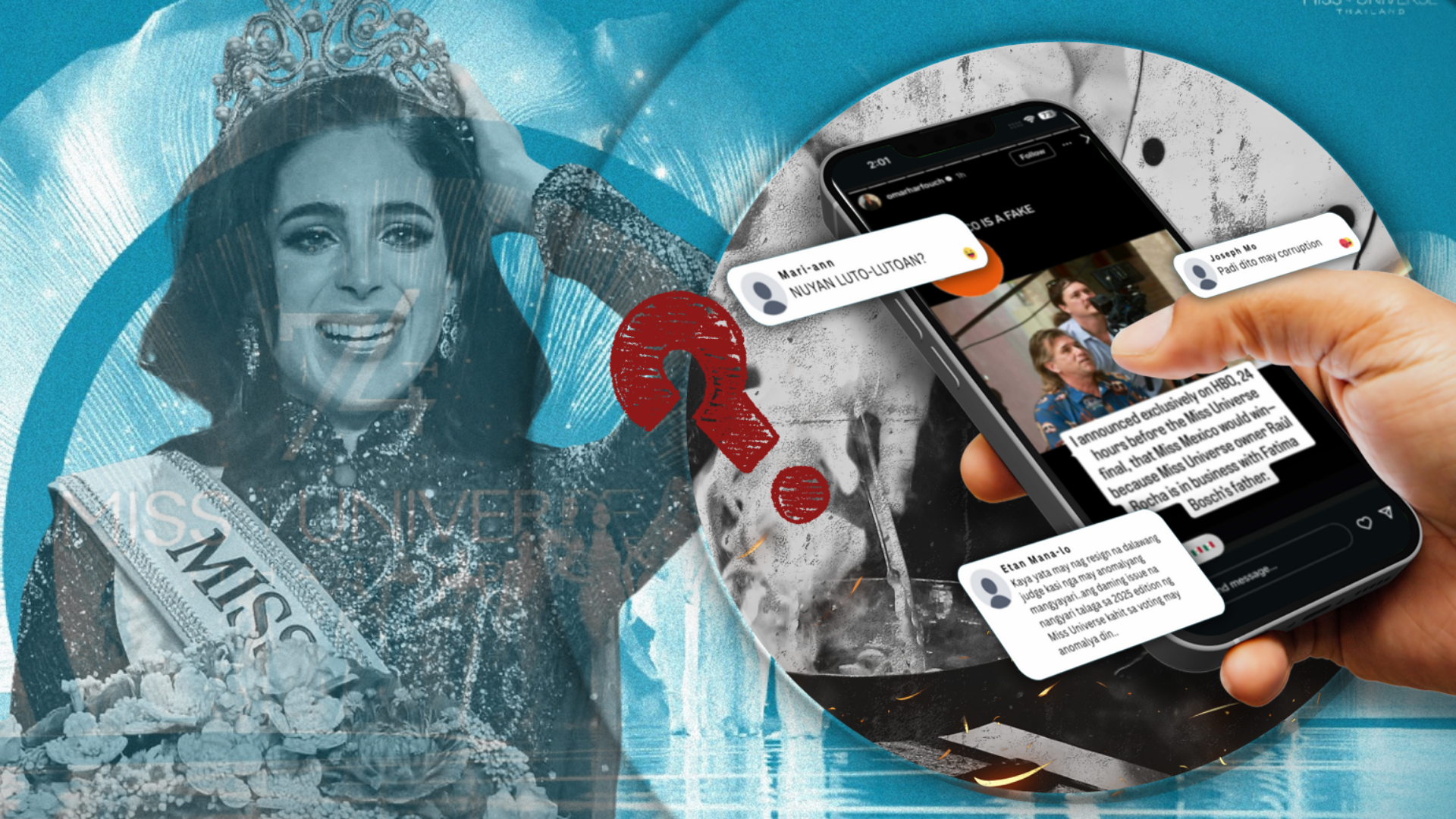
It was the most beautiful day in the universe.
In the Philippines, whenever the Miss Universe pageant airs, there is a remarkable kind of silence that falls over the country.
From houses to classrooms, even in streets and establishments, crowds gather around televisions and gadgets as if they were betting on destiny itself.
With that kind of moment, we hold our breath for a crown despite being weighed down by political tensions, scandals, feuds, and the never-ending praxis of instability that frames our national life.
It is evident. I once again saw the same stillness this year when our Pambansang Manika—Ahtisa Manalo, stepped on the 74th Miss Universe stage.
Throughout her journey, Filipinos rallied behind her: online voting for Beyond the Crown, People’s Choice, Best Skin, Most Photogenic, Best in Evening Gown, Best in National Costume, and Miss Congeniality—placing her consistently on the leaderboard. Pageant enthusiasts campaigned like it was a civic duty, and every kababayan suddenly evolved into a pageant analyst.
With the bayanihan we have, it felt like the world stopped just long enough for us to hope. Although she finishes strong as a 3rd runner-up, the disappointment ripples across the internet, as though we had been denied something we were entitled to.
But somewhere amid the debates over gowns and pasarela, there is another story we keep failing to talk about.
Our country’s rating in political risk escalated as the widening graft probes exposed corruption that aggravated the country deeper into precariousness. A label no crown can polish.
In that context, the rift between Marcos and Duterte simmers. Cabinet officials come and go. Accusations of fund misuse surface. Alliances fracture.
Yet none of these dominate the social media stage the way a pageant does. Unlike Ahtisa’s performance, these issues never trend long enough to matter.
And maybe that’s the problem.
Perhaps our love for pageants is our cultural identity. It somehow unites us without debate, and Miss Universe is one of the few.
But we often forget that Miss Universe is not just a harmless show—it is a private institution with enormous influence, quietly intruding into the public sphere.
It shapes narratives about beauty, empowerment, nationhood, and even politics, often more effectively than our own civic institutions. Its glossy glamour becomes a shadow government of sorts, capturing our attention and setting the emotional agenda of millions.
Yet along the way, we mirror higher standards to hold our beauty queens, but neglect to do the same when we need to demand from our leaders.
Because, unlike Miss Universe, where the worst consequence is a non-placement, politics decides our literal future. Our economy. Our rights. Our national dignity.
It’s also perplexing when we pour all our bayanihan into voting for our candidates with little to nothing remaining when election season arrives. We overanalyse our bets, yet we do not bother to scrutinise an electoral candidate’s track record.
And here lies the duality of pageants. When they entrench a kind of toxic resilience—teaching us to smile through crises, to celebrate representation instead of demanding reform, to accept escapism as survival.
They normalise political apathy because cheering is easier than challenging.
However, paradoxically, these same platforms also become global stages for visibility politics.
We saw it this year when Miss Palestine used her presence to assert identity, existence, and resistance on a world stage where many political institutions have failed her people. Pageants can dull our political instincts, but they can also ignite political consciousness.
Ironic how pageants reveal the standards we could demand from our leaders, if only we tried. We watch politics with a small attention span, and we give to a preliminary swimsuit round.
When pageants became a momentary reprieve from the heaviness of living in a country persistently grappling with its own government, it was a form of escape. It is easier to support a queen chasing a crown than a nation chasing accountability.
But our escapism becomes dangerous when it blinds us.
When the glitz of a crown overshadows the stench of corruption. When we continuously exert our passion on an international stage, yet we stay silent about the rot beneath our own.
When we passionately vote for Miss Universe, yet become apathetic about voting in our own barangays, our own cities, our own nation.
We must scrutinize every electoral candidate the way we evaluate evening gowns.
We must demand transparency in government, the way we demand the tabulation of scores.
We must have the same unity we always portray during Miss Universe mirrored in how we vote, how we speak up, and how we demand better.
Because in the end, it is not a beauty queen’s loss that holds us back.
It is our refusal to hold our leaders to the standards we already know how to demand.
If only we judged our politicians the way we judge our queens.
Perhaps, the Philippines would finally win where it counts.
Because the real crown—the one that matters—is a government worthy of its people.
And that crown will never be won if we continue electing the same corrupt figures who write the script of our suffering.