










Now Reading: Weather forecasts aren’t unreliable—we just miss the point
-
01
Weather forecasts aren’t unreliable—we just miss the point
Weather forecasts aren’t unreliable—we just miss the point

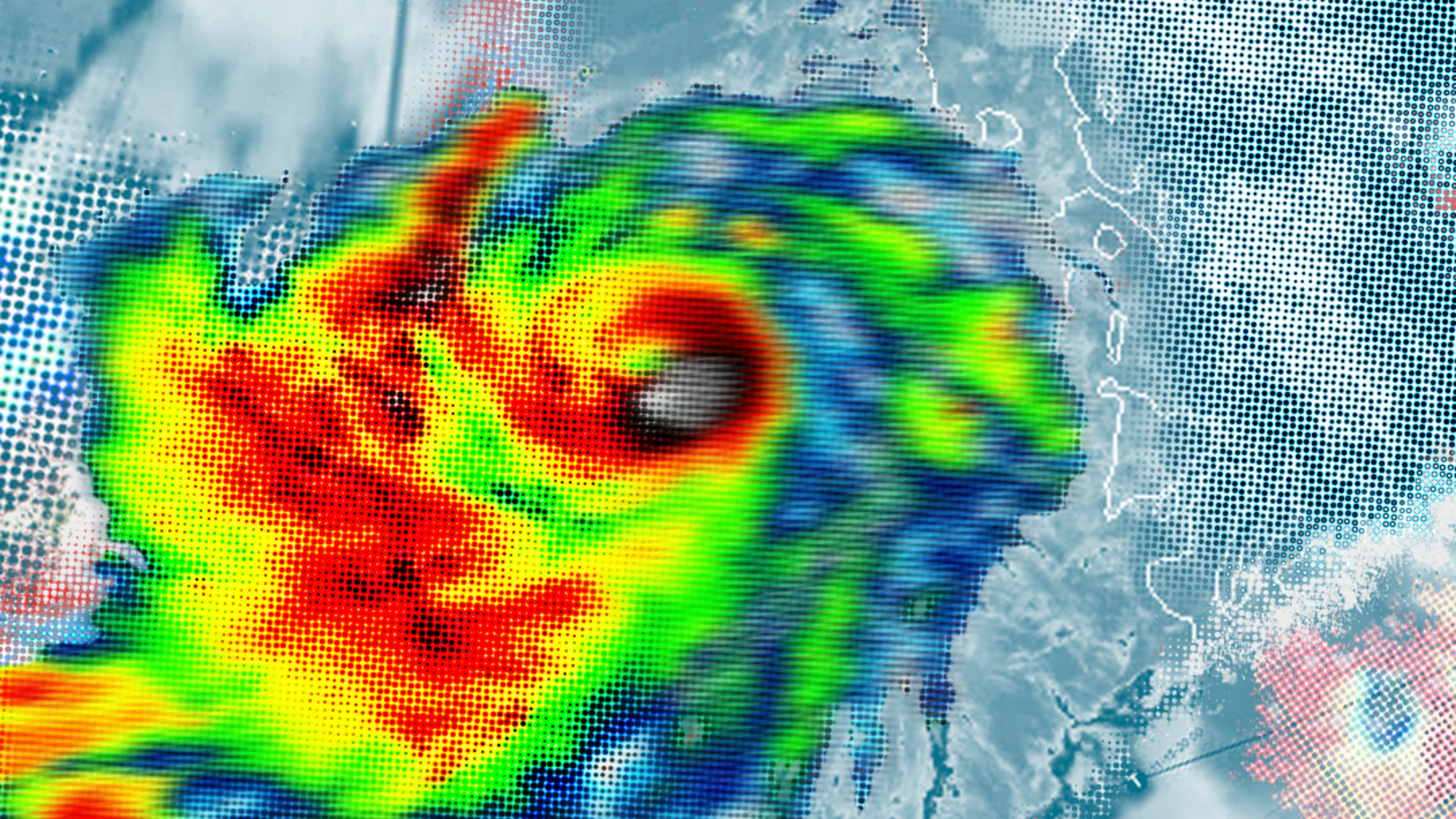
With the onslaught of typhoons in the country, weather forecasting means more than just saving livelihoods and properties—it means saving lives. Still, Philippine Atmospheric Geophysical and Astronomical Services Administration (PAGASA) gets flooded with comments about the “inaccuracy” of its weather reports.
But the real issue isn’t that forecasts are wrong or that PAGASA has failed—it is that we’ve misunderstood what is actually at stake.
FORECAST ≠ CERTAINTY
When it comes to their forecasts, PAGASA emphasizes that its reports are probabilistic ways of expressing the likelihood of atmospheric conditions.
Forecasts, as defined by the agency, are scientific estimates of future weather conditions. Although it relies on structured data, scientific methods, and analysis from weather models and atmospheric measurements, uncertainty is always in the mix.
This is why a forecast saying there’s an 80 percent chance of rain does not mean rain is guaranteed—it expresses the likelihood, not the certainty.
WHEN SKY HAS A LIMIT
Absolutely perfect weather forecasts are impossible—and nature is to blame.
Unlike predictable systems such as ocean tides and planetary orbits, the atmosphere has limits—there’s a point where predictions simply break down.
“Forecast uncertainty arises due to inherent unpredictability in the atmosphere. The atmosphere is, by nature, a chaotic fluid which is very sensitive to initial conditions. This, coupled with an incomplete depiction of the current state of the atmosphere, will always result in forecast uncertainty,” the World Meteorological Organization said.
This is why even a change in surface temperature or wind direction might interact with existing factors and trigger a shift in weather patterns, leading to unexpected rainfalls or a shift of a typhoon track.
ACCURACY IS THE AIM, PROBABILITY IS THE GAME
Beyond nature’s unpredictability stems technological and structural limitations, where constraints not only affect accuracy, but also hinder the ability to disseminate early warnings to residents.
“Since we can’t collect data from the future, the weather models used by meteorologists have to use estimates and assumptions to predict future weather. The atmosphere is changing all the time, so those estimates are less reliable the further you get into the future,” reported National Environmental Satellite, Data, and Information Service (NESDIS).
According to NESDIS, a five-day forecast is accurate 90 percent of the time, while a seven-day forecast is accurate 80 percent of the time. Meanwhile, forecasts beyond 10 days are right only about half the time.
Though there is great potential to further improve weather forecasts through upgrading existing meteorological technology, these systems cannot escape uncertainty—accuracy may be the goal, but probability remains the reality.
GREAT RESPONSIBILITY COMES WITH GREATER EXPENSES
The high-technology equipment PAGASA uses, such as Doppler weather radars, automatic weather stations, upper-air sounding systems, and automatic rain gauges, tends to be expensive to procure and to maintain.
For example, a Doppler radar that can determine the amount of rainfall within a 450-kilometer radius costs around Php 250 million.
Senator Juan Miguel Zubiri said PAGASA only has 19 Doppler radars, with just 11 functioning as the other eight are already “busted.”
“Kung serious po tayo na gusto natin i-improve ‘yung weather prediction of our PAGASA, sana naman ‘yung DBM–alam ko hindi naman natin kaya kasi we have a very limited fiscal space here–but when the NEP comes out, dagdagan sana nila yung budget for the improvement of the doppler radars,” Senator Juan Miguel Zubiri said.
BETTER FORECASTS ARE ‘UNDERRATED’
While we may not have noticed, PAGASA has steadily improved its forecast track performance.
In fact, the 2024 report of the agency revealed it has achieved a forecast track error of 113.8 km for Tropical Storms and Severe Tropical Storms (target: 120 km) and 54.3 km for Typhoons and Super Typhoons (target: 100 km) for the mean 24-hour forecast position.
Put simply: when PAGASA predicts where a storm will be in 24 hours, they’re usually right within about 50–55 km for typhoons and 110–115 km for tropical storms—surpassing their accuracy benchmarks.
WHAT ‘JUAN’ CAN DO?
It has been proven that even the most accurate forecast means nothing if we’re not ready to respond.
PAGASA continues to reiterate that alerts and warnings from agencies require utmost preparation to avoid damage to properties, disruption of livelihoods, and worse, loss of lives.
Preparing a basic emergency kit, securing important documents in waterproof containers, and identifying safe evacuation routes all go a long way in keeping households protected when disaster strikes.
Weather happens every day, and while forecasts may not predict certainties, they’re our best chance at staying safe—if we choose to act on them.
So the next time you see Facebook comments bashing the “inaccuracy” of PAGASA’s weather forecasts, remember: the goal is not to predict perfectly, but to prepare early.
The real point of a forecast lies, not in its precision, but in our preparedness.