








Now Reading: PH fertility rate drops to historic low as family planning gaps persist
-
01
PH fertility rate drops to historic low as family planning gaps persist
PH fertility rate drops to historic low as family planning gaps persist

Daemien Arkin Batacan
The Philippines recorded its lowest total fertility rate (TFR) at 1.7 children per woman in 2025, while 12.5% of currently married women aged 15 to 49 reported an unmet need for family planning, slightly up from 12.4% in 2022, according to the Philippine Statistics Authority (PSA).
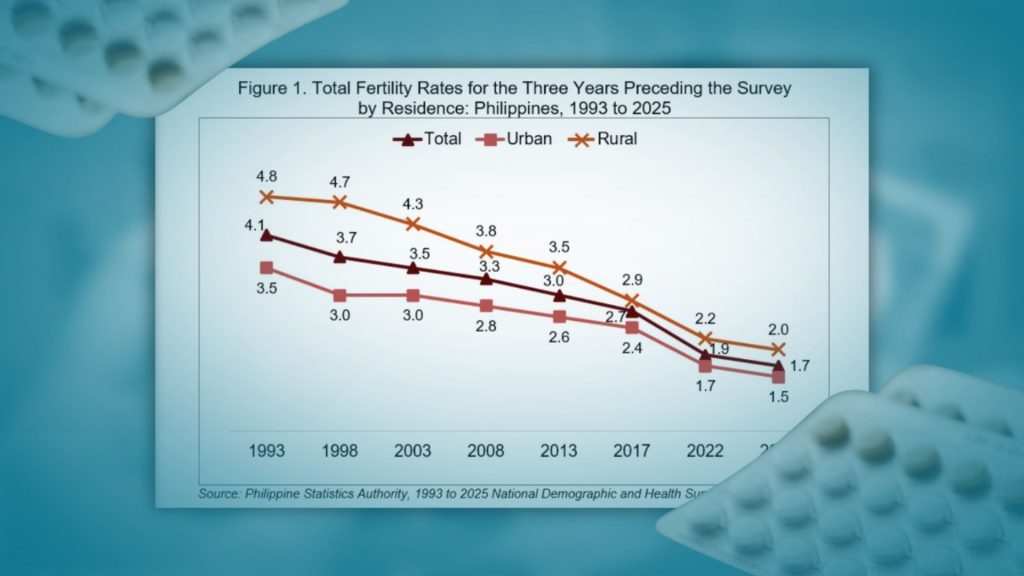
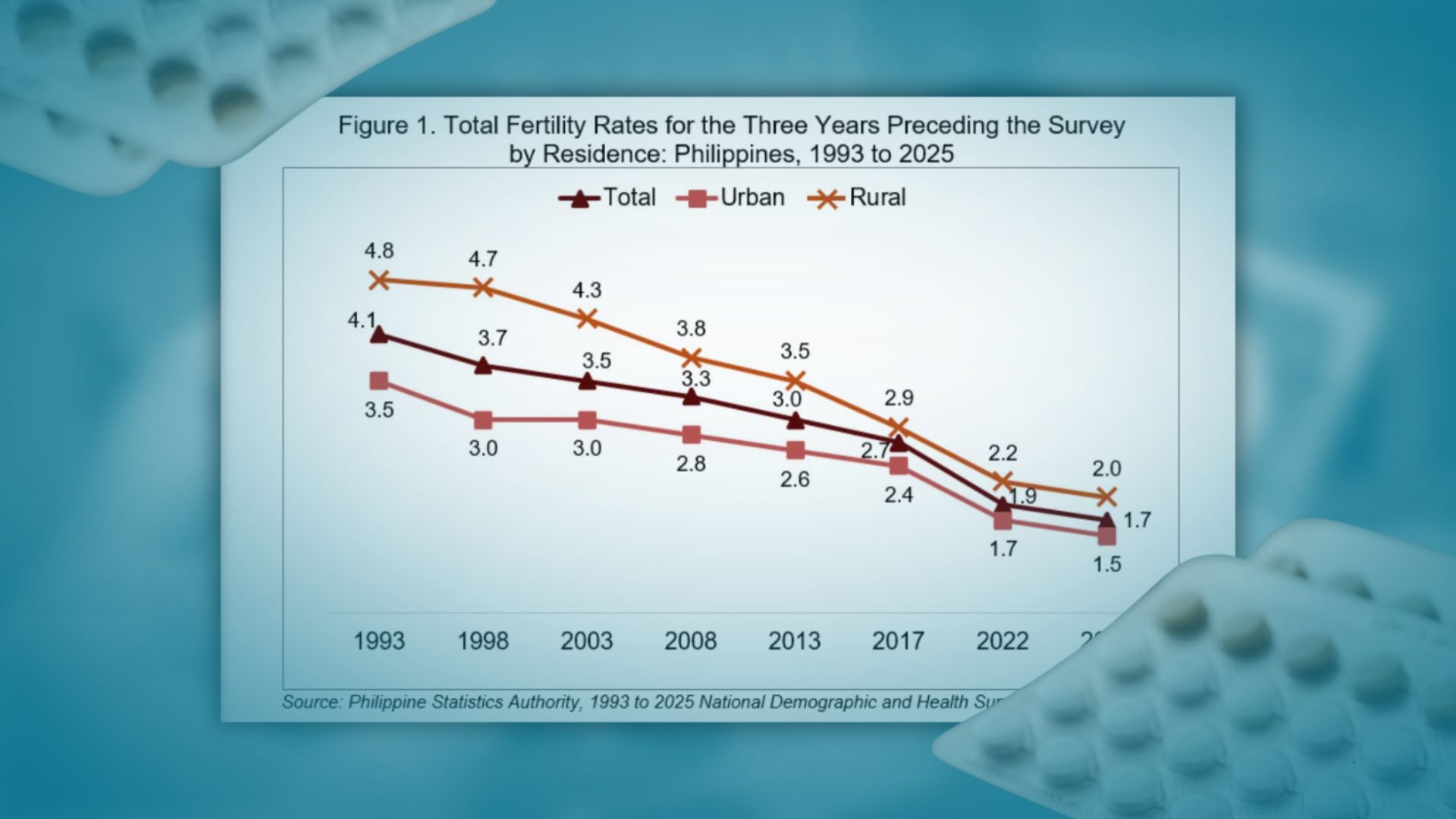
Data from the 2025 National Demographic and Health Survey (NDHS) revealed a decline in fertility from 1.9 children per woman in 2022 and 4.1 in 1993.
At 1.7 children per woman, the country’s TFR is below the replacement-level fertility rate of 2.1.
Fertility remained higher in rural communities at 2.0 children per woman, while urban areas recorded 1.5.
PSA defines unmet need for family planning as the percentage of women who want to delay or avoid pregnancy but are not using a contraceptive method.
Young women recorded higher levels of unmet need, reaching 38.5% among those aged 15 to 19 and 24.8% among those aged 20 to 24.
Women with no formal education registered an unmet need of 24.4%, while those belonging to the poorest wealth quintile recorded 16.3%.
Rural areas also posted a higher unmet need at 12.8%, compared with 12.3% in urban areas.
Data from the survey further showed that 82.4% of demand for family planning was satisfied through all methods in 2025, while 62.5% was satisfied through modern methods.
Modern methods include female and male sterilization, intrauterine devices, implants, injectables, pills, condoms, and other modern contraceptive methods.
The Commission on Population and Development (CPD) and its partners renewed calls on Thursday for wider access to family-planning information, services, and contraceptive methods amid continuing differences in access to reproductive health services as fertility patterns change nationwide.
According to the Philippine Institute for Development Studies (PIDS), declining fertility has effects on investments in children and preparations for an aging population.
Results from the 2025 NDHS provide updated indicators on fertility, contraceptive use, and family-planning needs that government agencies can use in planning population and reproductive health programs.