





Now Reading: With Pax Silica and WAICO, comes great risk and possibilities
-
01
With Pax Silica and WAICO, comes great risk and possibilities

Isabella Laraga
As discussions on Pax Silica continue to transpire in the Philippines, it is important to look beyond our borders and into the standpoints of other countries. Different nations either view this initiative as a threat or an opportunity. For us, observing how our approach compares is critical.
Beyond data centers for Artificial Intelligence (AI), Pax Silica, led by the United States (US), aims to build a ‘secure, prosperous, and innovation-driven silicon supply chain,’ by converting raw materials into semiconductors and the systems that powers AI.
It also endeavors to “reduce coercive dependencies,” which is widely seen as a move to oppose China’s dominance in the high-tech manufacturing industry. Specifically, in the production of computer chips and acquiring the rare metals essential for the components.
Currently, 60% of world’s rare earth metals are produced by China. On the other hand, it processes nearly 90%. This conveys a near-monopoly, or condition where a single entity creates exclusive control over the supply or production of a specific good or service, a significant reason why Pax Silica was created. As US President Donald Trump stated, “We don’t want to ever go through what we went through a year ago,” referencing the time when China demonstrated its willingness to exploit the control it has on critical mineral products.
Weeks after the US invited 35 countries to sign the ‘Declaration on AI Opportunity’ under Pax Silica, China and 28 other nations established the World AI Cooperation Organization (WAICO) on July 16, 2026. Despite the fact that WAICO is not explicitly declared as a ‘countermove’ in the official treaty, it is extensively understood as China’s response to US-led Pax Silica.
Is it a question of if or which?
For the Philippines, we have a choice of if we should participate in these undertakings, and if so, then which one? As of the present moment, for many nations, the answer is none. However, for some countries like Kazakhstan, it is both.
WAICO has 29 founding member states, including with China, Russia, South Africa, Pakistan, Indonesia, and Kazakhstan. Distinct from Pax Silica, whose goal is rather physical and focused on building machines, WAICO focuses more on governance.
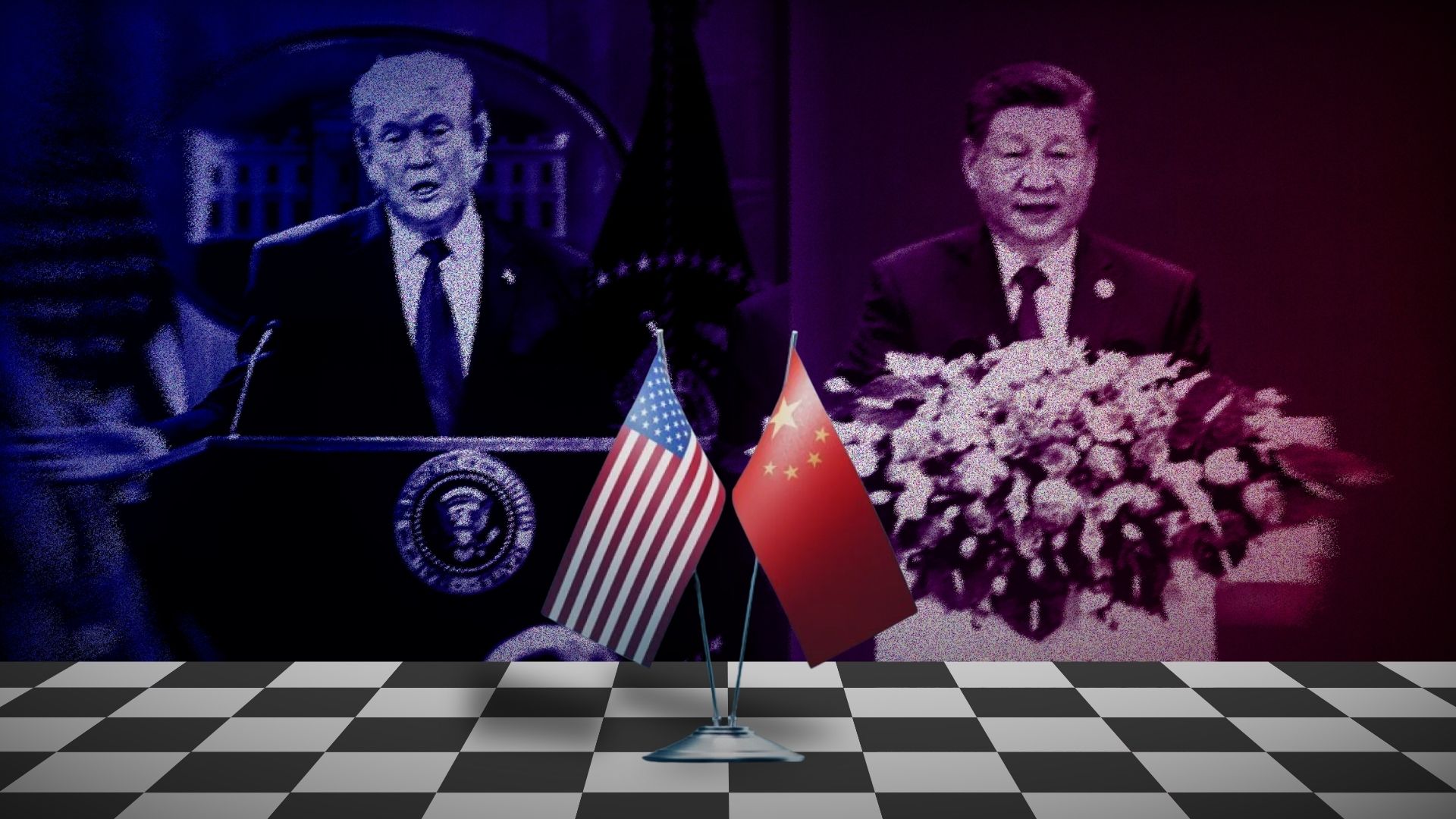
Joining the two initiatives is not necessarily contradictory. One is a supply-chain declaration, the other is an intergovernmental organization. However, considering that each is spearheaded by opposing global superpowers, interstate conflict is to be expected.
At present, Kazakhstan is a member of both Pax Silica and WAICO. The country joined Pax Silica in June 2026. More than two weeks later, it became one of WAICO’s founding members. Kazakhstan is known for building good ties with major powers like Russia, China, the US and the European Union without fully depending on any of them. For the country, partaking in both Pax Silica and WAICO fits its principle on foreign policy that aims to maintain rather than restrict its options.
In August 2026, a leaked draft of a US letter was said to urge countries to choose sides in the AI race against China. According to Reuters, the letter warns the 35 countries that previously signed the US “AI Opportunity Statement” not to participate in both US-led Pax Silica and China’s rival alliance. “To be part of everything is to be part of nothing,’’ the letter stated. This signals that the US intends to make dual alignment impossible.
Involvement in none poses a loss—it would mean missing out on major foreign investments and global supply-chain integration. However, engaging in both would result in unwanted entanglement between two superpowers. Such dilemmas must take careful planning and consideration from participating entities. In this situation, failure to plan is planning to fail.
An ecosystem of chip production
As AI continues to progress, competition carries on. Efforts such as Pax Silica and WAICO do not exist in solitude, rather, they are fastly disseminating. For nations have objectives and aspirations, and the capability to attain them.
Very recently, Thailand introduced Siam Silica, a strategy for local chip manufacturing that aims to position the country as a key hub in the regional ASEAN supply chain. Thailand is also moving to achieve resilience and bargaining power for Asean. The production of semiconductors is seen as foundational technology necessary to preserve forthcoming competition across AI, data centres, biotechnology, and clean energy infrastructure.
Back in 2023, moreover, Japan launched the Hiroshima AI Process. It acknowledges the necessity to boost inclusive international governance on AI to maximize its innovative potential, while mitigating possible obstacles and complications of AI advancement. Through the establishment of international rules to serve as a basis for governance, it has goals of promoting a ‘safe, secure, and trustworthy’ AI.
India, alternatively, plans to invest $13 billion for the second phase of its semiconductor mission. While local demand is anticipated to reach $200 billion by 2035, it aims to cut the country’s reliance on imported semiconductors. With this, India conveys a larger ambition, using its engineering workforce as the foundation of an ecosystem for effective semiconductors. Like India, the Philippines can invest in cultivating skilled semiconductor specialists and engineers. Through this, we can go from assembling products to designing and developing this—a goal also underscored by Executive Secretary Ralph Recto. Currently the Philippines aims to reach $110 billion in semiconductor and electronics exports by 2030 with the goal of attaining factories, investments, and well-paying jobs for Filipino workers.
The advancements of neighboring countries bring pressure to the Philippines to also progress. However, this is not the time to force change. It must be considered that every policy roadmap requires significant financial backing. Before investing in costly fabrication plants, the government must secure long-term financial viability and strengthen human capital.
Why action requires precaution
Both Pax Silica and WAICO bring promises, but with it comes the possibility of complications and challenges. It is no longer just a matter of economic and technological progress; it is also a geopolitical concern. Joining either makes a statement, partaking in both raises questions, and keeping ourselves out of the game could result in unwanted loss.
Amid geopolitical tensions, hopes of advancement require vigilant measures from countries such as the Philippines. This is not the time for governmental indecisiveness and complacency. In the end, we must ensure to evade foreseable risks and make the most out of every opportunity.