






Now Reading: DOST to focus on disaster resilience, create breakthroughs using AI
-
01
DOST to focus on disaster resilience, create breakthroughs using AI
DOST to focus on disaster resilience, create breakthroughs using AI

Some problems are so catastrophic that it pushes initiatives to utilize one of the most advanced technologies available—Artificial Intelligence (AI).
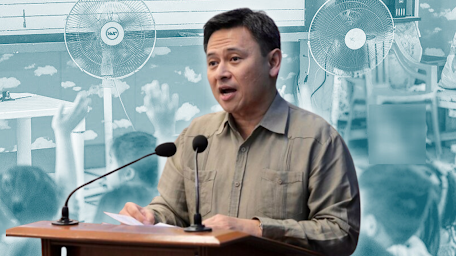
The Department of Science and Technology (DOST) Secretary Renato Solidum Jr. said in his state of the DOST address on July 19 that his agency will put emphasis on strengthening disaster preparedness and response by utilizing AI and building partnerships with private sectors.
“[Resilience] is an important pillar of the DOST to strengthen national resilience in creating and disseminating technology that is strong against the effects of climate and disasters,” he said.
Solidum Jr. added that their objectives complement the Philvocs Modernization Act—a law that prioritizes the use of scientific and technical knowledge in safeguarding the safety, well-being, and economic security of the masses.
In an article published in Esquire Magazine, Statista’s data reveals that the Philippines is the country with the highest natural disaster risk in the world, having a disaster risk index of 46.86.
Consequently, such high numbers result in massive damage, especially in high populated areas that are prone to various risks when disasters occur.
According to the Philippine Institute for Development Studies (PIDS), disasters in the Philippines can inflict economic losses of Php 85 billion to Php 422 billion annually, which is roughly 1-3 percent of the country’s gross domestic product (GDP).
Due to the rise in volume of these catastrophes, agencies are putting their foot down to boost the archipelago’s tenacity when encountering disasters.
While the DOST has only begun theirs, there are already several others that have implemented innovations in disaster preparedness, particularly by using AI.
What reinforcements are available currently?
Concurrently, the Philippines is experiencing heavy to rains, specifically in Luzon, due to the rampaging southwest monsoon or habagat which is enhanced by the late Tropical Storm Crising—the third tropical cyclone that hit the country this year.
To mediate some of the effects, the Philippine Space Agency (PhilSA) posted an AI-generated flood extent map that individuals can refer to in identifying whether their area is prone to flooding when heavy rainfall happens.
Based on the post’s caption, the data on the map were distinguished by AI through a composite of three Sentinel-1A band radars images acquired on 20 March 2025, 13 April 2025, and 18 April 2025.
The said radars are satellites that use specific signals which can penetrate through clouds and darkness, allowing it to generate all-weather, day-and-night imaging of the Earth’s surface.
However, the agency advised that the generated map still needs field validation for its precision and that the events shown in it may have already been gone.
Meanwhile, the University of the Philippines (UP) and the UP Resilience Institute have partnered with Mapbox to create the Nationwide Operational Assessment of Hazards (NOAH)—an all-around hazard map that utilizes 3D imaging to show different risks in areas such as, flooding, landslides, storm surges, and volcanoes.
Although it does not fully employ AI in its creation, NOAH still gives the information that Filipinos can access to have additional safety in times of catastrophes.
These are just two of the many instruments that are pioneered to assist the country in dealing with disaster management—there are still further technologies being crafted that will improve the Philippines’ resilience.
What’s next for the country?
As of July 22, 2025, the DOST’s Philippine Council for Industry, Energy, and Emerging Technology Research and Development (DOST-PCIEERD) have announced the launch of four different projects that all aim to provide hazard safeness, namely; project DELTA, project SIGMA, project LUPA, and project OMEGA.
All of the above-mentioned applies AI in their system, and through them, the agency objects to give Filipinos a good grasp of their surroundings and what potential dangers are lurking around them such as inundation-prone zones, fault lines, tsunami hazards, and many more.
Though information about the said projects are limited right now, the DOST-PCIEERD stated that more facts will be given in their 8th National Research and Development Conference on July 23-24, 2025.
Solidum Jr. mentioned in his speech that they will push the passing of top-priority science bills that aims to bolster the archipelago’s scientific infrastructure.
Moreover, the secretary emphasized the importance of the private sector’s participation and support in accelerating innovation and commercialization for startups. In line with this, he also announced the new AI chatbot, WannaKnow, that will serve as an assistant to Filipino inventors.
This chatbot would play a role as a digital mentor under the DOST’s Propel program. It would link science-based enterprises with investors and mentors while speedily tracking them.
“We continue to be focused on delivering solutions and creating opportunities through strong partnerships with government agencies, private sector and academia and other important shareholders,” Solidum said.
In times of crises, when all other solutions are exhausted, there might be no other choice but to turn to what is rising the most.
While AI can be the source of deception, it can most definitely be used as a savior as well and with combined efforts of different agencies, any breakthroughs can be transformed into tangible benefits for the people.