








Now Reading: Here’s how AI can level up sari-sari stores, say Ateneo researchers
-
01
Here’s how AI can level up sari-sari stores, say Ateneo researchers
Here’s how AI can level up sari-sari stores, say Ateneo researchers

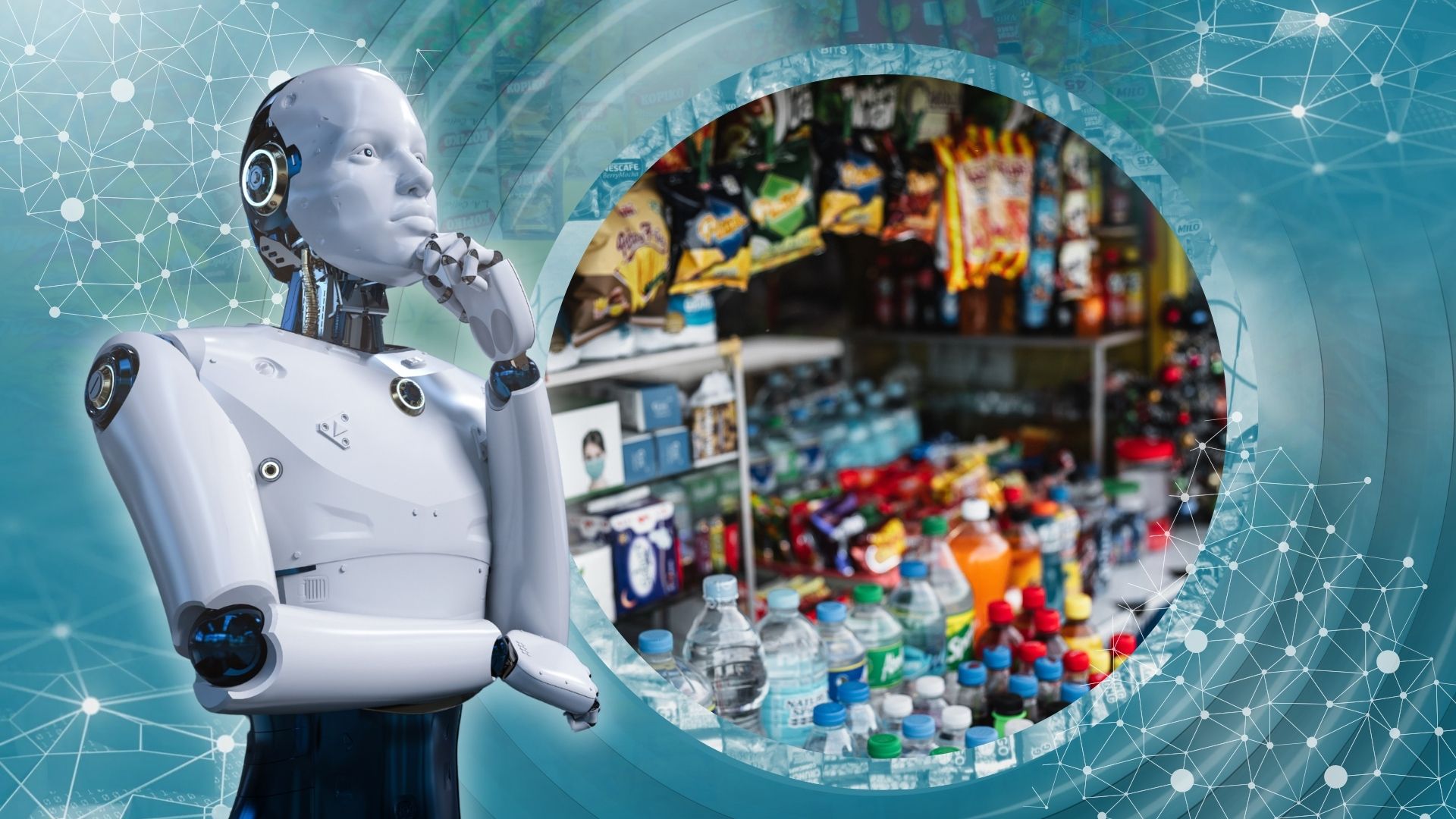
When the topic of integrating artificial intelligence (AI) in the workplace pops up in our feed, two key comments emerge: many workers aren’t digitally trained and the lingering fear of human job displacement—a notion that researchers of Ateneo de Manila University’s Business Insights Laboratory for Development (BUILD) have sought to address.
In the study Applied Optical Character Recognition and Large Language Models in Augmenting Manual Business Processes for Data Analytics in Traditional Small Businesses with Minimal Digital Adoption, BUILD researchers Zachary Matthew Alabastro, Joseph Benjamin Ilagan, Lois Abigail To, and Jose Ramon Ilagan, integrated AI to turn a ubiquitous, but important process of inventory-taking into a simple and efficient digital system that could help business owners make sense of their daily sales.
“The system allows even someone with no digital training to grasp inventory trends with ease. It scans logbook photos and uses AI to recognize products, match prices, and tabulate sales summaries,” the study noted.
Through augmenting manual business processes, researchers said traditionally non-digital businesses will be able to optimize operations without removing work for staff with limited proficiency in technology—copiloting and complementing human effort rather than replacing it.
Inside the system
The AI-assisted digital logbook system is an application built using Python, combining Amazon Web Services’ optical character recognition (OCR) with Anthropic’s Haiku 3.0 large language model (LLM).
OCR extracts written or printed text and converts it into a digital text, while LLMs are systems trained to analyze and generate insights based on the data prompt, with both Amazon Web Services and Anthropic’s Haiku 3.0 being cost-efficient but reliable models that can do the job.
“The pipeline extracts handwritten text from uploaded images of the sales logbooks and performs few-shot learning-based classification by letting the LLM read a masterlist of SKU-price data and retrieving information according to its perceived data content,” the proponents said.
Its few-shot learning-based classification is done through having AI recognize which product from the extracted data is referred to from the masterlist, even if the phrasings are different.
Though the results of the early prototype yielded an above-average recall or is able to capture a lot of information from the prompt but a moderate-low precision or producing many inaccurate details, the model offers much hope for improvement.
“Improvements are needed to enhance the learning mechanism of the LLM, but aside from analyzing logbooks, it can also be adapted to handle other kinds of handwritten data such as inventory sheets, delivery logs, or even payroll ledgers,” the researchers wrote.
Outside the papers
For sari-sari store owners, food stall vendors, or any small business, the AI tool means more than inventory-taking, it means an analysis of sales trends on which products are performing well or poorly, especially in this age of mass trend consumerism.
“With the ‘copilot’ model, businesses can quickly identify bestsellers or slow-moving stock, offering recommendations on inventory, pricing, and restocking, and thereby making it easier to keep up with customer demand,” according to the study.
Just by being simple, affordable, and reliable, the model can serve as a tool for local businesses to focus their attention on data-driven quality assurance, strategic alignment, and direction, once only available to those who can afford, among small, local business owners—practically ensuring a competitive edge and longevity with their products and services.
So next time news about AI pops in our feed, maybe look at it through a more optimistic lens. Much of our progress comes from slowly integrating innovations that make life easier—and for local businesses, digitization may mean data-driven decisions beyond the papers.