Now Reading: Kei Urana’s Gachiakuta may reflect the politics of a familiar Filipino reality
-
01
Kei Urana’s Gachiakuta may reflect the politics of a familiar Filipino reality
Kei Urana’s Gachiakuta may reflect the politics of a familiar Filipino reality

What happens when a society decides that some people are no longer worth saving, but only worth throwing away?
Garbage is supposed to disappear. We toss it into a bin, watch the truck collect it, and rarely wonder where it ends up. The cleaner our surroundings become, the easier it is to forget that our waste never truly vanishes — it simply arrives somewhere else, often in communities that had little say in receiving it.
In Kei Urana’s Gachiakuta, that “somewhere else” is called the Ground.
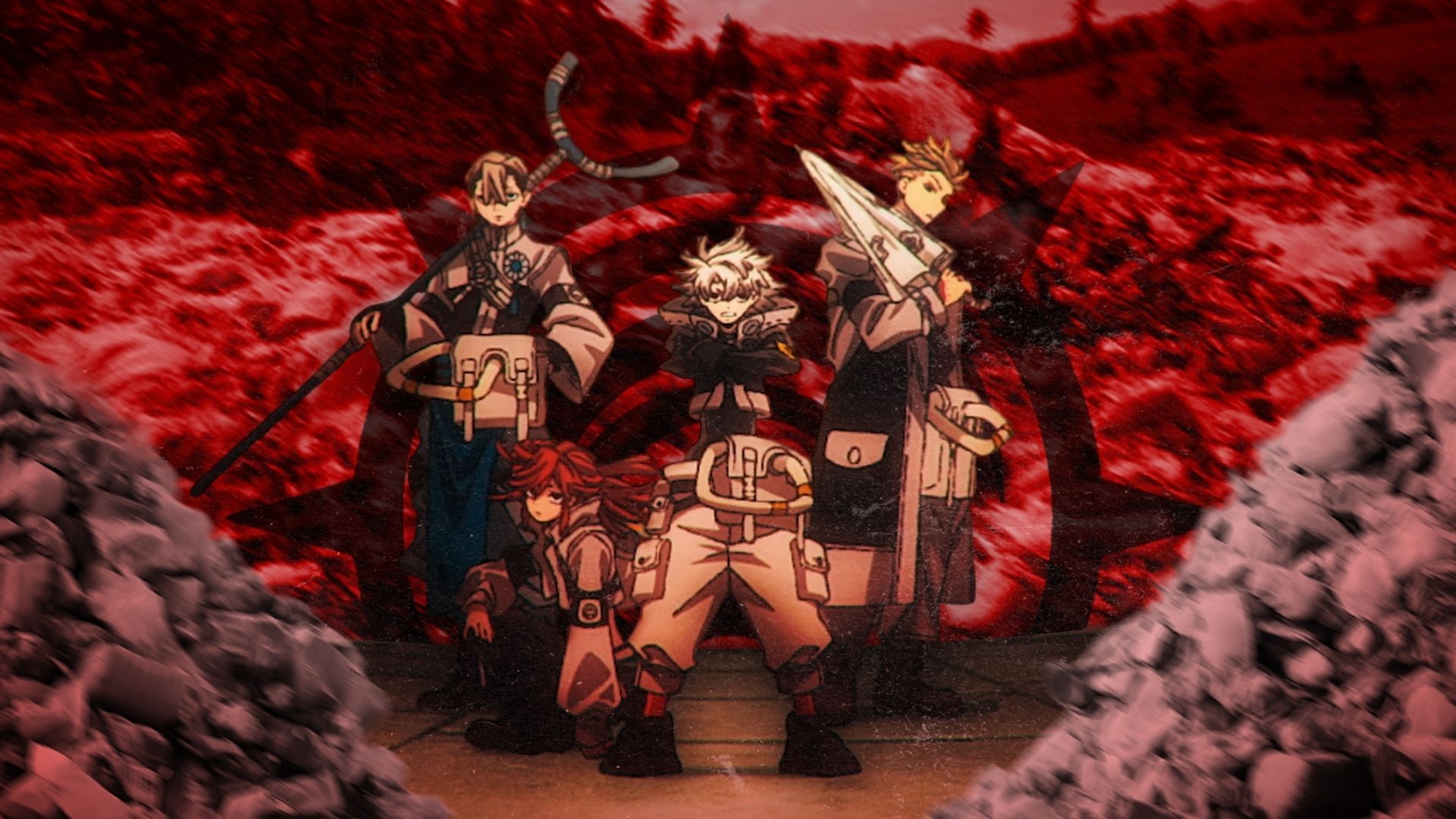
The anime adaptation of the acclaimed manga introduces audiences to a world where the privileged live in a pristine floating civilization known as the Sphere while everything deemed worthless — objects, waste, and even people — is discarded into the abyss below. When the story’s white-haired protagonist, Rudo, is falsely accused of murder, he is not merely imprisoned. He is thrown away into the ground, treated no differently from garbage.
Although Gachiakuta is packed with monstrous creatures, supernatural abilities, and explosive action sequences along with its graffiti aesthetic, its most terrifying idea is remarkably ordinary: that systems of power can convince people that certain lives are disposable.
It is a fantasy built on garbage, but at its heart, it is a story about class. And for many Filipinos, that story feels less like fiction than it should.
When trash becomes a measure of human worth
At first glance, Gachiakuta appears to revolve around waste management. Mountains of garbage fill the Ground, mutating into monstrous Trash Beasts born from decades of neglect and pollution.
Yet the manga quickly reveals that garbage is merely a metaphor. The Sphere does not simply throw away broken objects. It throws away responsibility. Its wealth depends on never having to witness the consequences of its own excess. Every discarded item eventually lands in the Ground, where entire civilizations are forced to survive using whatever the privileged no longer find useful.
In many ways, the Ground exists because the Sphere refuses to acknowledge it. The image resonates strongly within the Philippine context. Across the country, there are currently 4.5 million Filipinos who are living in informal settlements. They continue to live beside rivers clogged with waste, esteros overflowing with plastic, and landfills that sustain entire informal economies. For countless waste pickers and scavengers, garbage is not simply refused — it is livelihood, shelter, and survival.
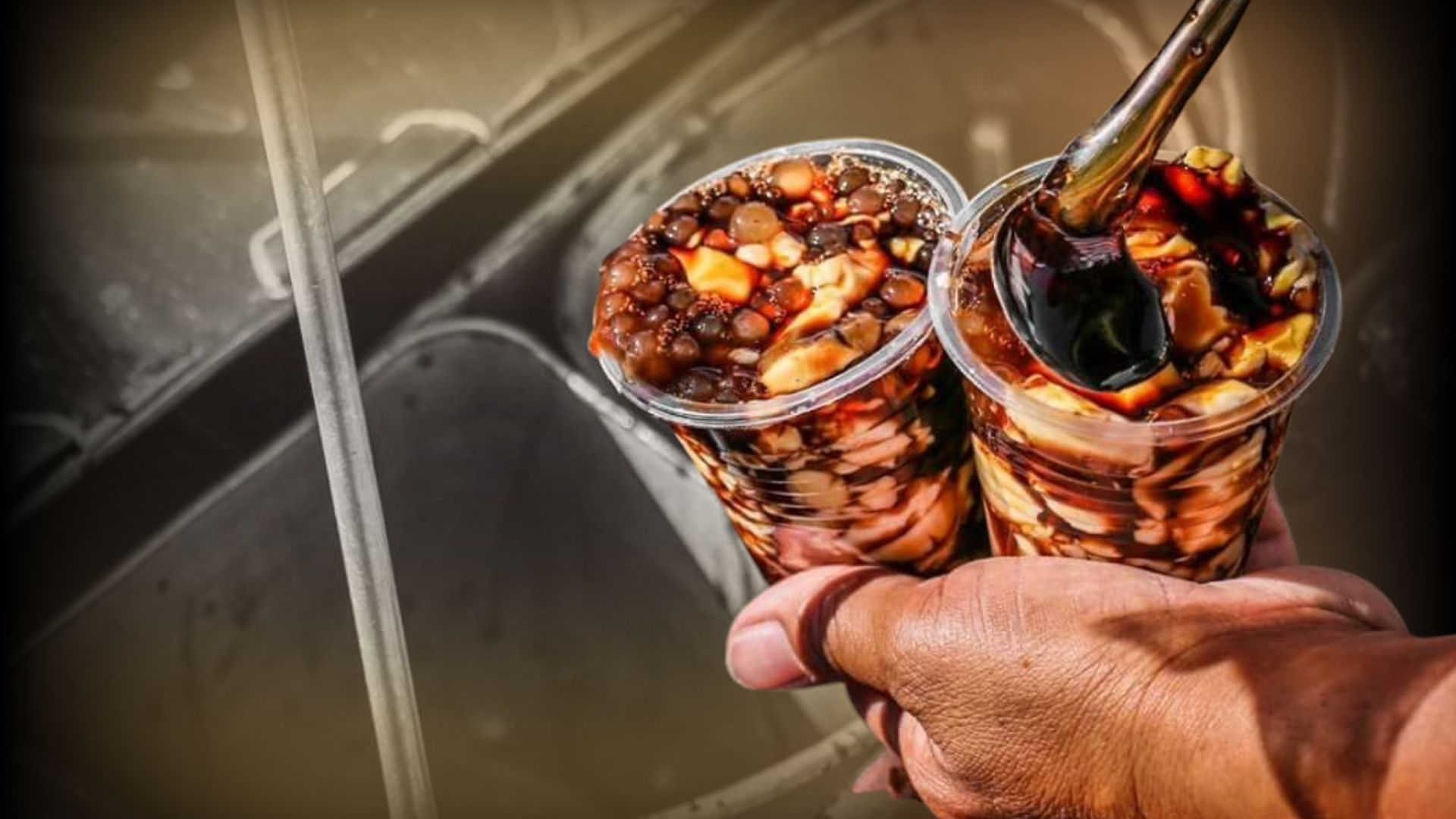
Perhaps no example illustrates this more painfully than pagpag — leftover food recovered from restaurant waste, cleaned, recooked, and eaten by those who have few alternatives. While often sensationalized as an unusual practice, pagpag ultimately reflects something much larger than individual desperation. It exposes how economic inequality forces some Filipinos to survive on what others have already discarded.
Like the residents of the Ground, marginalized communities do not choose garbage because they value it. They choose it because society has left them with few choices.
The tragedy, then, is not the trash itself. It is the system that decides who must live with it.
The illusion of cleanliness
One of Gachiakuta‘s most striking images is the contrast between the immaculate Sphere and the polluted Ground.
The upper world appears peaceful, orderly, and civilized. Its streets remain spotless precisely because every inconvenience has been exported elsewhere.
Cleanliness, in this sense, becomes political.
The Sphere’s beauty is not achieved through responsibility but through displacement. Its prosperity depends on making another society carry the burden of its consumption.
This dynamic reflects a familiar pattern within highly unequal societies.
Affluent subdivisions rise only a few kilometers away from informal settlements. Air-conditioned offices overlook communities vulnerable to flooding every rainy season. The comforts enjoyed by some often remain invisible to those who bear their environmental and economic costs.
The idea of pushing inequality out of sight has, at times, found echoes in the Philippines. During preparations for international events, governments have often prioritized presenting cities as orderly and modern to visiting dignitaries.
One example came during the 48th ASEAN Summit in Cebu City last May 6-8 ,2026, when tarpaulins and barriers were erected along portions of major roads, shielding some informal settlements in Barangay Pasil from the view of delegates and tourists. While officials described these measures as part of the city’s preparations and beautification efforts, the images sparked public debate about whether poverty was being addressed — or merely hidden from sight.
Gachiakuta presents this same contradiction through the Sphere. Its immaculate streets are not evidence that inequality has disappeared; they simply reflect that its burdens have been relocated somewhere else. The Ground exists so that the Sphere can continue believing itself clean. Likewise, concealing visible signs of poverty may create the appearance of progress for those passing by, but it does little to change the conditions faced by the communities behind the walls. The manga reminds readers that injustice does not cease to exist simply because it has been pushed beyond public view.
The manga never suggests that wealth itself is immoral.
Rather, it questions what happens when prosperity becomes detached from accountability.
When those at the top never see the consequences of their decisions, suffering becomes remarkably easy to ignore.
Living on society’s leftovers
The people of the Ground build entire lives from discarded objects. Broken tools become weapons. Old furniture becomes shelter. Abandoned belongings become treasured possessions.
What outsiders interpret as filth becomes necessity.
This reflects one of Gachiakuta‘s critiques that poverty is never portrayed as agency versus structure. Instead, it is shown as the product of systems that consistently deny people access to resources while expecting them to survive nonetheless.
This reality is not unfamiliar in the Philippines. According to Business World Publishing, 20.6 million Filipinos work within the informal economy — not because they reject stability, but because stable opportunities remain scarce. Street vendors, junk collectors, contractual workers, and day laborers often navigate uncertain livelihoods shaped by economic conditions far beyond their control.
Like the residents of the Ground, many continue adapting, rebuilding, and creating value from what society overlooks.
Their resilience is remarkable. But resilience should never become an excuse for inequality.
Who gets remembered and who gets erased
As Gachiakuta progresses, its focus expands beyond survival and begins asking another question:
Who gets to tell history?
Leading up to the story, Rudo had managed to endure the cruel nature of the Pit, gain membership in the Cleaners, and master the art of fighting through the Gift while revealing secrets of the upper and lower worlds. During this journey, he meets people who find meaning in life despite being treated as outcasts, and this realization emphasizes one of the most important themes of this manga, namely that both things and people deemed as “waste” are still very valuable.
In the Canvas Town arc, the Heritage Mural becomes far more than a piece of public art. Canvas Town is a city of freedom where numerous artists find the courage to protect and create a space for artists to fill their passion. It preserves the stories, struggles, and identity of ordinary people whose experiences might otherwise disappear.
Protecting the mural becomes an act of resistance. Not because paint can defeat oppression. But because memory can. The conflict echoes contemporary conversations in the Philippines surrounding historical memory, public narratives, and digital misinformation.
History has increasingly become a contested space where competing interpretations circulate across classrooms, documentaries, Facebook timelines, TikTok videos, and political campaigns. Debates surrounding Martial Law, corruption, and democratic institutions demonstrate that history is never simply about the past. It shapes how societies understand the present and imagine the future.
Like Canvas Town’s mural, public memory becomes something worth protecting precisely because it can also be rewritten.
When truth itself becomes a subject of fear rather than a tool for accountability
The Heritage Mural also highlights another recurring theme throughout Gachiakuta: systems often fear stories they cannot control. As independent figures attempt to preserve history, authorities intervene under the language of maintaining order. The conflict raises familiar questions.
Who decides what counts as truth? Who determines which voices deserve to be heard? Who benefits when uncomfortable stories disappear?
These questions continue to resonate within the Philippine media landscape, where debates over press freedom, online disinformation, cyberlibel cases, attacks against journalists, and the closure of major media institutions have shaped public discourse in recent years.
Alongside traditional journalism, artists, community muralists, campus publications, independent filmmakers, and grassroots media organizations have increasingly become spaces where alternative narratives survive.
Like Canvas Town’s murals, these works challenge official versions of reality by insisting that ordinary people’s experiences deserve to be remembered and honored
The real enemy is not the monster
Although Gachiakuta features terrifying creatures born from pollution called “trash beasts,” its greatest antagonist is never a monster. It is a system. Rudo is not discarded because he deserves punishment. He is discarded because society finds it easier to blame the powerless than to question the institutions that govern them.
Throughout the manga, readers encounter authorities more invested in preserving order than pursuing justice, social norms that normalize exclusion, and communities conditioned to believe that inequality is simply the natural order of things. For example, the widespread belief that success comes solely from hard work promotes the idea that individuals must simply “work their way to the top,” even when poverty, corruption, and unequal access to education and opportunities create significant barriers.
In the manga, this mindset is reflected in the Sphere through the slums inhabited by the Tribesmen, who are branded as criminals and forced to struggle for survival in a society that has already marginalized them. Rather than addressing the structural conditions that pushed these communities into poverty and crime, those in power treat them as threats that must be controlled.
The Tribes’ constant fight to escape the slums mirrors how marginalized Filipinos are often expected to overcome inequality through personal perseverance alone, allowing public officials and institutions to evade responsibility for addressing the deeper social and economic conditions that sustain inequality.
The manga repeatedly suggests that oppressive systems do not survive because they are invincible. They survive because they become the norm and people stop asking and questioning them.
Why Gachiakuta speaks beyond Japan
Despite its distinctly Japanese setting and aesthetics, Gachiakuta resonates with readers around the world because its central question transcends national borders. Every society creates boundaries between those it values and those it overlooks.
Sometimes those boundaries are economic, sometimes political, sometimes environmental, and sometimes historical.
The Philippines is no exception.
Questions surrounding poverty, environmental justice, wealth inequality, public accountability, historical memory, and democratic participation remain part of the country’s continuing national conversation. Gachiakuta does not provide solutions to these challenges, nor was it written specifically about them.
What it offers instead is a powerful lens through which readers can examine the structures shaping their own communities. In the end, Gachiakuta reminds us that societies rarely collapse because of the garbage they produce. They collapse when they begin treating people the same way. The Sphere believed throwing things away would make its world cleaner.
Instead, it only buried its problems beneath someone else’s feet. And perhaps that is the manga’s most enduring political message: a society should never be judged by how spotless its cities appear, but by how it treats the people it would rather pretend do not exist.