





Now Reading: Not your typical regional government
-
01
Not your typical regional government

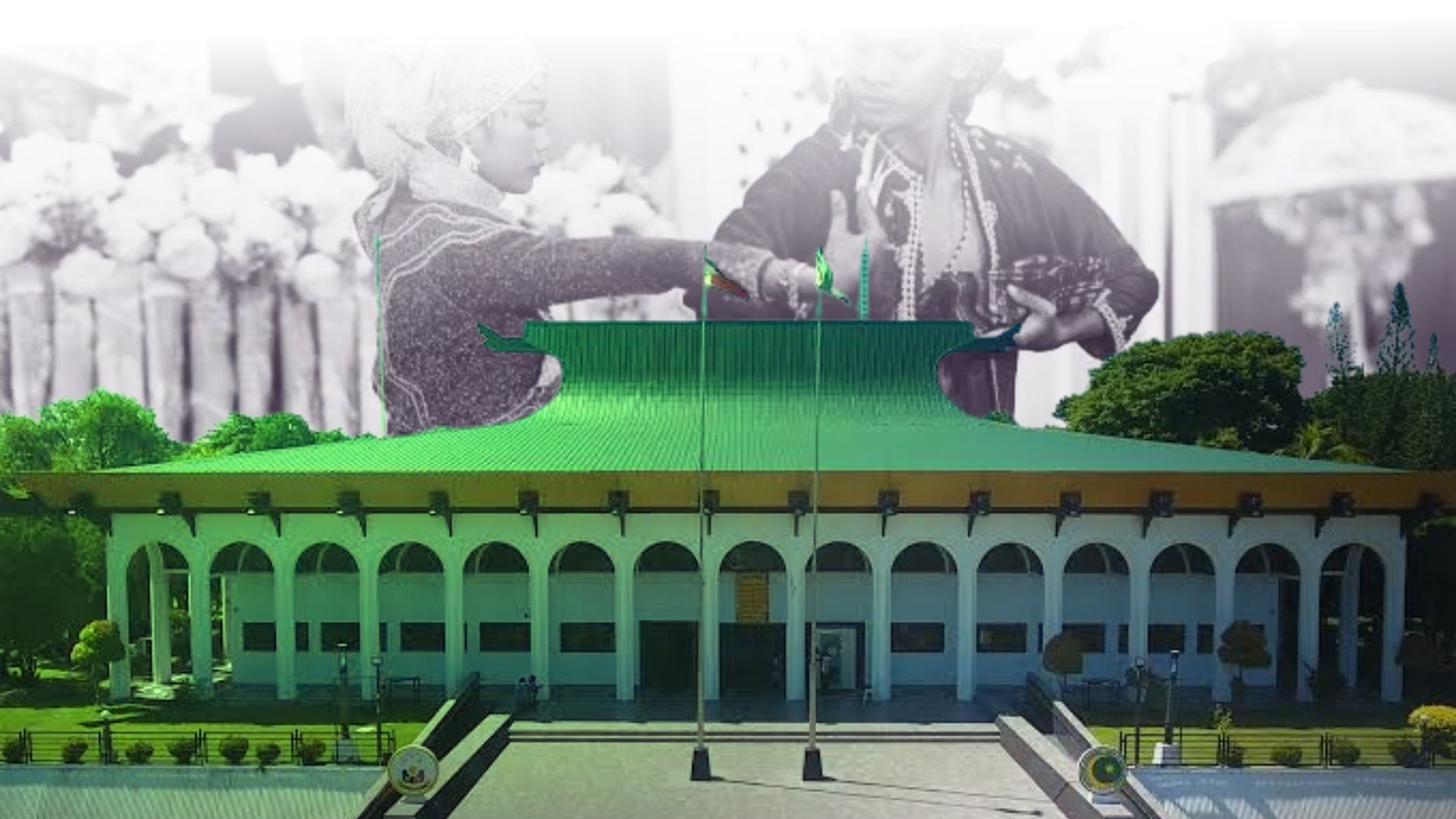
When Filipinos think about their government, most imagine the national system led by the President and executive departments. While this model operates across most of the country, one region follows a different system.
The Bangsamoro Autonomous Region in Muslim Mindanao (BARMM) has its own regional government, one that is unlike any other in the Philippines. Instead of executive departments, it has ministries led by ministers. Its executive authority rests in a Chief Minister, who serves as head of the Bangsamoro Government. Rather than following the country’s presidential system, BARMM operates under a parliamentary form of government.
These fundamental distinctions often lead Filipinos to wonder: Why is BARMM different? How was it created? What does autonomy mean? And how does its government work alongside the Philippine government?
The long road to self-governance
Long before the Philippines existed as a unified state, powerful Muslim sultanates such as the Sultanate of Sulu and the Sultanate of Maguindanao already governed large parts of Mindanao and the Sulu Archipelago. These sultanates had established political systems, trade relations, and legal traditions long before Spanish colonization.
When Spain colonized the archipelago, many Moro communities fiercely resisted foreign control. Unlike much of Luzon and the Visayas, significant portions of the Muslim communities maintained independence throughout centuries of Spanish occupation.
Even after the American colonial period and Philippine independence, issues involving ancestral domain, political representation, governance, and cultural identity continued to fuel tensions in Mindanao.
By the late 1960s and early 1970s, armed conflicts escalated with the emergence of Moro revolutionary groups, particularly the Moro National Liberation Front (MNLF) and later the Moro Islamic Liberation Front (MILF). Their struggle centered on the Bangsamoro people’s right to self-determination and meaningful autonomy.
Recognizing that military force alone could not resolve the conflict, the Philippine government engaged in decades of formal peace negotiations.
One of the earliest milestones was the establishment of the Autonomous Region in Muslim Mindanao (ARMM) in 1989 through Republic Act No. 6734. While ARMM granted a certain degree of autonomy, many believed its powers remained limited and did not fully address the aspirations of the Bangsamoro people.
Years of negotiations eventually led to the signing of the Comprehensive Agreement on the Bangsamoro (CAB) in 2014. The agreement became the foundation for creating a stronger autonomous political entity.
In 2018, Congress enacted Republic Act No. 11054, better known as the Bangsamoro Organic Law (BOL). The law abolished the ARMM and created the Bangsamoro Autonomous Region in Muslim Mindanao.
Residents of the proposed territory overwhelmingly voted in favor of creating the new region in a two-part plebiscite held in January and February 2019, officially ushering in the BARMM.
What does “autonomous” mean?
One of the most common misconceptions about BARMM is that autonomy means independence—it does not.
BARMM remains an integral part of the Republic of the Philippines and continues to operate under the Philippine Constitution.
Instead, autonomy means that the Bangsamoro Government has broader powers to govern regional affairs while the national government retains authority over matters such as:
- National defense
- Foreign affairs
- Citizenship and immigration
- Currency and monetary policy
- National elections
- Constitutional governance
Meanwhile, BARMM exercises greater authority over areas directly affecting the region, including:
- Education
- Health
- Agriculture
- Social services
- Local governance
- Cultural preservation
- Regional economic development
This structure empowers the Bangsamoro Government to craft policies that are more responsive to the unique culture, history, and needs of its people while remaining part of the Philippine state.
Presidential vs Parliamentary
Perhaps the biggest distinction between BARMM and the national government is the system they follow. The Philippine government operates under a presidential system.
Under the national presidential system, citizens directly elect the President, who serves as both Head of State and Head of Government. The President appoints Cabinet Secretaries to lead national departments, while Congress functions independently as a separate branch.
BARMM follows an entirely different model—a parliamentary system.
Citizens vote for Members of Parliament (MPs), who then select the Chief Minister from among themselves. The Chief Minister subsequently appoints Ministers to head regional ministries of the regional government.
Unlike the presidential system where branches are elected independently, BARMM’s executive leadership is drawn directly from Parliament, creating closer integration between legislative and executive functions.
Ministries instead of departments
Another feature that makes BARMM unique is its use of ministries instead of departments. National agencies are headed by Cabinet Secretaries appointed by the President.
BARMM’s counterparts are called ministries and are headed by Ministers appointed by the Chief Minister.
Some of BARMM’s major ministries include:
- Ministry of Basic, Higher and Technical Education (MBHTE)
- Ministry of Health (MOH)
- Ministry of Agriculture, Fisheries, and Agrarian Reform (MAFAR)
- Ministry of Public Works (MPW)
- Ministry of Social Services and Development (MSSD)
- Ministry of Environment, Natural Resources and Energy (MENRE)
- Ministry of Labor and Employment (MOLE)
- Ministry of Indigenous Peoples’ Affairs (MIPA)
- Ministry of Science and Technology (MOST)
Although these ministries perform functions similar to national departments, they focus solely on implementing policies and programs within the Bangsamoro region.
Who leads BARMM?
At the helm of the Bangsamoro Government is the Chief Minister, who serves as the head of the regional government. As the region’s chief executive, the Chief Minister provides overall direction to the Bangsamoro Government, exercises general supervision over its ministries and offices, and ensures the implementation of regional laws and policies.
Assisting the Chief Minister are the Ministers, each of whom leads a specific ministry responsible for delivering programs and services within their respective sectors.
The region’s lawmaking body is the Bangsamoro Parliament, which enacts regional legislation, approves the Bangsamoro budget, and exercises oversight over the executive branch to help ensure accountability in governance.
Unlike the Philippine Congress, which is composed of the Senate and the House of Representatives, the Bangsamoro Parliament is unicameral, meaning all legislative functions are carried out by a single chamber.
BARMM also has a Wali, who serves as the ceremonial head of the Bangsamoro Government. Although the Wali does not exercise executive authority, the position performs important constitutional and symbolic functions, including administering the oath of office to the Chief Minister.
The Members of Parliament explained
One of the biggest misconceptions about the Bangsamoro Parliament is that it is composed solely of politicians from political parties.
In reality, the Bangsamoro Organic Law was designed to ensure that Parliament reflects the diversity of Bangsamoro society. Rather than representing only political organizations, the Parliament includes members chosen through different methods to ensure that various communities and sectors have a voice in regional governance.
Under the Bangsamoro Organic Law, the Parliament is composed of 80 Members of Parliament (MPs).
These seats are divided into three groups.
Party Representatives (40 seats)
Half of the seats in Parliament are allocated to political parties through a proportional representation system.
Instead of voting for an individual candidate, voters cast their votes for a political party. The number of seats each party receives depends on the percentage of votes it earns across the Bangsamoro region.
This system encourages parties to campaign based on their platforms, policies, and programs rather than relying solely on individual personalities.
Parliamentary District Representatives (32 seats)
The Bangsamoro region is divided into parliamentary districts, with each district electing one representative to Parliament.
These Members of Parliament directly represent the people living in their respective districts. They bring local concerns, issues, and priorities to the regional legislature and help ensure that laws respond to the realities faced by communities across BARMM.
Their role is similar to that of district representatives in the House of Representatives, but their focus is on regional governance.
Reserved Seats (8 seats)
Perhaps the most distinctive feature of the Bangsamoro Parliament is its reserved seats.
These seats ensure that sectors which have historically been underrepresented are guaranteed representation in the lawmaking process.
The reserved sectors include:
- Women
- Youth
- Traditional leaders
- Non-Moro Indigenous Peoples (NMIPs)
- Settler communities
- Other sectors as may be provided by law
Rather than leaving representation to chance, the Bangsamoro Organic Law guarantees that these sectors have a seat at the table. This reflects one of the law’s guiding principles—that governance should be inclusive and representative of the region’s rich cultural and social diversity.
Through this system, the Bangsamoro Parliament seeks to balance political representation with sectoral representation, ensuring that different voices participate in shaping regional policies.
How BARMM and the national government work together
Although BARMM enjoys greater autonomy than any other region in the country, it does not function separately from the Philippine government. Instead, the two governments work alongside one another.
For instance, national agencies continue to oversee matters involving defense, foreign relations, and national security. At the same time, BARMM develops and implements regional policies on education, agriculture, health, infrastructure, and social services.
The national government sets overall standards in many areas, while BARMM adapts programs to better address the needs of Bangsamoro communities.
This system of shared governance allows regional leaders to make decisions closer to the people while remaining aligned with the Constitution and national laws.
A product of peace and self-governance
The establishment of BARMM represents one of the Philippines’ most significant peace-building initiatives.
For decades, conflict affected many communities across Mindanao, displacing families, slowing development, and claiming countless lives. BARMM was created not only to establish a new political structure but also to address the historical grievances that fueled decades of unrest.
Autonomy recognizes the Bangsamoro people’s right to preserve their identity, culture, traditions, and institutions while remaining part of the Philippine nation.
At the same time, it provides an opportunity for governance that is more responsive to local realities and more accountable to the communities it serves.
Like any government, BARMM continues to face challenges—from improving public services and infrastructure to strengthening institutions and promoting economic growth. Yet its success remains central to the broader goal of achieving lasting peace and inclusive development in Mindanao.
The story continues
More than just another administrative region, BARMM represents a unique model of governance in the Philippines. Its parliamentary system, ministries, and autonomous institutions distinguish it from the country’s presidential form of government, reflecting decades of peace negotiations and aspirations for self-governance.
Understanding how BARMM works is not only important for the people of the Bangsamoro but also for every Filipino. It shows that governance can be adapted to respond to a region’s unique history, culture, and circumstances while remaining committed to the Constitution and the unity of the Republic.
We must remember that BARMM is more than a product of legislation. It is the result of generations of dialogue, resilience, and hope. As the region continues to grow and strengthen its institutions, its future will depend not only on its leaders but also on the active participation of its people in building a peaceful, inclusive, and accountable Bangsamoro.