




Now Reading: Filipino students yearn for the guidance that DepEd can’t provide
-
01
Filipino students yearn for the guidance that DepEd can’t provide
Filipino students yearn for the guidance that DepEd can’t provide

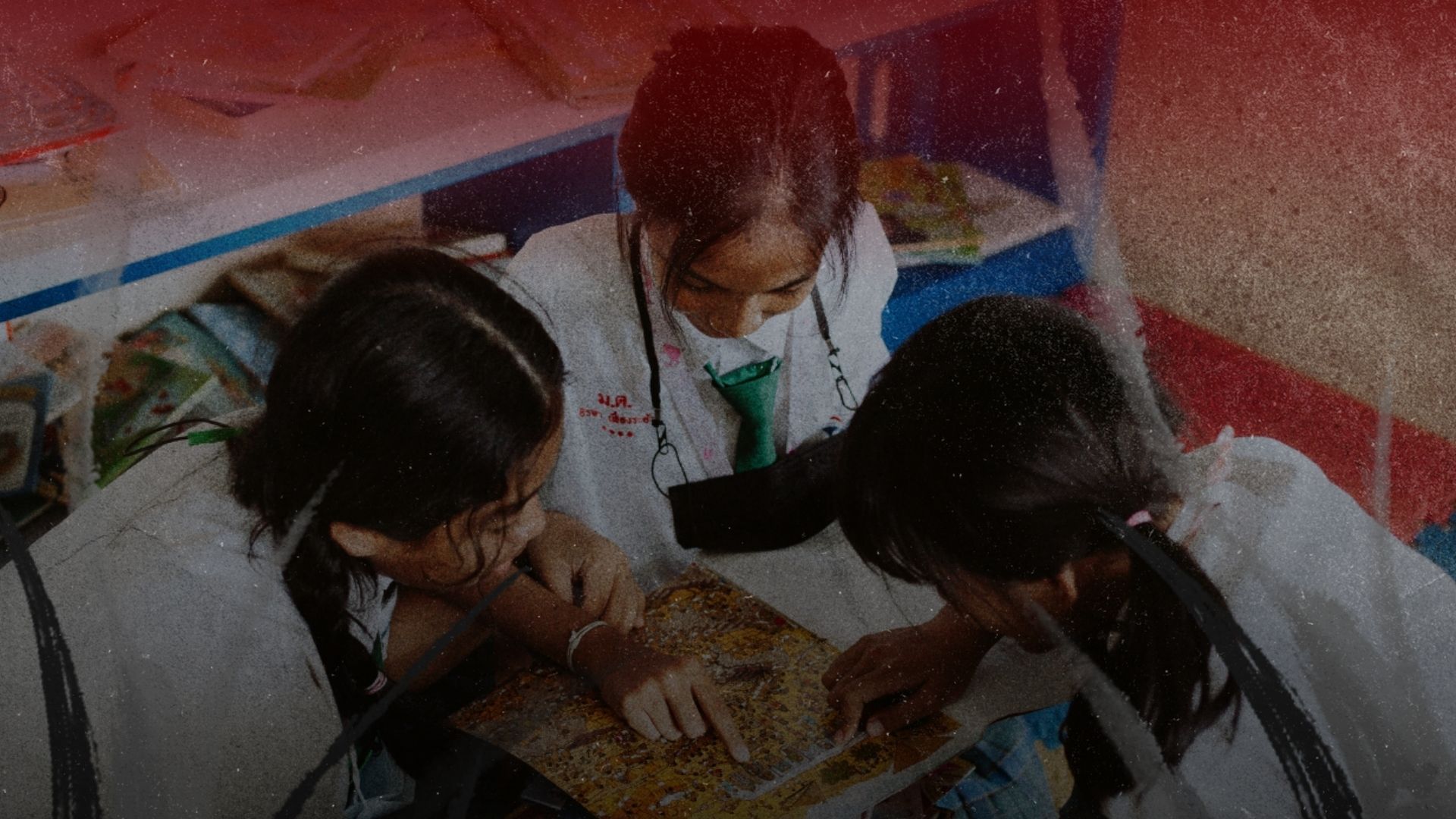
Crises don’t form overnight—it’s often a sign of prolonged systemic neglect and incompetence.
After consecutive incidents in the country involving mentally troubled students, the Department of Education (DepEd) has come up with a band-aid solution that—for them—might combat the surge of adolescent-led campus violence. Mandated by Republic Act No. 12080, or the “Basic Education Mental Health and Well-Being Promotion Act,” they are to hire 10,000 school counselor associates with an allocated budget of ₱2 million within 36 days.
Although DepEd has finally pushed the emergency button to prioritize the mental well-being of the youth, one question remains: Will it be enough to restore peace not only in schools but also in the minds and lives of every Filipino student?
The rot underneath
Despite the passage of Republic Act No. 12080 in 2024, no school counselor associates have been hired to date. This caused a severe shortage, leaving all schools grappling with a staggering counselor-student ratio of one counselor having to attend to 14,000 students—a far cry from the global standard of one to 250.
For the past 2 years, only 4,000 active licensed counselors in the Philippines have been responsible for the well-being of roughly 28 million learners. DepEd still needs to hire over 50,000 more personnel to meet international standards. Western and Central Visayas have also raised concerns regarding documented ‘mental health workers’ who are actually teachers or staff given additional tasks without thorough and professional training.
Beyond these disappointing numbers, the severity of this mental health crisis can also be seen in the day-to-day lives of Filipino students.
Over half of the youth have experienced suicidal thoughts due to stress in households and learning environments, while many have admitted to committing suicide. Recent campus violence cases have also pointed to bullying as the source of the suspects’ intentions, which could have been properly resolved with the right guidance from professionals—sparing the lives of innocent victims.
These incidents lead to a realization that while teenagers are constantly blamed for their sensitivity, the absence of appropriate counseling to address their hidden struggles only puts them at a fork in the road leading to two tragic and gruesome paths in their lives: to either inflict pain on themselves or onto others.
The root, the cause, and the reason
It’s hard to commit to a job when you’re well aware that you’re getting the short end of the stick.
Before the urgent need for mental health workers, DepEd strictly required only those with a Professional Regulation Commission (PRC) license to perform counseling, ensuring that every student has access to professionals with expertise they can trust. However, only those with a master’s degree were allowed to take the licensure examination, sacrificing years of hard work before even starting their career.
These standards were a major cause of the current shortage. With these credentials up their sleeves, Registered Guidance Counselors (RGCs) were seeking far greater opportunities in the private sector that offered more than the DepEd Salary Grade (SG) 11 rate of ₱31,705 per month. Instead of raising this amount to attract more licensed guidance counselors to the institution, the government lowered the qualifications instead.
A new plantilla position named “School Counselor Associate I” was created for non-licensed practitioners after the Civil Service Commission (CSC) approved the mass hiring under Resolution 2600920. This introduced opportunities in the field for fresh graduates who are struggling to secure jobs. However, members of the House Committee still questioned the prolonged delay in this long-overdue hiring, considering that the law was already passed two years prior.
“Why did it take so long? They submitted it to you on November 27, 2025,” questioned House Committee Chairperson and EDCOM 2 Co-Chairperson Rep. Roman Romulo during a panel hearing on June 24. “The public will inevitably think that the only reason you are suddenly moving on this is because the Tacloban tragedy has already happened. But if you had acted on this earlier, then maybe they could have done something.”
Administering prevention as the cure won’t stop the spread of the disease. Multiple desks in schools sit empty today on blood-stained floors, while the rest of the class carries the irreversible trauma throughout their lives. The root of these horrors, the cause of multiple mental distresses amongst the youth, and the reason for this continuous neglect are bigger than what our current constitution can handle—or however much they are willing to solve.
Responsibility given second-handedly
Like the blood, like the tears: the liability trickles down.
The classroom doesn’t just serve as another home for its students, but as another responsibility that teachers are made to handle as “de facto” parents the moment they are hired to handle the classroom. It is already a given fact of life: the school is the child’s second sanctuary alongside their teachers, as their second guardians, and sometimes preferred guidance counselors. It is sometimes a thankless and mostly unpaid, added responsibility that teachers have always just accepted in their normal workdays, but only one of those is in the job description.
While it’s one counselor for every 14,000 students, DepEd Assistant Secretary Jocelyn Andaya projected a ratio of one teacher for every 35 kids at the lower levels and one for every 41 learners at the higher levels for the current academic year. However, there would be one teacher for every 50 to 55 students in urban areas like Metro Manila. With an easier proportional distribution, it would seem like a no-brainer for them to also aid with more personal and emotional aspects in life. But their job, on paper, is to solely be an adult who is trusted with their education—to be a guiding hand, not the sole crutch for their psychological well-being.
It is a noble act of kindness to students, yes, but relying on teachers completely could also have unknowable repercussions because classrooms are not the same as guidance counceling offices. Counseling needs ethical frameworks and professionals whose jobs ensure not only the counseling itself but also provide the needed confidentiality, safety, and integrity for patients. Without these, words and actions from non-practitioners can lead to worse conditions.
According to the APA Dictionary of Psychology, an “iatrogenic effect” is the harm that unintentionally happens, causing any unintended, adverse conditions, diseases, or psychological injuries caused by medical examinations, treatments, or institutional practices. In psychology, rather than the practitioner, treatment, or diagnostic procedure helping the patient, it instead makes their condition worse.
In schools, teachers acting as counselors could risk inducing said “iatrogenic effect” simply because they are not equipped for it. It is criticized that teachers are already expected to lead initiatives like Brigada Eskwela and even call themselves “solicitor general” to patch classroom infrastructures; what more for the mental health of their students?
And while investigations and plans following the Tacloban shooting focus on possible preventions, with how the system was already set up, others argue that it has always failed both the students and teachers in the first place.
“When one teacher is expected to care for 50 to 60 students at a time, meaningful intervention becomes nearly impossible,”Alliance of Concerned Teachers (ACT) Chairperson Ruby Bernardo explained to Philstar.
With understaffed or nonexistent guidance offices or school clinics unable to aid their mental well-being, she points out that learners won’t have any place to seek help with the myriad of struggles they might have in and out of school. And as these problems continue to stack and weigh on their already-heavy backpacked shoulders, some of their “second parents” might aim to shoulder the weight as well.
They signed up to be teachers and left with the jobs of temporary therapists, not because it was asked of them, but because the children have no one else to turn to. Having to take the burden of so many titles in one room, it is not and never has been a question of if teachers have been doing enough, but a long-time question of when and how they would be relieved of the responsibilities that they aren’t paid, equipped, and trained for in the first place.
To realize the call for help
The wounded heart of the issue pours down onto the students: the brunt of the problem on mental health that officials only brought up after guns were brought and lives were taken.
The two identified school shooters, aged 14 and 15, are currently under government custody and located in the Regional Rehabilitation Center for Youth (RRCY) in Tanauan, Leyte, and are undergoing separate rehabilitation and intervention programs.
Meanwhile, psychometricians from the Bureau of Jail Management and Penology (BJMP) in Eastern Visayas gave Psychological First Aid (PFA) to around 1,700 students, teaching and non-teaching staff of San Jose National High School (SJNHS), a three-day intervention giving them an outlet for expressing and processing their emotions and trauma while receiving psychosocial support.
DepEd also rolled out the first ‘active shooter’ drill at Manila Science High School (MSHS) on July 15, Wednesday, as an additional response.
Yet, there are questions about whether these will be handled enough or even properly.
Is it enough to give a three-day PFA for students who have never in their life expected to witness a gruesome act committed in what should have been a safe space? Will fire drills suffice as a warning and preparation? Are the psychological effects of such drills considered while doing so?
When schools experience tragedies such as campus violence or the loss of a student, the response cannot end with police investigations, security measures, or press conferences. The witnesses and survivors carry psychological wounds that linger long after the headlines disappear. Grief, fear, anxiety, and trauma do not disappear when classes resume. Without consistent counseling and professional intervention for weeks or even months after a crisis, these experiences risk becoming lifelong burdens.
This is what critics point out as why the sudden urgency to hire thousands of guidance counselor associates feels long overdue.
The Saya Mental Health team states that around 12.5 million Filipinos live with some sort of mental health condition like depression and anxiety this year, also noting that this is a sourced picture of the gap left by lacking records that are most likely not even close to the real number. This is hand-in-hand with the ratio of less than 2:100,000 mental health workers for the whole country by 2020, and that young Filipinos aged 15 to 24 who have ever attempted suicide more than doubled between 2002 and 2021, from 3.0% to 7.5%, respectively.
It has always been an issue, and only now is it starting to be treated as such when it becomes too in-your-face to look away. But for the students, it’s always been there, even before the calls and pleas for leaders to aid the problem were shunned to the side.
Students do not yearn for impossible solutions to magically erase problems; they yearn for adults who will notice when they are hurting, well-equipped institutions that will protect and aid them with proper care, and understanding systems that value their physical, emotional, and psychological well-being as much as their education.
DepEd’s decision to finally address the shortage of guidance counselors is a necessary first step, but it cannot erase years of neglect, nor can it undo the damage left behind by a system that reacted only after such an irreversible loss. Mental health cannot continue to be treated as a talking point to be switched on right after incidents of tragedy, when it could have long been a priority.
There is grief to be found in the aftermath of a horrible reality, and there’s also grief to be found in what’s lacking: the guidance and support for mental health that should have been there in the first place.