







Now Reading: Tapping into privilege
-
01
Tapping into privilege


What does the way you pay say about you?
For some, it is simply a matter of convenience. For others, a tap of a phone or card has slowly become something more — a quiet display of wealth, sophistication, or status. But beneath the polished image of cashless transactions lies a reality that is less glamorous: not everyone has equal access to digital finance, and not every digital transaction is free from risk.
The Philippines is undeniably becoming more cashless. With Apple Pay launching in the country on August 4, 2026, Filipinos can now use supported cards through their iPhones, Apple Watches, iPads, and Macs. At launch, eligible Visa and Mastercard cards from Chinabank, GoTyme Bank, Metrobank, and UnionBank became supported, with thousands of merchants already accepting the service.
The arrival of another digital payment option is not inherently problematic. In fact, it reflects how quickly financial technology is changing the way Filipinos spend.
According to the Bangko Sentral ng Pilipinas’ 2024 Report on E-Payments Measurement, digital retail payments accounted for 57.4% of total transaction volume in 2024, surpassing the government’s target of 52% to 54%. Digital payments are no longer a niche convenience. They are becoming part of everyday life.
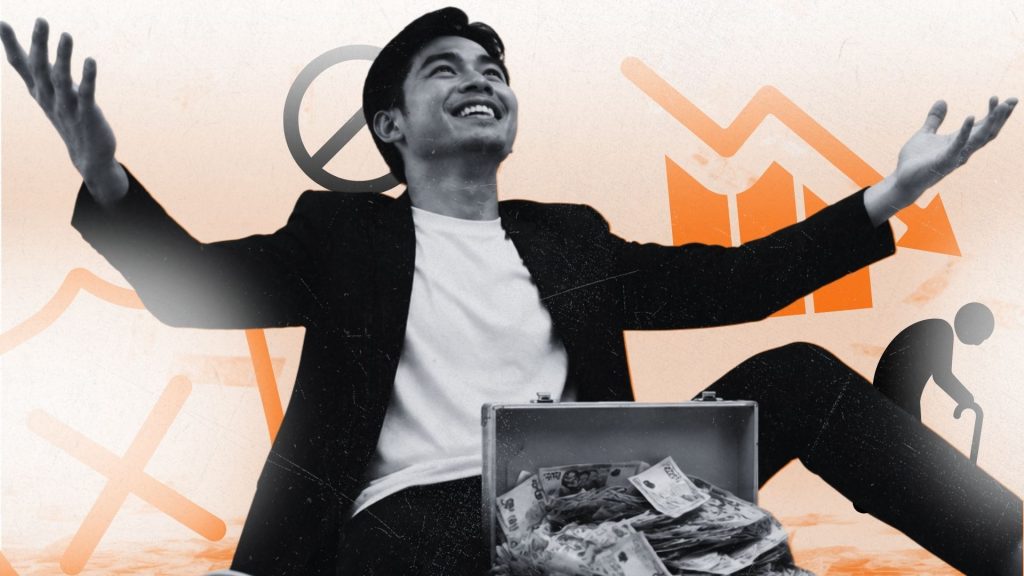
But as cashless payments become increasingly common, another trend is developing alongside them: the idea that going cashless somehow makes a person look more financially capable. A phone placed against a payment terminal. A sleek card pulled from a wallet. A quick tap followed by a receipt. On social media, ordinary purchases can become performances. And when the ability to use certain payment technologies is repeatedly associated with a particular lifestyle, the transaction stops being merely a transaction. It becomes a status symbol.
Furthermore, research on consumer behavior has long examined conspicuous consumption, or the use of visible purchases to communicate status, identity, and social standing. Research published in Nature likewise discusses how consumers use purchases to signal social rank and prestige, with social media providing another space where signals of affluence can be displayed and exchanged.
Additionally, another study on social media influencers and conspicuous consumption found that social media users may consume products associated with current trends to attract attention, improve their social standing, and express their self-image. Influencers can reinforce this behavior by presenting certain products and lifestyles as desirable.
Cashless payments may not be luxury goods themselves, but the culture surrounding them can still turn technology into a marker of status. Cashless does not automatically mean accessible.
The Philippines’ digital transition may look impressive in percentages, but those numbers do not tell the whole story. A Philippine Institute for Development Studies study found that account ownership nearly doubled from 29% in 2019 to 56% in 2021. Yet despite that growth, more than half of the population remained outside the formal financial system.
Digital adoption is accelerating. Financial inclusion, however, is struggling to keep pace. That contradiction should make us cautious about treating cashless payment as the universal standard of financial sophistication.
Apple Pay, for instance, requires a compatible Apple device and a supported card for contactless transactions. Its launch also initially covers only selected banks. While more partners are expected to follow, access to a particular digital payment system still depends on what device, bank, card, and financial services a person has.
Still, not everyone can simply tap. And that does not make those who cannot less modern, less successful, or less financially responsible. The danger of turning cashless technology into a status symbol is that it makes access look like achievement. Having the device is not necessarily a sign of financial wisdom. Having a supported card is not proof of wealth management. Being able to use a particular payment system may simply mean that someone happens to have access to the necessary technology and financial infrastructure.
There is also another issue that a glossy cashless image can easily hide: security.
To be fair, Apple Pay has several safeguards. Apple emphasized that actual card numbers are not stored on the device or Apple’s servers. Instead, a unique device account number is created, encrypted, and securely stored on the device. Transactions require authentication through Face ID, Touch ID, or a passcode, and merchants do not receive the user’s actual card number. These protections are important. But a secure payment feature does not mean the entire digital financial environment is secure. Data from the Bangko Sentral ng Pilipinas reported by Inquirer.net, show that social engineering, account takeovers, and identity theft accounted for 76% of total fraud losses in 2025. Hacking accounted for another 13%, while card-not-present fraud made up 8%. These figures show that the weakest point in a digital transaction is not always the technology itself. Sometimes, it is the person using it.
A payment can be encrypted, but a user can still be deceived by a fraudulent message. An account can have security features, but a person can still be manipulated into surrendering sensitive information. A device can require authentication, but digital financial safety still depends on awareness.
Moreover, the government itself recognizes the challenge. In 2024, President Ferdinand Marcos Jr. signed Republic Act No. 12010, or the Anti-Financial Account Scamming Act, which aims to combat financial account scams and related crimes, including social engineering schemes and the use of money mules. Meanwhile, the BSP has acknowledged that cybersecurity risks remain a major obstacle to the wider adoption of digital payments. As digital finance expands, the central bank has emphasized the need for a payment ecosystem that is not only efficient, but also secure and inclusive.
Because what is the point of building a cashless economy if people are encouraged to enter it without the knowledge or protection needed to navigate it safely?
Nonetheless, supporters of digital payments have every reason to celebrate their benefits. Cashless transactions can be faster and more convenient. Apple Pay, for example, allows users to authenticate and pay without repeatedly entering card information, while its security architecture offers protections against exposing actual card details to merchants.
But convenience should not become a competition. The goal of financial technology should not be to create another way for people to prove that they can afford something. It should be to make financial services easier and safer for more people.
That means expanding access to bank accounts and digital financial services. It means improving consumer education. It means strengthening cybersecurity and fraud prevention. It means ensuring that people without expensive devices or supported cards are not treated as if they are somehow behind.
Most importantly, it means remembering that a payment method says very little about a person’s actual financial health. Someone can tap a phone and still make irresponsible financial decisions. Someone can pay with cash and manage every peso carefully. One person may have the latest device but struggle financially, while another may deliberately choose cash because it is more practical for them.
Technology can change how we pay. It should never determine how we measure people. Cashless payments should be celebrated for what they can accomplish — not for what they appear to say about the person using them. Otherwise, we risk turning a tool designed for convenience into another dividing line between those who have access and those who do not. A tap should mean a payment was made. Not that someone is richer, smarter, or more successful than the person standing beside them.
Because in a country still working toward financial inclusion, the future should not be about who gets to tap first. It should be about making sure everyone can tap safely, affordably, and equally.
Until then, perhaps we should stop tapping into privilege and start tapping into progress.