









Now Reading: How to get away with plunder
-
01
How to get away with plunder

In How to Get Away with Murder, Annalise Keating always seems to find a way out, exploiting every loophole when accountability closes in. In our own political drama, the plot is no less familiar: the moment a warrant is served, the untouchable suddenly becomes a fragile patient – sick enough to evade the law, but somehow never too sick to evade accountability.
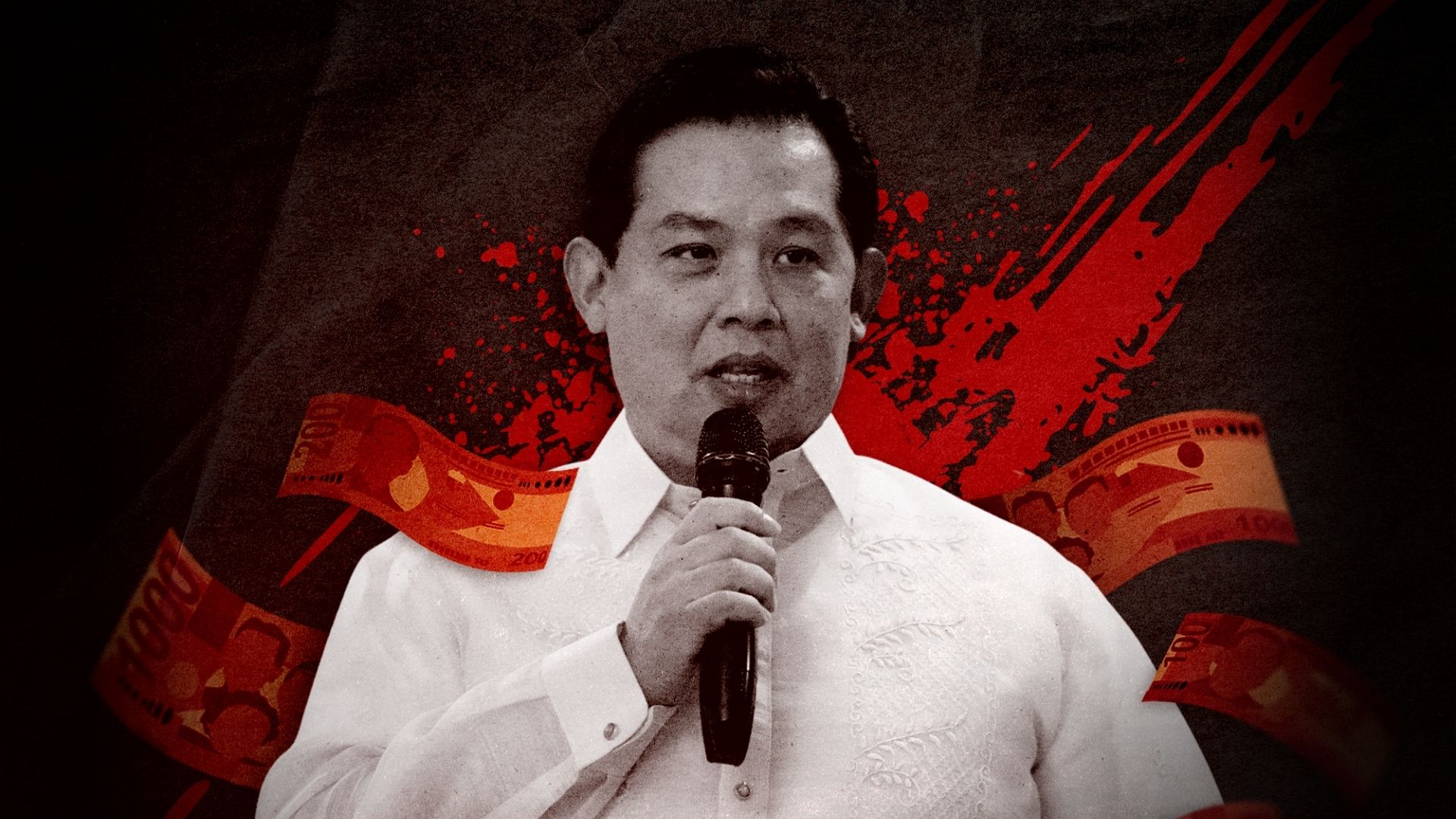
Just forty-eight hours after Sara Duterte found herself under arrest, former House Speaker Martin Romualdez suddenly suffered a cardiovascular condition. For years, as billions vanished into the muddy waters of unbuilt infrastructure and suitcases of cash allegedly moved in secret, the power brokers operated with unyielding health. But show them a non-bailable P7.4-billion plunder charge, and suddenly Cardinal Santos Medical Center becomes the country’s most comfortable holding cell.
The law may technically be operating. But does it operate with the same weight? Sara Duterte’s and Romualdez’s arrests occurring within days of each other create a useful narrative: the law reached both political enemies and allies. But the real test is whether the same institutional machinery follows the entire chain of beneficiaries. Duterte’s arrest is a separate case; it should not be presented as evidence of the same corruption investigation.
Romualdez is not an ordinary political figure. He is Marcos’ maternal first cousin and one of the administration’s most powerful allies. So his prosecution creates an illusion that is politically convenient to demonstrate “even our own are accountable.” The danger is that accountability becomes reduced to visibility.
If Marcos were protecting his allies, why was his own cousin arrested?
This is no surprise, as President Marcos Jr. does not necessarily need Romualdez to remain untouched for the political system to remain intact. In fact, allowing a prominent figure from his own political camp to face prosecution can be useful. The Palace has already adopted this language essentially: it says it respects the Ombudsman’s filing and that evidence and justice must prevail, while Marcos has publicly positioned himself as unwilling to protect even those close to him.
A government can point to an arrest and say ‘justice is working.’ But an arrest is not the same thing as conviction, restitution, or dismantling the networks that made corruption possible. The state can prosecute a politician without necessarily prosecuting the same system that made the politician powerful.
The administration can isolate corruption into individual offenders while leaving the budgetary, congressional, contracting, and bureaucratic networks intact. This is particularly powerful because nearly P545 billion went into almost 9,855 flood-control projects from July 2022 to May 2025, while nearly P100 billion reportedly went to just 15 contractors.
The P7.4-billion plunder case filed by the Office of the Ombudsman alleges a massive kickback scheme tied to flood control infrastructure funded under the General Appropriations Acts from 2022 to 2025. The complaint describes alleged diversions of public funds, the use of intermediary accounts and foreign-exchange transactions, and the acquisition of high-value properties.
At the same time, the FY 2027 National Expenditure Program (NEP) submitted by the Department of Budget and Management (DBM) is again set to receive massive funding, including ₱107.4 billion for flood-control projects. If the administration is serious about preventing another flood-control scandal, the question is not simply why the money is still being spent, but what has fundamentally changed about how that money is allocated, monitored, and protected from political patronage.
These are not abstract figures. They are flood-control projects in a country where flooding is not an inconvenience but a recurring threat to homes and livelihoods. While ordinary Filipinos wade through floodwater every monsoon season, the money meant to protect them is alleged to have been converted into private wealth.
That is why the controversy cannot end with the spectacle of one powerful man being arrested. Who else benefitted? Who approved the projects? Who facilitated the transactions? And, most importantly, will accountability follow the money – or stop at the most politically convenient names?
This isn’t a new script; it’s a rerun we’ve endured for decades. Former President Gloria Macapagal-Arroyo pioneered the modern medical drama, decked in a neck brace and custom halo-vest while facing charges, effectively turning Veterans Memorial Medical Center into a comfortable political command center for years. Juan Ponce Enrile was granted bail on humanitarian grounds due to advanced age and frail health while under hospital arrest for his multi-million peso pork barrel plunder charge, only to magically recover his vigor and return to active political office immediately after release.
Hospital arrest isn’t a medical necessity; it is a delay tactic designed to sap public rage and buy time for political tides to shift. The Interior Secretary insists that a hospital bed is not a permanent pass and that a cell at the New Quezon City Jail in Payatas is waiting the moment doctors run out of vitals to monitor. Panic attacks and elevated blood pressure are human reactions to facing consequences, but systematically siphoning billions from a nation’s flood control defenses while citizens drown is a choice.
Perhaps this is the real political function of the spectacle. The government does not need to prevent powerful figures from being arrested. Sometimes it is more useful to show the public that even the powerful can be arrested.
Maybe this is exactly what the rule of law should look like. The Ombudsman files cases, releases warrants, and even sees the President’s cousin arrested. But the same scheme also blinds the system to genuine accountability. Justice isn’t automatically served once a criminal has been jailed; it is when the system follows the evidence wherever it leads and confronts the major roots of corruption.
Those roots extend beyond one politician. They lie in a political culture where public funds can strengthen electoral machinery, infrastructure projects can reinforce political alliances, and dynastic families can maintain influence through access to state resources. If the Marcos administration is serious about justice and accountability, then it must examine not only the individuals accused of benefiting from corruption but also the structures that determine who controls appropriations, who receives contracts, who implements projects, and who remains politically protected. A government cannot credibly promise to end corruption while leaving the mechanisms of patronage fundamentally unchanged.
Justice delayed in a hospital room isn’t just denied – it is democracy robbed. If you can command billions from a legislative throne, you can sit in a jail cell like any other criminal. A hospital bed may delay detention. A court may determine guilt. But neither should become an emergency exit from accountability.
You don’t get away with plunder by escaping the law. You get away with it when the law punishes the offender but leaves the system that enabled the plunder untouched. If Romualdez’s prosecution ends with Romualdez, then the state may have punished an individual without confronting the network that allegedly made the scheme possible. Genuine accountability demands more: following the money, exposing the beneficiaries, reforming the mechanisms that enabled the alleged abuse, and breaking the patronage relationships that allow the same machinery to reproduce itself under different names.
That is ultimately what the Marcos administration must prove. Not simply that it can arrest the powerful, but that it is willing to dismantle the structures that make political power, public money, and private interests so easily converge. Otherwise, the government may succeed in proving that even the powerful can be arrested while failing to prove that the system itself has changed.