








Now Reading: Forgotten Island turns Filipino folklore and everyday life into a story of home
-
01
Forgotten Island turns Filipino folklore and everyday life into a story of home
Forgotten Island turns Filipino folklore and everyday life into a story of home

Shasmecka Reambonanza
Once narrated by our grandparents during bed time stories and passed down through generations, Filipino folklore finds new life in DreamWorks’ new movie, Forgotten Island, where mythical creatures inhabit a world shaped by childhood memories, family stories, and the fear of growing apart from the people we love.
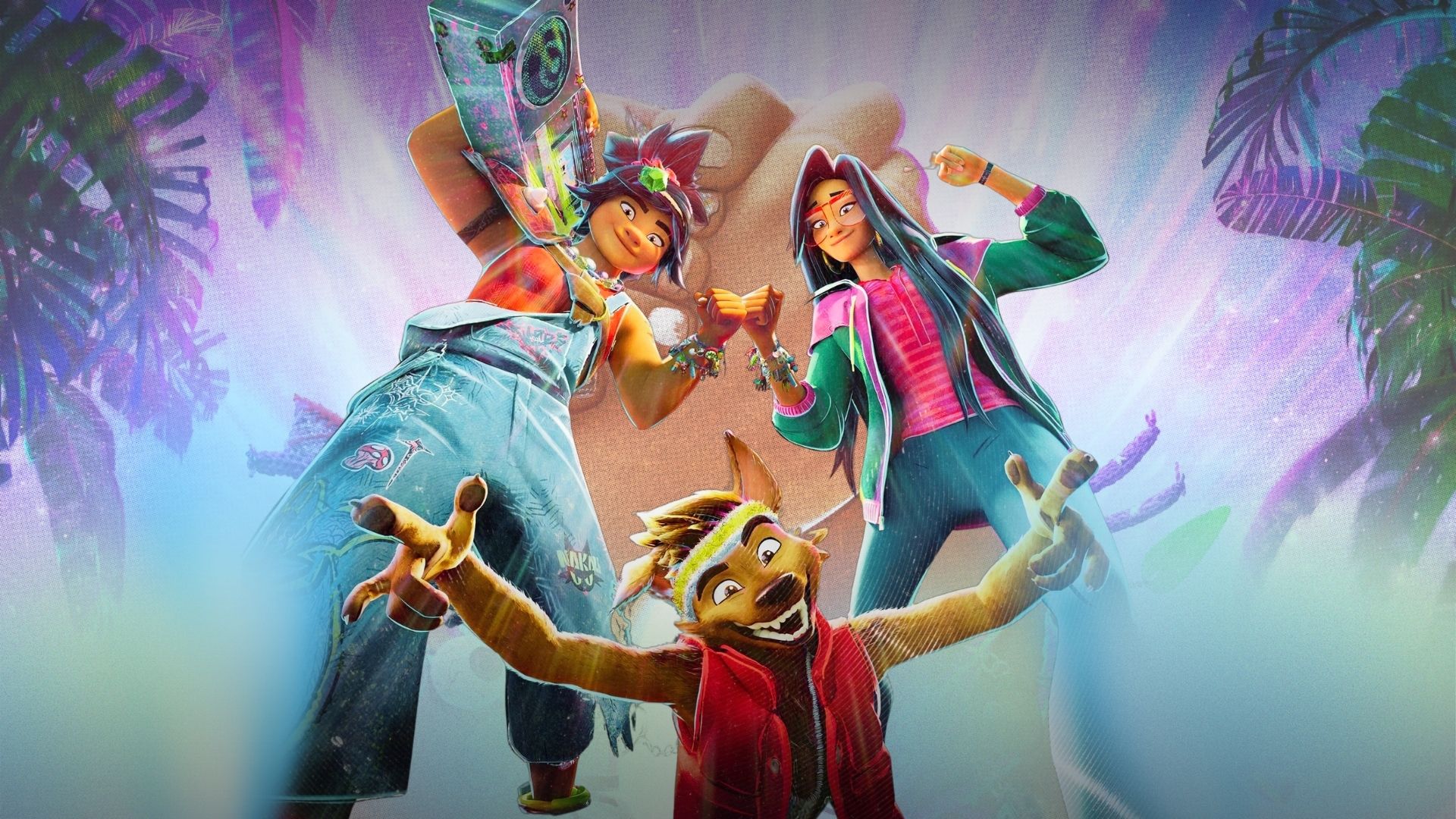
For Jo and Raissa, the main protagonists of the film are childhood best friends on the brink of being separated by college, the answer to the wonders of their hearts is an island filled with creatures they once only knew through stories.
Written and directed by Januel Mercado and Joel Crawford, the film features a mysterious portal transporting the two friends to Nakali, a fantastical island inhabited by creatures rooted in Filipino mythology. There, the familiar becomes extraordinary: folklore becomes flesh, childhood memories become a matter of survival, and the things that once made home feel like home suddenly became the only things keeping two friends connected.
However, beneath its fantastical creatures, chaotic humor, and colorful animation, Forgotten Island is doing something much more personal.
It is putting Filipino culture on the table—not as just a decoration, but as the heart of the story.
Beyond mythological creatures
Forgotten Island appears to be another adventure about a magical world. There are monsters to escape, mysteries to uncover, and a seemingly impossible journey home. Yet Nakali feels different because its fantasy does not exist in isolation from Filipino life.
The island draws from figures deeply embedded in Philippine folklore, including the Manananggal, Batibat, Tiyanak, Kataw, and other mythological beings. Raww, the hapless weredog voiced by Dave Franco, is inspired by the Askal, or native Filipino dog, while other creatures carry characteristics that make them feel distinctly familiar to Filipino audiences.
They are not simply monsters imported into a fantasy setting but they come from stories that Filipino families have passed from one generation to another.
The result is a world where mythology does not feel distant nor ancient. It feels like something that could have been told during a family gathering, shared by our grandmother, or remembered from childhood.
That is particularly evident through Lola Fatima, Jo’s grandmother, whose stories become part of both girls’ childhoods. Her presence shows how the older generation becomes the keeper of stories wherein culture and identity can be passed down.
Before Jo and Raissa encounter the creatures of Nakali, they first came across them through the tales told by Lola Fatima. And perhaps, Jo and Raissa already have the map inside their hearts on the adventure that awaits them on Forgotten Island.
When culture looks like home
It is in the practice of respect through the gesture of “mano” or “bless,” the karaoke microphone passed around at gatherings, the jeepneys weaving through familiar streets, and the food piled on a family table where Forgotten Island begins to feel unmistakably Filipino.
Filipino expressions can also be heard exchanged naturally between characters.On the table, the echo from the karaoke can be heard, the crunch of lechon can be heeded, horns from jeepneys and tricycles reverberate along the street.
Even the music from the movie’s soundtrack becomes part of that cultural landscape.The inclusion of recognizable songs and Filipino musical references, including “On the Wings of Love” and “Nothing’s Gonna Stop Us Now” places the fantastical adventure alongside the sounds and memories of everyday Filipino life.
These details matter because culture is rarely experienced as a list of traditions. It is experienced through repetition of moments shaping the threads of our identity. Forgotten Island understands that culture is often most powerful when it is ordinary.
Instead of introducing Filipino identity as something that needs to be explained to an international audience, the film allows it to simply exist.
A Filipino childhood on a global stage
Forgotten Island’s Filipino identity is not confined to visual references. It is embedded into the characters’ relationships, fears, humor, memories, and conflicts. Jo and Raissa are not simply Filipino because of the culture surrounding them. They are Filipino because their understanding of friendship, family, adulthood, and expectations is shaped by that environment.
Raissa, in particular, carries the pressure of growing up under expectations. Her family places heavy importance on her life achievements and her future, while Jo represents a more spontaneous kind of childhood freedom. Their conflict of character and personalities therefore becomes more than a disagreement between two friends.
It becomes a familiar transition for young Filipinos: the moment when childhood begins giving way to adulthood, and personal dreams begin colliding with family expectations. In the movie, the two main characters begin to wave goodbye to the times when they were younger and they must then face the reality of growing up. Graduation is supposed to be a beginning but for Jo, it feels like an ending.
Raissa, on the other hand, is leaving for the United States for college, and suddenly the future does not look like the adventures they once imagined together. That fear is what sends them to Nakali. And ironically, the island forces them to confront the very thing they are afraid of losing.
Family as part of the adventure
The film’s treatment of family also gives its coming-of-age story a distinctly Filipino texture. For many Filipino children, adulthood is not simply about discovering what they want. It is also about discovering what their families want for them.
Grades are celebrated. Achievements are remembered. College choices can become family conversations. Success can feel less like an individual accomplishment and more like something that reflects the entire household.
Raissa’s experience perfectly captures this tension. Her family sees opportunity in her leaving for the United States. Jo sees distance between them. Neither perspective exists entirely outside love. That is what makes their conflict more complicated.
The film does not need to portray family expectations as inherently cruel to show how overwhelming they can become. Sometimes pressure comes from people who genuinely want what they believe is best. For Raissa, growing up means learning how to carry both her family’s expectations and her own desires. For Jo, growing up means learning that loving someone does not necessarily mean being able to keep them beside you.
And for both of them, growing up means confronting the possibility that the friendships formed in childhood may change.
What happens when memories become a price?
The greatest threat in Nakali is forgetting. Jo and Raissa eventually discover that their memories of each other are the price of returning home. To escape the island, they may have to surrender the memories that made their friendship what it is.
When the possibility of forgetting becomes the price of going home, the island’s magic begins to feel less important than everything Jo and Raissa might leave behind.
Their years together live in friendship bracelets, old photographs, shared jokes, mixtapes, and the countless ordinary afternoons that once seemed too small to matter. These fragments of childhood follow them into Nakali, turning their journey into a struggle to hold on to their friendship even as adulthood begins pulling them in different directions. In the end, what they risk losing is not simply their memories, but the pieces of themselves that were shaped by having each other.
For Jo and Raissa, their memories contain an entire childhood— from elementary school detention to mixtapes, rockets, energy drinks, snacks, adventures, and afternoons spent listening to Lola Fatima’s stories.
Their friendship is not defined by one grand moment but it is built from hundreds of small ones. That makes the possibility of forgetting each other tragic thinking about because losing a person does not always mean watching them leave. Sometimes, it means remaining beside them and no longer remembering why they mattered.
Perhaps the island is not really forgotten
There is another Filipino legend that makes the idea of Nakali particularly intriguing: Biringan, the mythical city said to exist somewhere in the province of Samar.
Stories of Biringan describe an extraordinary hidden place that exists beyond the ordinary world—invisible to humans, technologically advanced, and inhabited by mysterious beings. The Waray word ‘biringan” has also been associated with the idea of a place where the lost may be found.
Nakali may not be directly based on Biringan, but the two share a familiar space in the Filipino imagination: places that seem to exist just beyond the reach of ordinary eyes. Like Biringan, whose stories describe a mysterious city hidden somewhere in Samar, Nakali emerges as a world accessible only through an extraordinary encounter, inhabited by beings that belong somewhere between folklore and reality.
Both survive not through maps or physical proof, but through the stories people continue to tell. In Forgotten Island, that idea carries an added weight—because an island can disappear from sight without disappearing from memory, just as the stories passed down by grandparents remain alive each time someone chooses to remember them.
A journey through the memories that shape who we become
None of these moments seem extraordinary on their own, they create the world Jo and Raissa are fighting to remember—a childhood made not from grand events, but from the ordinary pieces of home that become precious only when they risk being lost.
That’s why the most important thing Forgotten Island brings from the Philippines to the global stage is that it does not present Filipino culture as something exotic that audiences must simply observe. It presents culture as something people live with.
As Jo and Raissa race to escape Nakali before their memories disappear, their journey becomes a reminder that growing up does not necessarily mean leaving everything behind. Sometimes, it means learning what is worth carrying with you.
Because when the world becomes bigger, friendships change, families move, and childhood becomes something that can only be remembered, the things we once considered ordinary may become the very things we miss the most.
That is why the island should not be forgotten.
Because somewhere between its Manananggals, karaoke songs, family stories, Filipino humor, and two friends trying desperately to remember one another, Forgotten Island asks a simple question: What parts of home do we carry when the time comes that we finally have to leave it behind?