





Now Reading: 54 Years, have we learned?
-
01
54 Years, have we learned?

Fifty-four years should have been enough time for a nation to learn from its past. Yet more than five decades later, Filipinos are still fighting over the truth of Martial Law, still questioning the return of the Marcos name to Malacañang, and still marching against the misuse of public power. As the country approached another September 21, the NCRPO has prepared 15,746 personnel across Metro Manila for expected commemorative rallies and assemblies. A massive police deployment for an anniversary rooted in events that transpired 54 years ago says more than the number of officers involved. Thousands can be mobilized to control protesters, yet when Filipinos are drowning in floods and demanding accountability from corrupt officials, the same urgency is nowhere to be seen. Instead of standing with the people they are sworn to protect, the police too often become instruments of those in power, suppressing dissent while ordinary Filipinos are left to fend for themselves.
What makes that reality troubling is how much the country has already gone through to leave that chapter behind supposedly. Martial Law was marked by widespread human rights violations, including arbitrary arrests and detention, torture, enforced disappearances, and killings, with Amnesty International documenting tens of thousands of victims. Yet 54 years later, Filipinos still have to defend why those abuses deserve to be remembered. History should have made us more difficult to deceive, not more willing to forget. When suffering becomes distant, it becomes easier to turn dictatorship into nostalgia and victims into footnotes. That is why remembering Martial Law is not an obsession with the past. It is an exercise of judgment for the present.
Unfortunately, our political history shows how fragile that judgment can become. Marcos Sr. was buried at the Libingan ng mga Bayani in 2016 after the Supreme Court allowed the interment. Six years later, his son Ferdinand Marcos Jr. won the presidency. These events do not justify claiming that every person who voted for Marcos Jr. supported Martial Law. They do, however, expose an uncomfortable contradiction: a country that once removed a dictator eventually returned his family to the presidential palace. EDSA successfully removed Marcos Sr. from power, but it could not guarantee that future generations would understand why he had to be removed. Democracy was restored in 1986; democratic vigilance, however, has to be renewed by every generation
More than three decades later, however, martial law once again became a reality in the Philippines. On May 23, 2017, President Rodrigo Duterte declared martial law across Mindanao following clashes between government forces and militants from the Maute group and Abu Sayyaf in Marawi City. The declaration came amid a serious armed conflict, and the government maintained that extraordinary measures were necessary to address the threat. However, its implementation also raised human rights concerns.
Amnesty International documented allegations of unlawful killings, torture, arbitrary detention, and other abuses during the Marawi conflict, while the fighting displaced hundreds of thousands of residents. This does not make Duterte’s martial law identical to Marcos Sr.’s regime, nor does the existence of armed conflict erase the need for constitutional safeguards. Instead, it demonstrates why the history of martial law should remain relevant; whenever extraordinary powers are granted to the state, citizens must remain attentive to how those powers are exercised and whose rights may be affected.
Some will argue that Filipinos should simply move on. After 54 years, they say, there are newer problems that deserve attention, and younger generations should not be burdened by a conflict they never personally experienced. But moving forward does not require abandoning the past. A country that forgets why power must be questioned only makes it easier for power to go unquestioned again. If the lesson of Martial Law is that unchecked authority can devastate ordinary people, then remembering that lesson becomes even more important whenever public officials are accused of abusing their authority. The answer to historical trauma is not amnesia. It is institutional memory, accountability, and citizens who know when to demand answers.
That demand is visible today. As the country approaches the first anniversary of the Trillion Peso March, youth leaders and civic and religious groups are again calling for accountability over alleged irregularities in flood-control projects. No, allegations surrounding flood-control projects are not equivalent to the systematic abuses committed during Martial Law. But dismissing the connection entirely misses the larger lesson. Public power exists on borrowed trust, and every peso entrusted to the government carries an obligation to the people. When Filipinos have to march because they want answers about enormous amounts of public money, the problem is bigger than one project or one controversy. It reflects how easily accountability can become reactive, arriving only after citizens become angry enough to demand it.
That is where “Never Again” must become more than a slogan. It cannot mean remembering Marcos Sr. only when September comes while ignoring the same principles throughout the rest of the year. It should mean questioning politicians regardless of surname, checking claims before sharing them, defending journalists who investigate those in power, and refusing to excuse corruption because the accused belongs to a preferred political camp. Schools should also stop treating Martial Law as a date to memorize for an examination. Students should examine survivor testimonies, primary documents, court decisions, and historical evidence, then learn how to distinguish documented facts from political narratives. If 54 years have taught us anything, it should be that historical literacy is a form of democratic defense.
The government must answer for the present, too. Agencies handling major infrastructure projects should publish accessible records showing the project location, approved budget, contractor, implementation timeline, and completion status, allowing citizens to check whether what was promised was actually built. Allegations involving public funds should be investigated with evidence and transparently reported, not buried beneath political noise. Citizens, meanwhile, should demand accountability before scandals become protests. Do not wait for another trillion-peso controversy to ask where the money went. Follow it while it is still being spent. That is how remembrance becomes action, and how “Never Again” becomes something more meaningful than a yearly post.
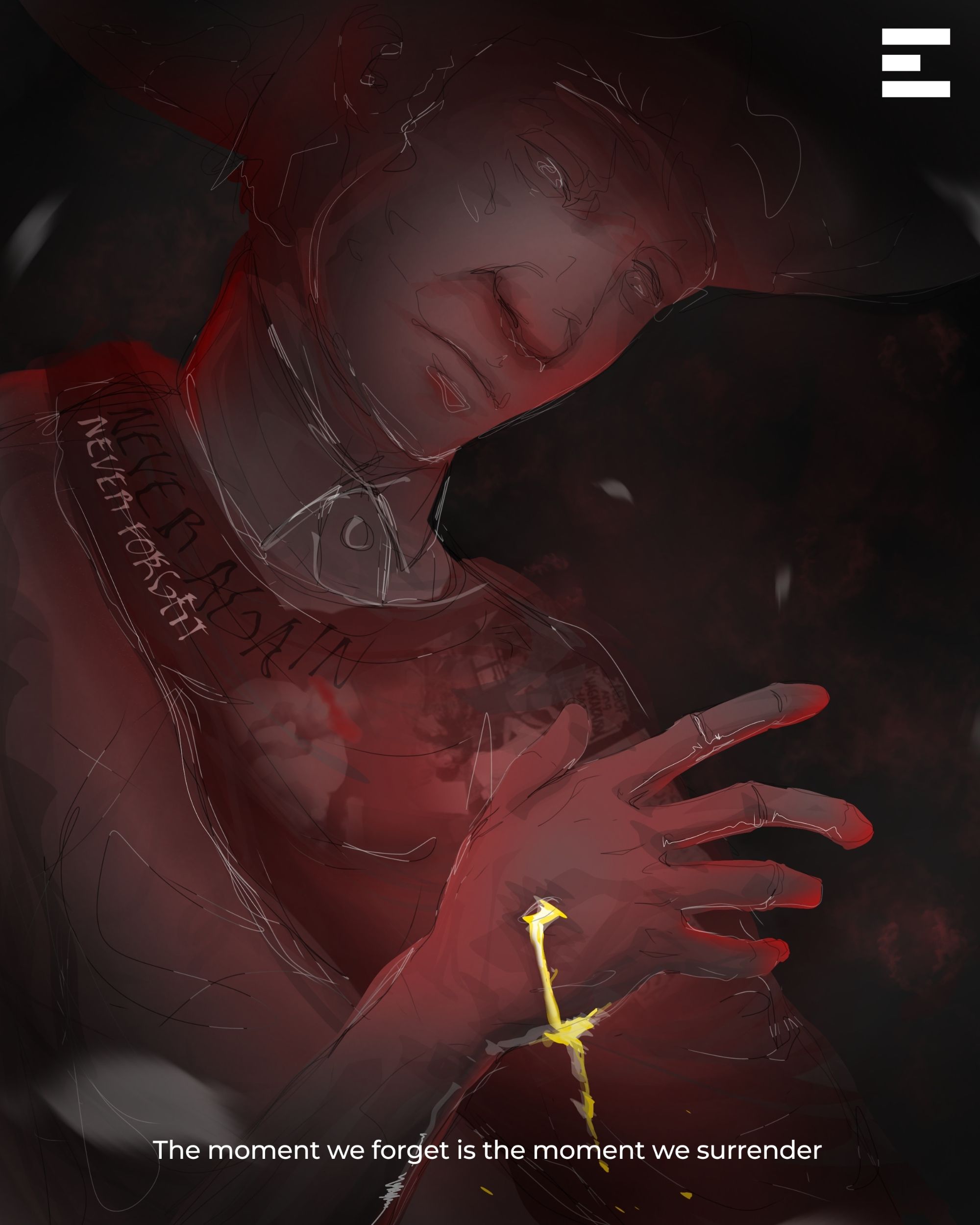
Fifty-four years later, “Never Again” or “Never Forget” cannot remain a slogan repeated every September 21. This year’s protests gave that promise a sharper meaning by demanding truth, accountability, and an end to abuses of power. Remembering Martial Law means refusing to let history be distorted, dissent be silenced, and progressive voices be suppressed. Hands off those who speak, organize, and fight for the people. Protect the right to protest, demand transparency from public officials, call out abuses instead of normalizing them, and hold leaders accountable through legal and democratic means. Most importantly, use the ballot wisely by examining candidates’ records, platforms, and integrity rather than their names or political families. Martial Law is remembered once a year, but its lessons demand vigilance everyday.