










Now Reading: When “All” no longer means all
-
01
When “All” no longer means all


From sixteen to fourteen?
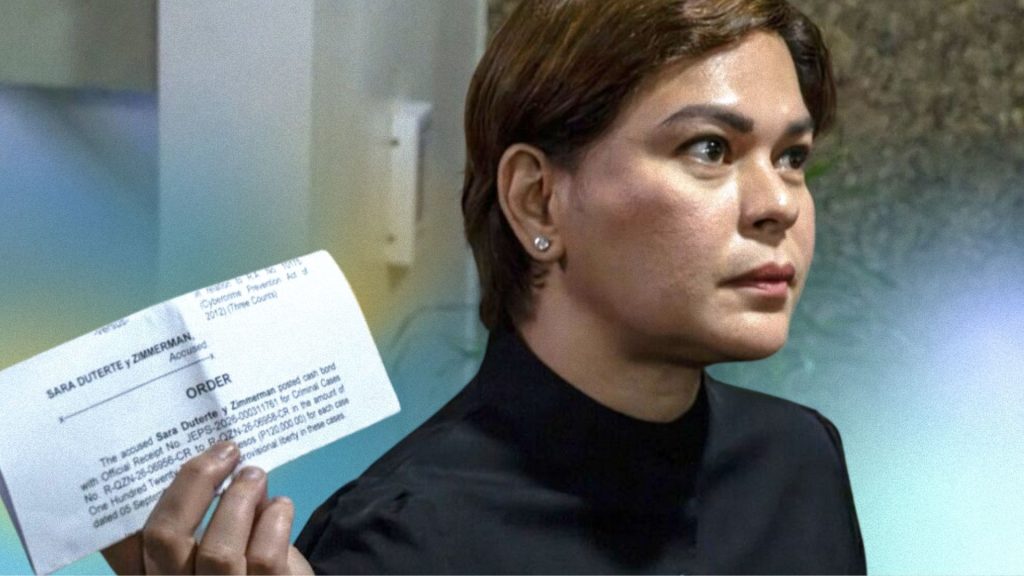
What appears to be a simple matter of arithmetic has become a constitutional question in Vice President Sara Duterte’s impeachment trial.
The Senate impeachment court has overturned its earlier interpretation requiring 16 votes for conviction and adopted a formula counting only senators who are “legally and factually capable” of participating. With 20 currently participating senator-judges, that would mean 14 votes are needed for a two-thirds conviction.
But the real issue is not whether 14 is smaller than 16. It is whether the Senate is interpreting the Constitution—or effectively bending its rule to fit the circumstances of one trial.
Article XI, Section 3(6) of the 1987 Constitution states that an impeached official cannot be convicted without the concurrence of “two-thirds of all the Members of the Senate.” With 24 senators, the original interpretation meant 16 votes. The new ruling instead asks whether senators who cannot participate should remain part of the denominator.
The Senate maintains that it did not lower the constitutional requirement. Two-thirds remains two-thirds; what changed is who is counted. The Senate’s new rule excludes senators who are detained, suspended, legally restrained, physically or medically incapacitated, or any similarly situated including Senators Jinggoy Estrada and Rodante Marcoleta. But determining who falls under those categories is itself a consequential decision.
The opposing argument, however, is just as fundamental: the Constitution specifically says “all the Members of the Senate,” not “all participating members.” The defense argues that absence or non-participation does not create a vacancy and therefore should not automatically remove a senator from the denominator.
Vice President Duterte’s defense team also said that bringing the threshold issue before the Supreme Court remains a “real possibility.” Counsel Michael Poa said the team would first consult Duterte before deciding whether to pursue the legal remedy, while also considering whether to seek a temporary restraining order.
And here lies a bigger constitutional dilemma. The question facing the Senate is ultimately bigger than Sara Duterte: When the Constitution sets a rule, who gets to determine who counts—and how far can interpretation go before it becomes alteration?
A democracy cannot rely on elections alone. It also needs institutions that follow rules stronger than whoever holds power. The credibility of impeachment therefore depends not only on the final verdict, but on whether the process follows clear and consistent principles.When constitutional rules can be recalculated in the middle of a political dispute, the issue is no longer just who will be held accountable. It is whether the rules meant to hold those in power accountable can remain protected from political convenience.
Is the Constitution being interpreted according to a principle that would apply regardless of the person on trial, or is its interpretation being adjusted to address the circumstances of this particular case?
That is the line the Senate must be careful not to cross.
Changing how the rules are applied in the middle of a proceeding can weaken public trust in the institutions meant to keep power accountable. Constitutional rules should not become more flexible simply because the stakes are politically high. If a constitutional provision can be reinterpreted during an ongoing impeachment trial whenever the composition of the voting body changes, then the rules governing accountability risk becoming part of the trial itself.
Amidst all these, one thing remains certain: the people determining the denominator are the same senator-judges who will eventually determine Duterte’s fate. That makes this more than a question of 14 versus 16.
The number alone does not guarantee Duterte’s conviction. Even with a 14-vote threshold, 14 senators must still actually vote to convict. A lower threshold changes how many votes are mathematically required; it does not dictate how the senator-judges will vote.
The disagreement is therefore not merely political arithmetic. It is a question of constitutional interpretation. The Senate must establish whether its interpretation is genuinely grounded in the Constitution and whether the same principle can withstand scrutiny beyond the immediate circumstances of this trial.
And beyond the courtroom, there is a political cost.
This impeachment is not an ordinary Senate vote. Its outcome can determine whether the current Vice President remains eligible to hold public office and potentially pursue the presidency in 2028. That makes the rules governing her trial especially consequential—not only for Duterte, but for every political actor who will participate in the country’s future contests for power.
An impeachment court must therefore protect more than the outcome of one trial. It must protect the credibility of the process itself.
Perhaps, when “all” no longer means all, the Constitution does not merely sets the regulation—it becomes another rule to be reinterpreted when power demands it.