





Now Reading: The Church once denied Filipino priests the right to lead. Now, a Filipino leads its cardinals.
-
01
The Church once denied Filipino priests the right to lead. Now, a Filipino leads its cardinals.
The Church once denied Filipino priests the right to lead. Now, a Filipino leads its cardinals.

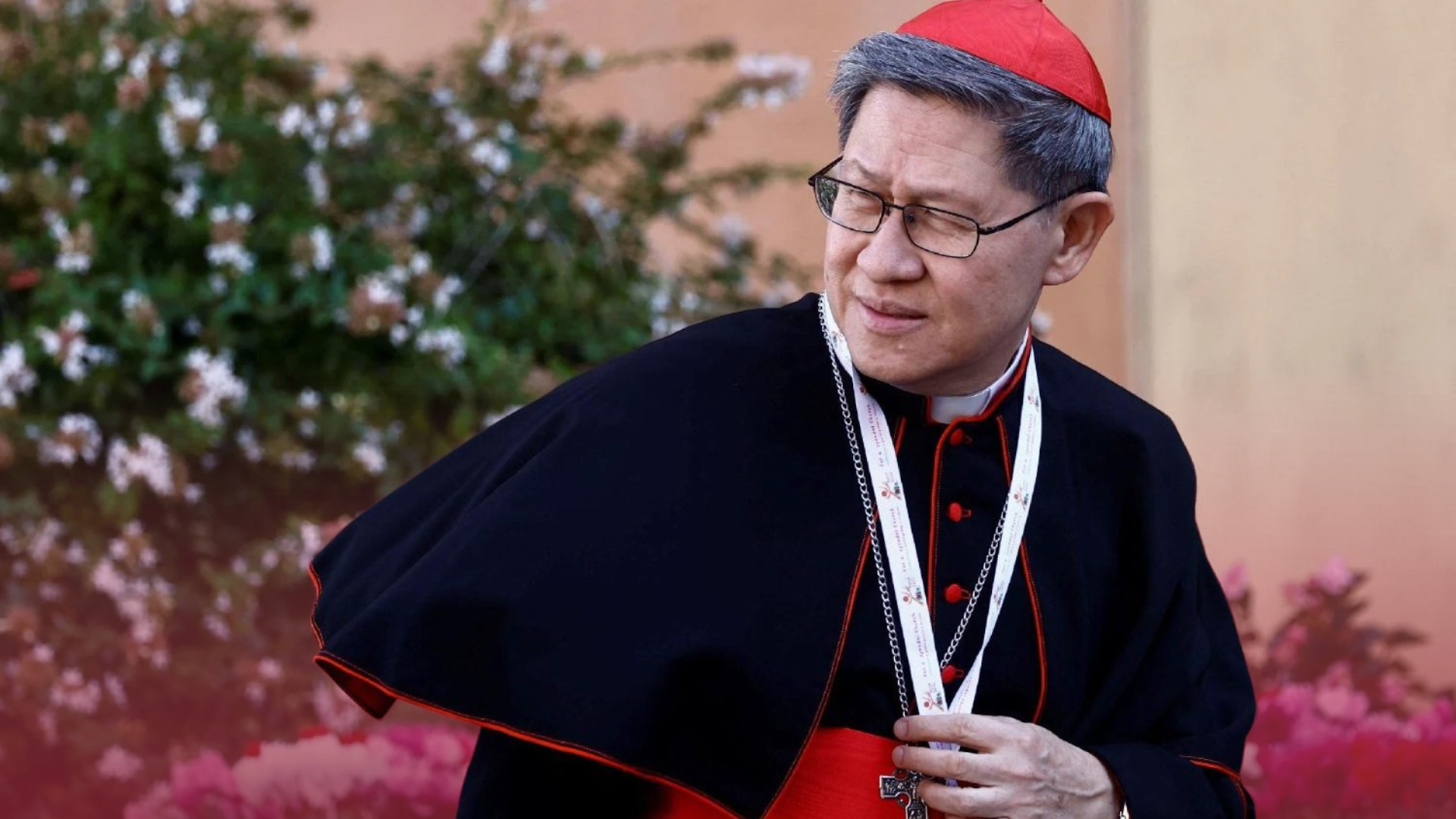
Centuries ago, Spanish friars resisted efforts to give Filipino priests greater authority within the Catholic Church. For much of the colonial period, Filipino clergy struggled to administer parishes in their own country, while influential ecclesiastical positions remained largely in foreign hands. The Philippines did not have its first Filipino bishop until 1906, nor its first Filipino cardinal until 1960. Now, 120 years after that first bishop was consecrated, Cardinal Luis Antonio Tagle has become the first Asian Dean of the College of Cardinals, one of the highest offices in the Catholic Church.
On October 9, 2026, Pope Leo XIV approved Tagle’s election as dean, succeeding Italian Cardinal Giovanni Battista Re. The 69-year-old former Archbishop of Manila will preside over the College of Cardinals, whose members advise the pope and whose eligible members elect his successor. Although the dean does not exercise authority over other cardinals, the position carries considerable institutional significance. Its occupant is regarded as primus inter pares, or first among equals.
The appointment marks a remarkable contrast with the Philippine Church’s colonial past, when Filipino priests faced institutional discrimination even as Catholicism became deeply established throughout the archipelago.
Under Spanish rule, religious orders such as the Augustinians, Dominicans, Franciscans, and Recollects administered many Philippine parishes. These positions carried considerable influence beyond religious affairs, as parish priests played important roles in education, community administration, and relations with colonial authorities. Filipino secular priests, who were ordained to serve under diocesan bishops rather than religious orders, frequently faced restrictions in securing parish assignments. The distinction reflected a colonial hierarchy in which Spanish clergy enjoyed advantages unavailable to many native priests.
This inequality helped give rise to the secularization movement, which sought to transfer parish administration from religious orders to diocesan priests. The movement gained prominence during the 19th century, particularly under Father Pedro Pelaez and later Father Jose Burgos. Its supporters challenged the practice of favoring Spanish friars over Filipino secular clergy, arguing that native priests deserved equal opportunities to administer the communities they served.
The dispute intensified after the Jesuits returned to the Philippines in 1859, prompting a redistribution of missionary territories and parish assignments that displaced some secular priests. What began as a disagreement over ecclesiastical administration increasingly became a conflict over racial equality and colonial authority. Historical research also shows that the issue divided Church officials themselves: some Spanish bishops supported the rights of secular clergy, even as powerful religious orders resisted changes to parish administration.
The struggle would become closely associated with Mariano Gomez, Jose Burgos, and Jacinto Zamora, collectively remembered as GOMBURZA. On February 17, 1872, the three priests were executed by garrote after Spanish authorities implicated them in the Cavite Mutiny. Their controversial convictions and deaths became a defining moment in Philippine nationalism, later influencing reformists such as Jose Rizal, who dedicated El Filibusterismo to their memory.
Yet even after their execution, Filipino leadership within the Catholic hierarchy remained limited. It was only in December 1905, after Spanish colonial rule had ended, that Pope Pius X appointed Jorge Barlin of Camarines Sur as Bishop of Nueva Caceres. Consecrated on June 29, 1906, Barlin became the first Filipino Catholic bishop, ending centuries in which the country’s episcopal offices had been occupied by foreigners. His appointment marked an important breakthrough, although Filipinos would continue to share the episcopate with foreign churchmen.
Progress remained gradual. In 1949, Gabriel Reyes became the first Filipino Archbishop of Manila, more than three centuries after the archdiocese was established. Eleven years later, Pope John XXIII elevated Manila Archbishop Rufino Santos to the College of Cardinals on March 28, 1960, making him the first Filipino cardinal. Santos entered an institution historically dominated by Europeans, as the Vatican began expanding representation from churches in Asia, Africa, and other regions.
Tagle’s own rise followed decades of growing Filipino participation in the Church’s international leadership. Appointed Bishop of Imus in 2001, Archbishop of Manila in 2011, and cardinal in 2012, he was subsequently appointed to a senior Vatican position overseeing evangelization. In 2020, Pope Francis elevated him to the rank of cardinal-bishop, the highest order within the College of Cardinals. His election as dean six years later made him the first Asian to occupy the office, although he is not the first non-European: Cardinal Bernardin Gantin of Benin held the position beginning in 1993.
The historical progression is striking. In 1872, Filipino priests were executed amid a struggle deeply connected to their demands for recognition and equality. In 1906, the Philippines finally had its first Filipino bishop. In 1960, its first cardinal. And in 2026, a Filipino was elected to preside over the College of Cardinals itself.
These milestones did not emerge from a single uninterrupted movement. They unfolded across different political systems, generations of Church leadership, and transformations within global Catholicism. But together, they illustrate how dramatically Filipino representation has changed within an institution that once reflected the racial and political hierarchies of colonial rule.
Tagle’s appointment does not erase that history, nor does greater Filipino representation mean that every question of inclusion and authority within the Church has been resolved. What it does offer is an opportunity to revisit how the place of Filipino clergy within Catholicism has evolved over more than a century.
One hundred fifty-four years after the execution of GOMBURZA, a Filipino now presides over the College of Cardinals in Rome. The Church that once struggled to recognize Filipino priests as equal participants in its leadership now has a Filipino occupying one of its highest offices.
And that is perhaps the most important part of this appointment: not simply how far one Filipino cardinal has risen, but how much history separates the authority he holds today from the opportunities denied to generations of Filipino priests before him.