








Now Reading: DAVAO DEGREES: Living in an archipelagic oven
-
01
DAVAO DEGREES: Living in an archipelagic oven

Reeve Diaz
The snatch of your JisuLife or GOOJODOQ fan may become a habit that becomes even more frequent. Even in its coldest settings, your sweat continues to drip at a wearying rate. Amidst all your efforts in keeping yourself chill, it seems like the sun is on your tail. Even if you face the quiet rural greenery or the bustling urban transport, there is no escaping the blaze.
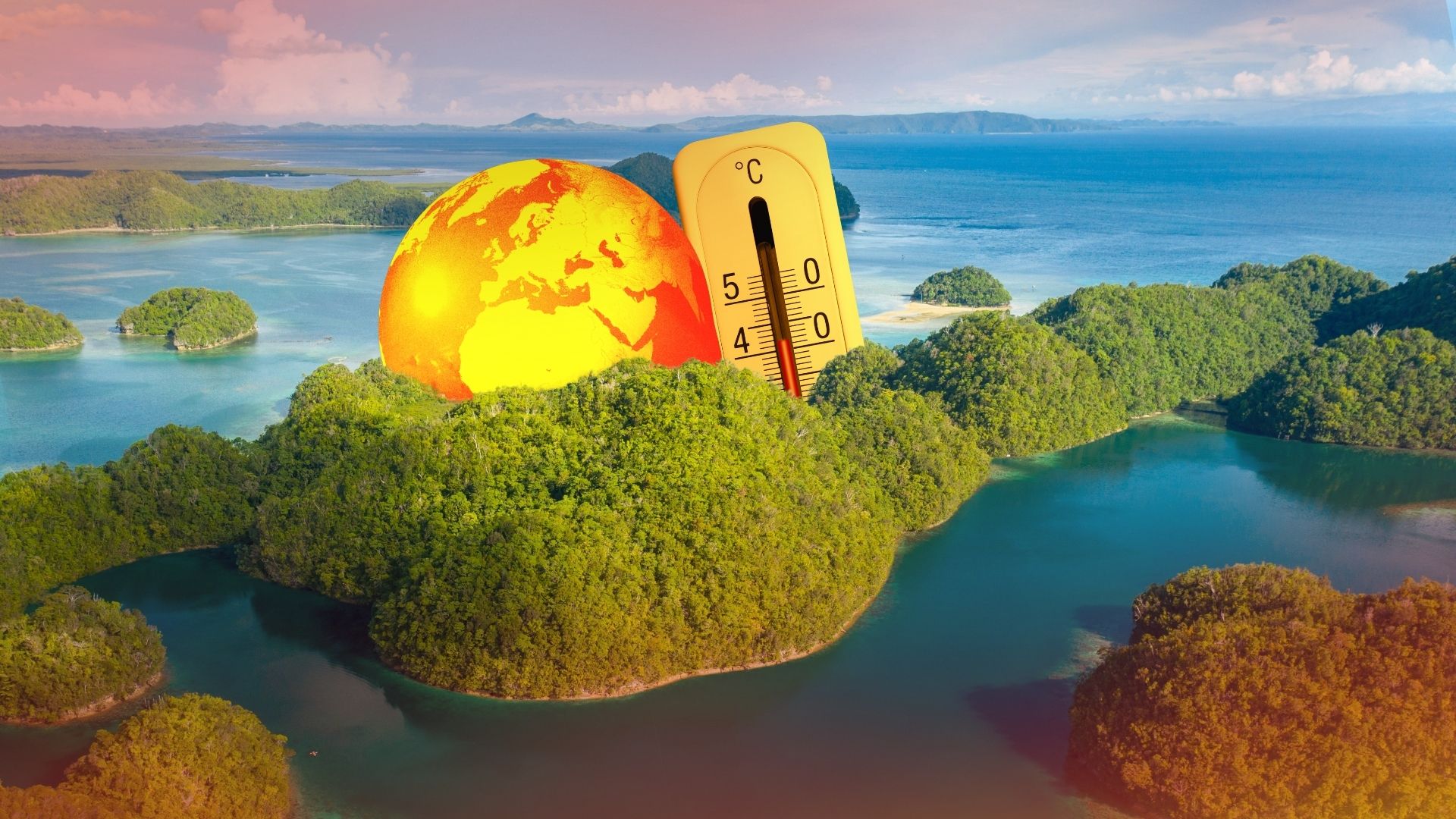
As thermometer readings start to go off the charts, the Philippine heat begins to take everything up a notch, with multiple sciences explaining the boiling phenomenon. During this season, every surface starts to feel like an open heater, especially in the Davao region.
PH Heat Spikes
These solar flames know no boundaries, especially in location. At the start of April, the Philippine Atmospheric, Geophysical, and Astronomical Services Administration (PAGASA) recorded several temperature readings falling under the ‘Danger’ category.
Some of these peaks include Dumangas, Ilo-Ilo’s 3-day danger zone with a 46°C record on April 3, followed by 43°C and 42°C. Other places that faced this concern include Butuan and Quezon City, with 42°C and 43°C readings on April 4 and 6, respectively.
While in Davao, these readings remain steady as the sun’s guard over time. The heat index recorded at Davao City continues to fluctuate from 38°C to 40°C for a full week, including the agency’s 2-day projections. Yet, two years ago, the highest recorded temperature in the nation belonged to Davao City, at a mere 34.5°C. Today’s temperatures replicate a huge jump from milder records to somewhat ‘daily record-breakers’.
Amihan’s Fading
Just last March 23, PAGASA declared the end of the northeast monsoon (Amihan), a primary factor of the moderate temperatures and localized rain. This signals the emergence of warm and humid winds from the Easterlies — a precursor to steaming-hot weather.
As one year starts to close with November and transitions into the upcoming February, high-pressure air from winter in the Northern Hemisphere push their air into the low-pressure oceans near the equator with the Philippine archipelago.
Following the period, the hemisphere starts to sizzle once again — hot air is now pushed into the equator-bound nations, thus revealing the scorch that a person in the country experiences.
Hot Season’s Entrance
Further cooking the country, the transition to the El Niño season starts to solidify, with unnatural warm ocean temperatures expected to seep in. Jhomer Eclarino, a weather specialist of PAGASA, stated that the phenomenon has a 62% chance of occurring, accumulating in the succeeding months of the year.
Beyond the current conditions, PAGASA’s Climate Change in the Philippines report shows a red-hot future, with their 2050 benchmark noting that the number of days with maximum temperatures exceeding 35°C is expected to exponentially rise for many provinces.
Citified Climate
Climate change also takes its toll on the crisis. As more industries take part in environmentally-toxic practices such as burning fossil fuels, greenhouse gases in the atmosphere start to trap more heat.
This effect not only brings short-term rises in hot weather, but also a rise of a single degree is enough to turn multiple events hotter.
Adding on, urbanization has added to the warming curve. A clear example is Metro Manila, where Climate Tracker Asia recorded significant increases in warm nights — a chain result of buildings having more heat intake. As Davao continues to go towards the same pathway, there remains a factor of skyrocketing warmth.
Shielding from the Flare
Thus, not only do outdoor-exposed citizens require protection from external overheating, such as heat strokes, but this also applies to every person who keeps working even within the comfort of their homes.
There are many ways to keep oneself from these blazing conditions, including:
- Minimizing time outdoors, especially from late morning to mid-afternoon, when the heat index is at its peak.
- Making hydration a frequent habit, especially when active, helps keep the body replenished with water lost through perspiration.
- Keeping loose-fitting, light-colored, and breathable garments. When working outside, hats and long-sleeved shirts are a good defense against the sun’s scorch.
Daily Dreads
From the sizzling asphalt roads on the city streets to the quiet rural province views, Davao’s leap towards hotter days, alongside various places, signifies that the climatic catastrophe and the Habagat entry are starting to sizzle on our doorsteps.
As urbanization continues to turn cities into heat traps, we cannot arm ourselves with just umbrellas and water bottles. The sun seeps closer to us, and a cooler path forward is what the nation must drive towards.