




Now Reading: DEATH OF GRATITUDE: When Filipino gratitude turns into obligation
-
01
DEATH OF GRATITUDE: When Filipino gratitude turns into obligation

Harckie Payla
“Ang hindi marunong lumingon sa pinanggalingan ay hindi makakarating sa paroroonan.” (Those who do not look back to where they came from will not reach their destination)
This a popular Filipino saying that entails the care given by their homeland as a lifelong debt to be honored. However, as time goes by, it is often used for toxic guilt or manipulation, making it one of the thorns in the throat of the system.
A debt that can’t be counted
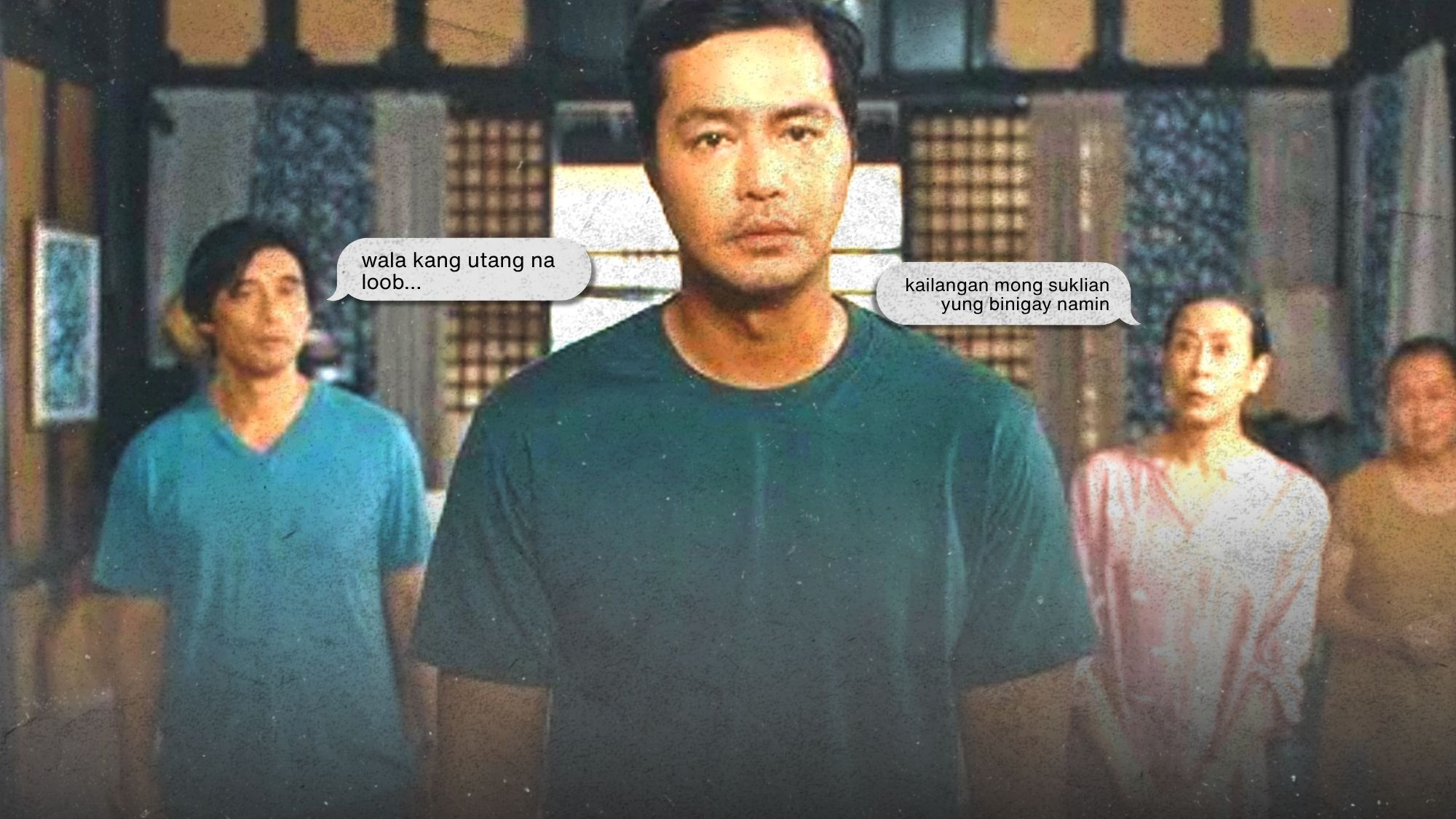
Utang na loob is a deeply ingrained Filipino core value that refers to the imposed lifelong obligation to repay someone who has helped you in times of need.
In other words, utang na loob is the recognition of the goodwill given by another person. This recognition comes with a high sense of duty to return the kindness that was received. Because of this, utang na loob always has someone it is directed toward, and that is the kapwa, or the other person.
Virgilio G. Enriquez, a social psychologist and the father of Filipino psychology, defines utang na loob as “gratitude and solidarity.” Unlike the word “debt,” which sounds like a heavy burden, “utang na loob” is simply about the natural give and take in Filipino relationships. There is always a chance to return a favor, and there is no pressure to do it right away.
In addition, according to Mary Holnsteiner, the word utang is closer in meaning to a “regalo” or gift, because the obligation it carries is not about returning something borrowed, but about responding to something freely given. In the same way, Leonardo Mercado explains that utang na loob cannot be paid with money.
Unlike ordinary debts that come with clear terms and conditions, utang na loob sets none. Instead, the “loob” becomes an inner law that moves a person to treat another with generosity and kindness, not just once, but for a lifetime.
What makes this concept meaningful is that it can go beyond one lifetime; the chance to show utang na loob may not come in your own time. Your children may be the ones to carry it out. This is not a burden passed down, but a sign of how deep and lasting Filipino relationships can be. It is a beautiful part of Filipino life, one that keeps people connected to their home, their community, and their country.
The self that lives in another
The concept of utang na loob is rooted in the concept of kapwa, meaning “shared-self,” where the care given is honored, rather than owed.
For Enriquez, this deep connection is rooted in the native awareness of Filipinos that kapwa is the very sense of identity as the self. He explains that kapwa is a recognition of a shared identity, an inner self that is shared with others. In this view, the “ako” (ego) and the iba sa “akin” (others) are the same in kapwa psychology.
Kapwa, according to Dioniso Miranda, “loob needs kapwa to be loob; its continued responding to kapwa is the condition for its own existence and authenticity of loob.”
Moreover, according to Albert Alejo, “Ang loob and isang tahanan [na kung saan] dito ang kapwa ay kasambahay.” (The loob is a home, and in it, kapwa dwells.)
When gratitude becomes a collar
Utang na loob has long been woven into what it means to be Filipino, tracing back even before colonial rule in a practice known as Alipin, or debt servitude. Unlike the slavery known in the West, this was rooted in obligation rather than ownership.
Every favor, big or small, was expected to be repaid through time and labor. Furthermore, if a person died before that debt was settled, it would not die with them; it would be passed on to the next generation, carried forward by blood.
Even in history, obligation can be seen as a manifestation of utang na loob. Vicente Rafael explained that utang na loob was used as a tool in spreading Christianity during the early centuries of colonial rule.
He noted that the natives, caught in what seemed like an endless exchange of words framed around reciprocal obligations, chose to convert. That is, they received the sacraments as a way of entering into a debt transaction with the Spaniards and their God.
The Spaniards recognized how deeply Filipinos valued utang na loob, and they used it to their advantage. By keeping Datus loyal through favors and the retention of their positions, the Spaniards were able to call on them when soldiers were needed.
In return, the Datus could be drawn from those who owed them, filling the ranks of colonial armies through existing debt relationships. As Mawson’s research shows, many indigenous soldiers were pushed into military service as a way of paying off debts or avoiding other forms of forced labor.
The child as a growing currency
Some parents guilt-trip their children using “utang na loob” as a basis. A common example is when a child asks for something, and the parent responds with “I clean, cook, and wash after you. What else do you want?” This makes the child afraid to express their needs. In other cases, children are treated as investments, raised and schooled with the expectation that they will one day pay it all back, with their future.
An example of this is the story of Carlos Yulo, that is brought into public conversation in 2024. His situation reignited debates on social media about the expectation for children in Filipino culture to always comply with their parents, even when it may not be in their best interest. Toxic parents may use utang na loob as a tool for emotional blackmail, creating an unhealthy cycle of obligation and guilt.
In addition, studies show that this weight falls hardest on the panganay (the firstborn child of the family), who is expected to take over the family’s financial and emotional duties once they are old enough. The child does not choose this role, it is given to them at birth like a heirloom.
When these expectations are not met, more traditional Filipino parents may invoke utang na loob to create a sense of obligation and pressure their children into compliance. Repaying utang na loob is a sweet gesture when done willingly and out of gratitude, but when guilt is used to demand it, it starts to feel more like a burden than an expression of care.
Passed down heirloom
No one explains the terms to a child. They learn it through silence, through guilt, through the weight of expectations they never agreed to carry. Moreover, by the time they are old enough to question it, it has already become a part of them.
We were taught to never forget where we came from, but no one ever asked if where we came from ever remembered us for who we are, rather than a growing debt that needs to be paid.