

Now Reading: Democracy in the age of cat filters
-
01
Democracy in the age of cat filters

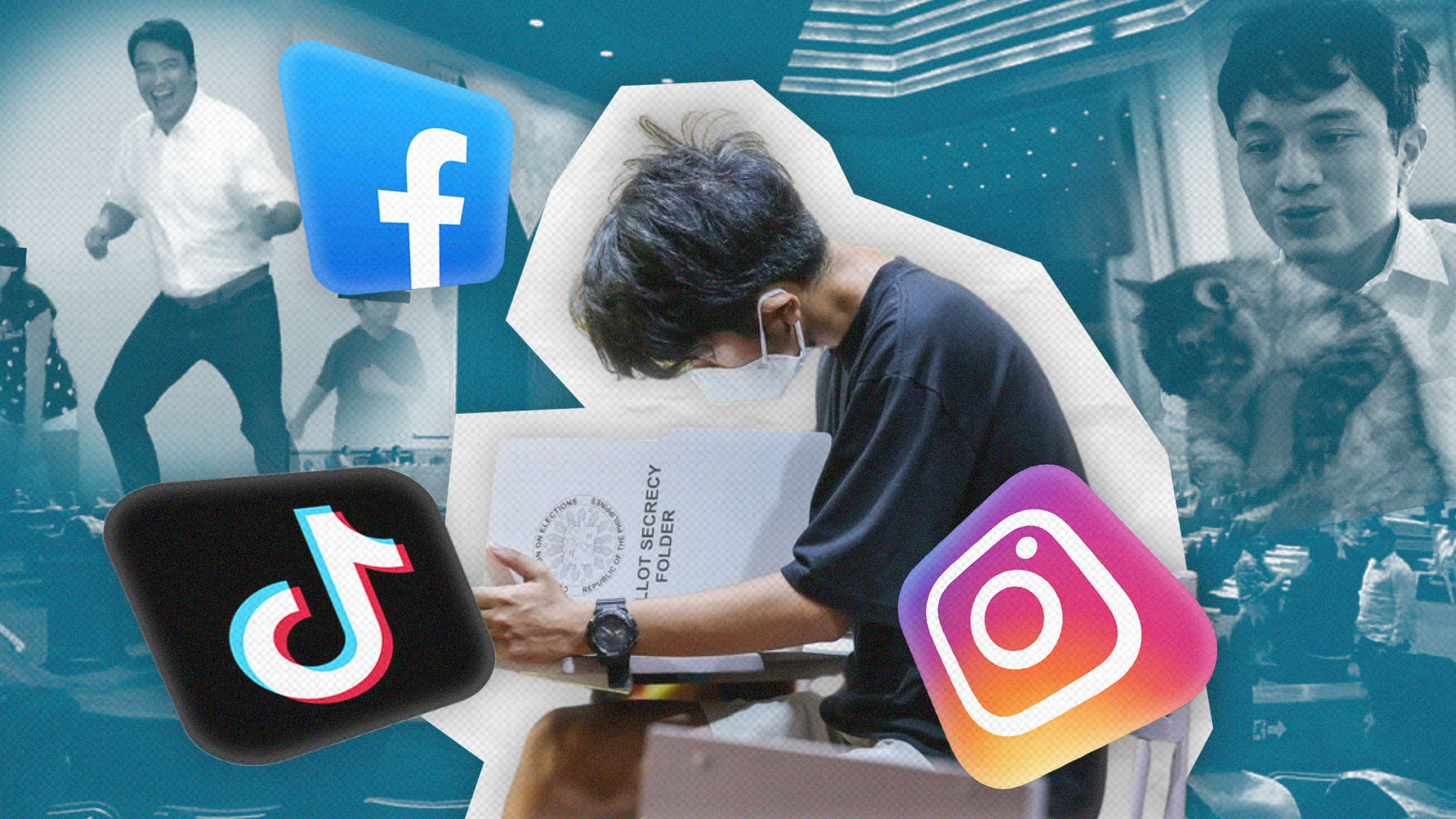
In the Philippines today, the Constitution may still define legislators as public servants, but TikTok has quietly revised the job description: you’re now expected to be part-time content creator, full-time charisma machine. Forget the floor debates. What really matters is whether your latest reel passed the vibe check.
Platforms like TikTok, Instagram, and Facebook are no longer mere communication channels; they have become instruments of political engineering, shaping perceptions through curated narratives, trending hashtags, and viral clips. Political figures are strategically humanized, their images meticulously sculpted to generate intimacy, empathy, and affective loyalty.
This is not political science as we know it. It’s parasocial science. Horton and Wohl long ago defined parasocial interaction as the illusion of friendship with media figures. Applied to Philippine politics, it means that voters now treat politicians the way Gen Z treats K-pop idols: “bias” is chosen, defended, and fiercely protected—even if said bias once voted against your minimum wage.
Studies back this up. Centeno (2016) found that citizens emotionally attached to politicians were more likely to ignore their actual performance. Translation: Kung cute ka edi meow-meow, pwede na makalimutan ang legislative record.
Short-form content accelerates this erosion of critical thinking. A mayor explaining procurement law? Snooze. A mayor explaining procurement law while dancing budots? Viral. Our democratic standards have fallen so low that we’ve reached the stage where choreographic accuracy matters more than budgetary accuracy.
Exhibit A: Congressman Kiko Barzaga, now better known as the “Congressmeow” of Dasmariñas, Cavite. His TikTok features him crooning “meow meow” to cats, busting moves at fiestas, and launching a cat-themed remix of Lupaypay. Governance may be opaque, but charisma? Crystal clear in HD.
And Barzaga is hardly alone. Isko Moreno, the “Yorme,” went viral with his “ISKOnaryo”—a mix of slang, selfies, and spontaneous crowd hugs—perfect for TikTok, less perfect for legislative clarity. Bong Revilla Jr. danced his way back to the Senate via budots, proving you don’t need a platform when you already have a playlist.
Even Imee Marcos gamified fear-mongering, claiming China had hypersonic missiles aimed at us. Fact-checkers gasped, but TikTok just said, “Content.” In a feed filled with thirst traps and cooking hacks, nuclear panic apparently counts as engagement.
The contrast with Vico Sotto is instructive. His reputation rests on reform and transparency, not dance challenges. And yet, he is an anomaly, an earnest overachiever in a class where everyone else is doing TikTok for extra credit.
Sociologists describe this drift as the rise of affective publics: communities organized not by policy or ideology but by shared emotion. Think fandoms, but with more barangay captains. Political “stan armies” defend their idols with hashtags, edits, and clapbacks, treating every criticism as a personal attack.
Cognitive psychology explains why this works. The halo effect convinces us that a politician who smiles nicely must also manage budgets nicely. Confirmation bias ensures our algorithm serves us only clips that reinforce our affection. Before long, you’re convinced your idolized senator is flawless, despite multiple graft charges.
The machinery behind this is not entirely organic. Bradshaw and Howard (2019) documented how bots and trolls engineer virality, giving the illusion of consensus. In the Philippines, “trending” is less democratic pulse and more paid PR package.
The result? Online debates devolve into meme wars. Criticize a politician, and you’re instantly mobbed by digital warriors whose arguments range from “wala kang ambag” to “umayos ka, at least cute siya mag-cat filter.”
Political science has a name for this: affective polarization. People are divided not by reasoned ideology but by emotional allegiance. Filipino Twitter, in other words, is less Senate hearing, more K-drama fan forum.
The consequences for democracy are significant. When affective engagement overshadows evaluative judgment, governance is judged by performative gestures rather than outcomes. Policies, fiscal responsibility, and administrative competence risk invisibility against the spectacle of curated charisma.
Elections reinforce this drift. The 2019 budots, the 2022 livestream banters, the 2025 AI-generated “man-on-the-street” interviews—all prove that virality substitutes for vetting. Why bother reading a candidate’s policy paper when you can just duet their TikTok?
Ethically, this is soft disinformation. It doesn’t outright lie; it just reframes the picture so you forget to ask the harder questions. No one said Barzaga isn’t charming; they just forgot to say what he’s done in Congress.
So what do we do? First, digital literacy. Citizens must learn that the algorithm is not a mirror of reality; it’s a funhouse mirror designed to keep you scrolling. Understanding this is the civic equivalent of knowing your favorite K-drama couple is only dating on-screen.
Second, platforms must stop pretending neutrality. Transparency in trending metrics and stronger checks against synthetic amplification are not luxuries as they are democracy’s version of pest control.
Third, citizens must demand substance. A functioning democracy requires voters who reward policies, not playlists; governance, not gimmicks. Until then, our politics will remain a cross between It’s Showtime and Pinoy Big Brother.
Ultimately, Philippine politics faces a pivotal choice: continue the drift toward performance-driven engagement or reclaim evaluative citizenship. Political fandom, amplified by digital design and cognitive bias, may dominate perception—but informed, critical, and deliberate participation remains the cornerstone of democratic resilience.
If left unchecked, the logic of fandom risks hardwiring itself into our politics, where the loudest TikTok dance eclipses the quietest but most competent policy draft. We end up rewarding charisma over competence, transforming civic judgment into nothing more than stan culture with ballot boxes. The danger? Our leaders become influencers with a payroll, not public servants with a plan.
So the question becomes urgent: are Filipinos simply passive spectators, hypnotized by cat videos and budots remixes, or active participants who can separate governance from gimmickry? Because if admiration keeps substituting for accountability, don’t be surprised if the next State of the Nation Address comes with a hashtag challenge and a Spotify playlist.