









Now Reading: “FACT”ory reset? People don’t have default setting
-
01
“FACT”ory reset? People don’t have default setting

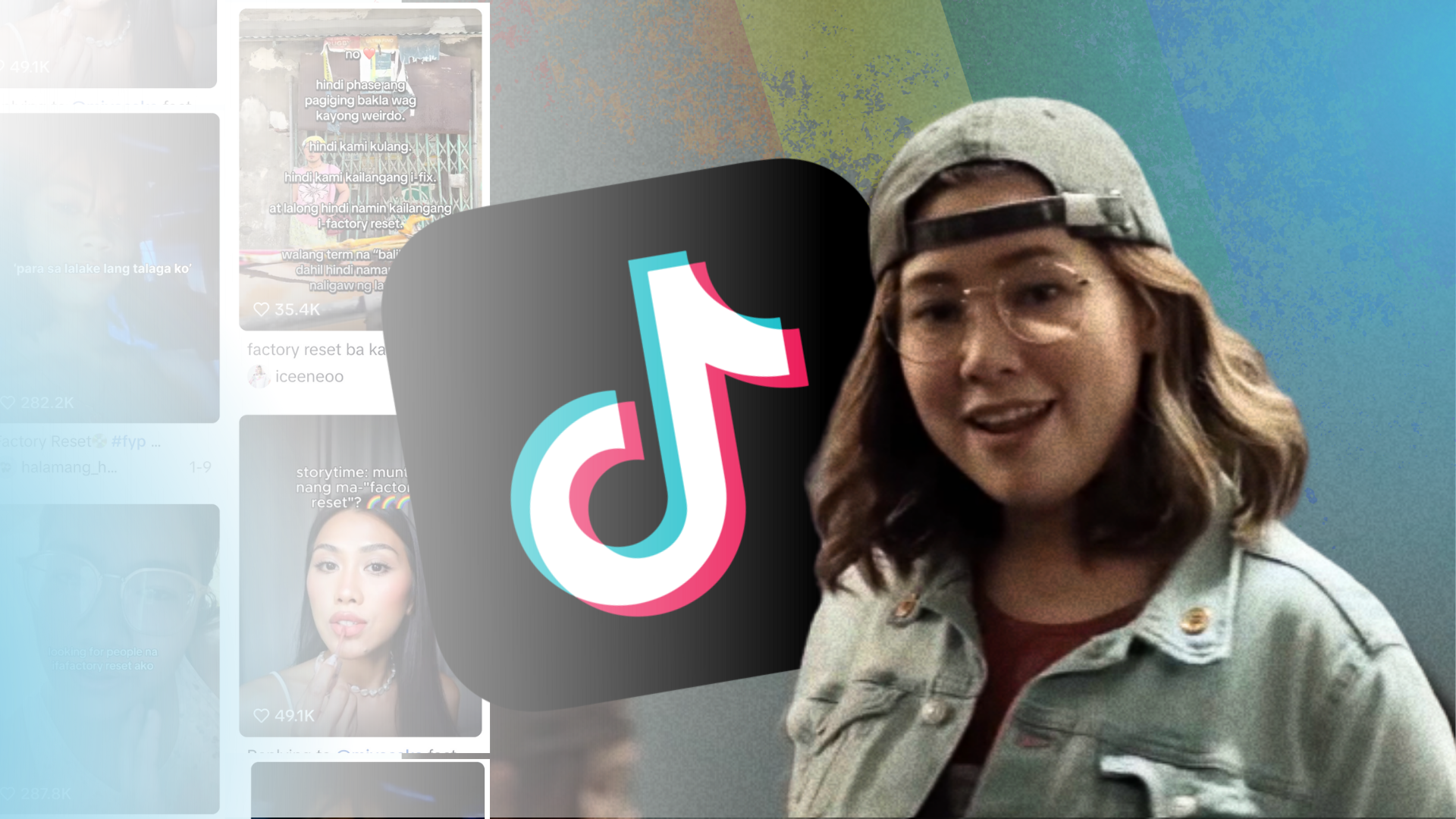
The line “Pero noong makilala kita, nagbagong bigla ang aking timpla,” from Moira Dela Torre’s song Titibo-tibo is often quoted as proof that love can change a person. In its original context, the lyric speaks less about changing one’s identity. The song itself is the way a person expresses themselves; it could be their style, mannerisms, and even the way they dress.
Yet on Tiktok, the song has been pulled into the so-called “factory reset” trend, an idea that seems so harmless at first, but actually becomes the source of misconceptions. The trend treats identity and sexuality as something that can be undone or reverted.
And worse, this mischaracterization turns a metaphor into justification for a harmful idea: that queerness can be easily switched off by the “right” person. The song is being used to imply that some identities are only temporary waiting to be undone.
But humans don’t have default settings. Identity is a process which is constructed over time. It is shaped by experiences and self-reflection. Every choice we make is a fragment of who we are, calling this process a “factory reset” implies something went wrong.
There is nothing wrong with change, but there is something wrong if you deny the self that once helped you grow.
Identity is not a default setting
First things first: we are not devices. We do not come with factory settings. Unlike a device, there is no such thing as “default version” of you to return to. For instance, identity formation in psychology is understood as a continuous process, not simply a one-time event. Psychologists like Erik Erikson described identity as something negotiated across different life stages. This means that identity can’t be erased by any means.
This is specifically true for sexuality and gender identity. A person’s attractions, preferences, or gender expression may shift over time, but these changes are part of your identity. Change is constant, we can’t deny that. That is why, it is only natural for humans to change and evolve for human development.
Sexual Orientation, Gender Identity and Expression (SOGIE)
SOGIE, also known as Sexual Orientation, Gender Identity, and Expression is a framework that helps in understanding the diversity of preferences and identity. Sexual orientation refers to who someone is attracted to. Gender identity is a person’s internal sense of their gender. And gender expression is how they present themselves externally.
Jeric, a gender advocate from PUP-Manila stated: “People who engage in this trend are unaware of concepts such as SOGIE—sexual orientation, and gender identity expression.” This lack of understanding is precisely why the “factory reset” trend can be harmful; it reduces complex experiences into oversimplified content. Mislabeling someone’s identity not only erases their lived experiences, but also spreads misconceptions to people who are still learning about gender and sexuality.
The problem is not the change, but how it is interpreted. Since many people lack understanding of sexuality, this leads to the spread of misunderstanding about queer experiences. As Jeric explains, “For instance, a queer person suddenly likes women—it doesn’t necessarily mean that he resets his sexuality. It could mean that he is coming out as bisexual. This works vice versa.”
Now is the perfect moment to educate people about SOGIE and why it is important. Understanding these concepts helps prevent confusion from umbrella terms. Plus, this allows people to respect people’s experiences and avoid mischaracterization.
Queerness is not a “phase”
A common misconception going around also is that being queer is temporary or something to “outgrow.” Again, queerness is not a phase; it’s a valid part of who someone is, even if the way they express it changes over time. Labeling it as a phase gives an idea that identity must conform to social expectations.
For many, exploring gender expressions is part of self-discovery. The changes in style, preferences, or even labels are part of growth. Once it is invalidated, this creates a sense of disconnection and self-doubt from oneself. It can pressure individuals to conform to rigid standards, create an ideal self rather than embracing their real self.
Unfortunately, fluidity is often misread as confusion in the society. For instance, they must “choose one” or erase previous experiences just to conform. When shifts in preference or identity are labeled as “confusion,” individuals may hide their true selves or avoid exploring who they are. This reinforces harmful misconceptions, such as assuming that queer attraction can be reversed.
Why the “factory reset” trend is harmful
The trend becomes especially damaging when it’s applied to sexuality and gender identity. It completely erases the existence of the identity you used to have and creates the false idea that attraction must follow a straight line. This idea turns experiences into strange punchlines used for “clout.”
“The world is healing!” “Hindi pa naka-mio, kaya pa i-factory reset,” “Habang hindi pa tindera ng scramble, kaya iyan!” The humor comes at the expense of other people. And who gets erased in the conversation? The very people they claim to reference: bisexual, pansexual, and gender-nonconforming individuals are frequently misrepresented. Their experiences are not treated as fully valid. Other genders exist. Other orientations exist.
There is a weight on the words we use lightly. So, when we use metaphors like terms that suggest error carelessly, we risk invalidating experiences and forget the essence of self-discovery. Being mindful of language is a form of respect, a basic human decency. It allows education about gender and identity without seeing them as problems to be solved or erased. As a result, we can build a society that fosters a safe space for everyone.
What we should say instead of “factory reset”
Instead of calling changes in preferences, identity, or expression a “factory reset,” we can use words that reflect growth, and self-discovery. After all, identity is about understanding yourself more fully and integrating all parts of who you are. Saying something like, “I’m learning more” or “My preferences have changed,” validates the process instead of reducing it to a joke or clout.
Identity is not something you can reset. You don’t need a reset to become yourself. Most importantly, you can’t just erase the chapters that made you—you.