


Now Reading: #FactsFirstRedefined | Campus press as the first draft of student resistance
-
01
#FactsFirstRedefined | Campus press as the first draft of student resistance
#FactsFirstRedefined | Campus press as the first draft of student resistance


Bernadette Soriano
Beyond ceremonial observance, National Campus Press Freedom Day traces its lineage to both global martyrdom and local defiance. What began as scattered acts of resistance by student journalists has since evolved into a codified right — though one still contested in practice.
1930s–1943: The international figurehead
The date July 25 draws symbolic weight from the birthday of Julius Fučík, a Czech journalist executed under Nazi rule for his underground writings. His posthumously published Report from the Gallows elevated him as an international icon of press freedom. The Philippines’ adoption of this date signifies solidarity with journalists globally persecuted for truth-telling.
1972–1986: Martial Law and the politicization of the campus press
Under the authoritarian regime of Ferdinand Marcos Sr., media institutions were co-opted, censored, or shuttered entirely. In contrast, student publications emerged as sites of radical critique and organizing. University papers such as The Philippine Collegian, The GUIDON, and Ang Malaya reported on abuses the mainstream press dared not touch, often at the cost of their staff’s safety. Campus journalism became not just extracurricular; it became insurgent.
1987: Constitutional freedoms acknowledged, yet incompletely realized
In the wake of the EDSA Revolution, the 1987 Constitution enshrined freedom of speech, of expression, and of the press under Article III, Section 4. However, this provision functioned more as a general guarantee than a specific safeguard. No mechanism yet existed to insulate student journalists from administrative interference, budgetary manipulation, or covert censorship.
1991: The Campus Journalism Act (R.A. 7079)—a Milestone, with Gaps
With the passage of Republic Act No. 7079, the state formally recognized the value of campus journalism in a democratic society. Yet while it affirmed the press freedom of student publications, it remained largely aspirational — lacking provisions for fiscal autonomy, protection against administrative control, or legal redress for repression.
As the Philippine Center for Investigative Journalism notes, many editors still operate under the threat of budget freezes, prior review, or outright silencing.
2019: National Campus Press Freedom Day institutionalized (R.A. 11440)
In a significant but largely symbolic victory, Republic Act No. 11440 was signed into law, officially declaring July 25 as National Campus Press Freedom Day.
Spearheaded by Rep. Evelina Escudero, the measure sought to honor student journalists and foreground their democratic role. However, critics note its largely commemorative nature, arguing that without structural reform, campus press freedom remains vulnerable to the very forces it seeks to expose.
2020–present: Recognition without protection
Despite the law’s passage, real-world conditions for student journalists remain precarious. Ongoing reports reveal patterns of:
- Red-tagging and surveillance
- Budget strangulation and forced content alignment
- Prior restraint and editorial meddling
Student editors today not only chronicle abuse—they often become its target.
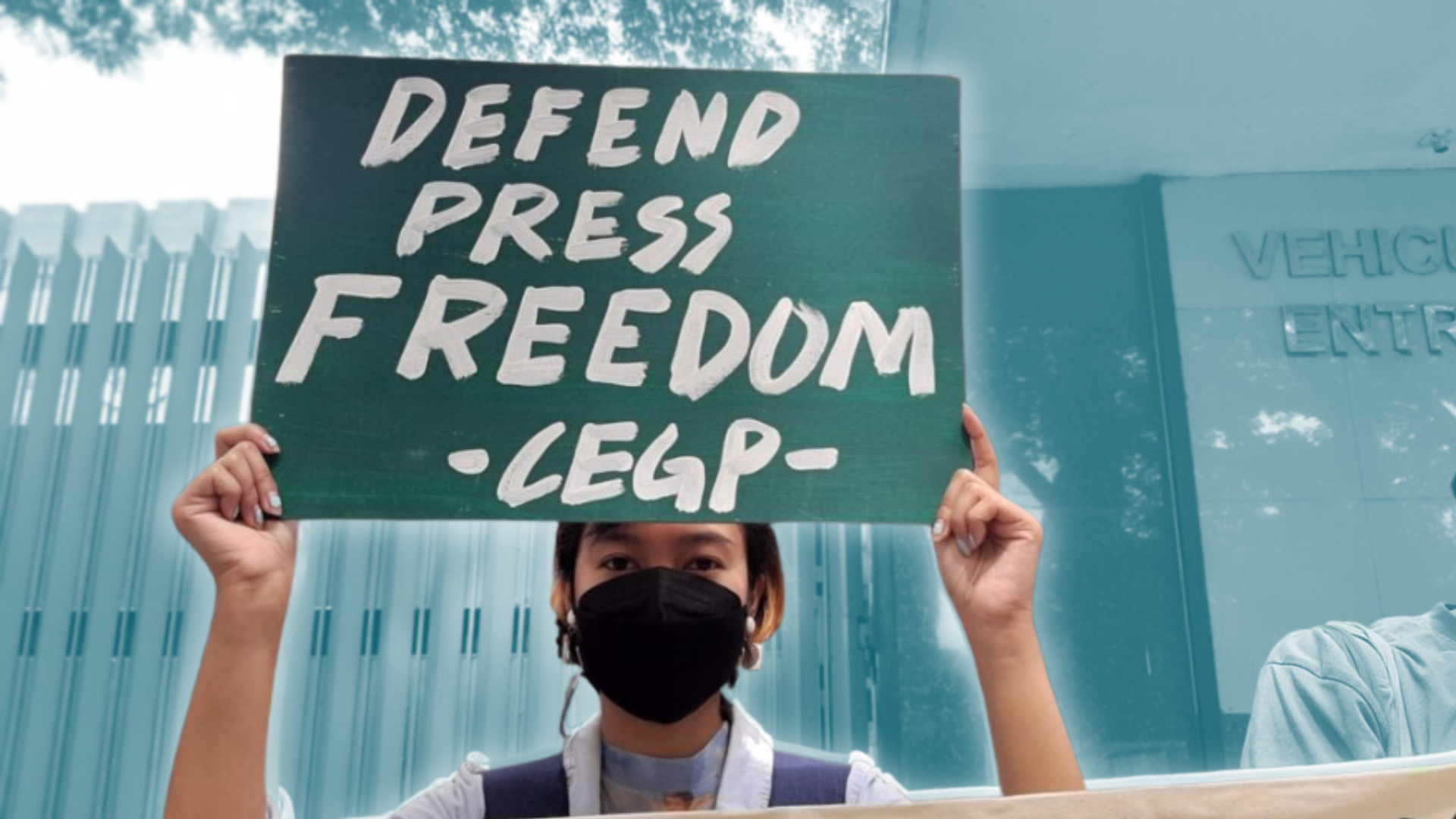
Organizations like the College Editors Guild of the Philippines (CEGP) have repeatedly urged the passage of a stronger Campus Press Freedom Bill, one that ensures institutional funding autonomy, editorial independence, and legal protection against state or administrative retaliation.
Today: July 25 as a living reminder, not a ritualized holiday
In an age marked by disinformation, algorithmic news cycles, and authoritarian creep, the campus press remains a frontline defense. It is not a feeder system for the mainstream media; it is a pillar of democracy unto itself, often publishing what professional outlets cannot or will not.
Commemorating National Campus Press Freedom Day should not begin and end with a Facebook post. It must involve sustained efforts to:
- Protect campus publications from coercion
- Assert the journalist’s right to dissent
- Recognize that student journalism is real journalism
Further Reading: