



Now Reading: #FactsFirstRedefined | When press freedom fails, the nation’s diwa suffocates
-
01
#FactsFirstRedefined | When press freedom fails, the nation’s diwa suffocates
#FactsFirstRedefined | When press freedom fails, the nation’s diwa suffocates

It is not merely a clause in law, it is a covenant for the psyche.
August 30: Freedom’s most fragile day
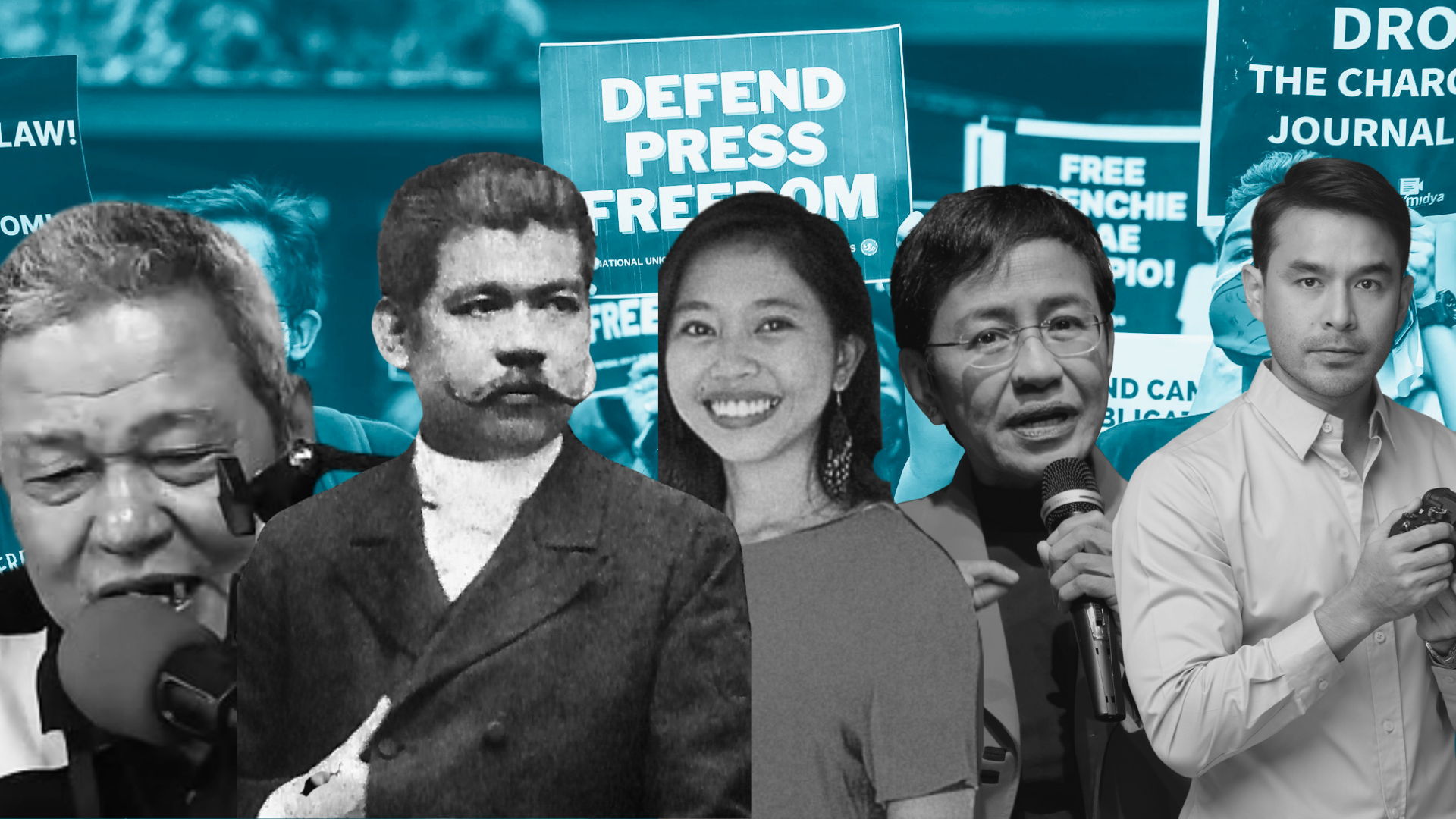
Every August 30, the Philippines observes National Press Freedom Day, a working holiday that honors Marcelo H. del Pilar—journalist, revolutionary, and conscience of the Propaganda Movement. By mandate of Republic Act No. 11699 (2022), the occasion obliges public and private institutions to affirm, in tangible form, the press’ role in sustaining democracy.
Yet legislation is only scaffolding. Beneath it stands a deeper, less tangible blueprint. One built of culture, memory, and what sikolohiyang Pilipino calls diwa: the animating spirit of the people, the inner current that shapes how we think, feel, and act toward one another.
To protect the press is not only to shield journalists from harassment or detention. It is to defend the diwa from attrition. When that defense falters, the wound is political as it is psychological, collective, and intergenerational.
Del Pilar as custodian of Loob, voice of Kapwa
In colonial Manila, Marcelo H. del Pilar wielded the press not solely as a reformist instrument, but as a mirror for the Filipino loob—the interior self forged through shared struggle.
Born in 1850 in Bulacan, Del Pilar emerged as one of the fiercest critics of Spanish colonial and clerical abuses. Among his early and bold literary contributions was Dasalan at Tocsohan—a satirical parody of Catholic prayers that targeted corrupt friars, awakening popular consciousness through humor that cut to the bone.
In 1882, with funding from Francisco Calvo y Múñoz, he co-founded Diariong Tagalog, the first bilingual newspaper in the Philippines (Tagalog and Spanish). This broke the monopoly of colonial language, validating Filipino voices and making reformist ideas accessible to the wider public. Yet the paper lasted only until October that year, hampered by financial strain and colonial suppression.
Publishing such a paper was perilous. From 1857 to 1883, the Reglamento de Asuntos de Imprenta required newspapers to submit proof pages for censorship and secure government licenses, with violations punished by fines or closure. Although the 1883 Liberal Press Act (Ley Gullón) relaxed some pre-publication censorship, its impact in the Philippines was limited, as colonial authorities retained tight control.
Exiled to Madrid in 1889, Del Pilar became editor of La Solidaridad, the principal publication of the Propaganda Movement. Until 1895, he authored roughly 150 essays and 66 editorials under the pen name Plaridel, advocating secularization, representation in the Spanish Cortes, and racial equality, demands that would seed the ideas of the 1896 Revolution.
Reading through the Kapwa theory framework, Del Pilar’s work, from Diariong Tagalog to La Solidaridad, was an act of pakikipagkapwa: solidarity through mutual recognition. Colonial censorship sought to fracture kapwa by restricting truth to elites or foreign observers. His journalism was the counterforce, soldering fragmented voices into a coherent, dignified national self-image, and affirming that the lived truths of ordinary Filipinos were vital lines in the nation’s rough draft.
When press freedom contracts, so too does the diwa
One hundred thirty-three years later, the tools have evolved, but the stakes remain constant.
In 2025, Reporters Without Borders (RSF) placed the Philippines 116th of 180 in the World Press Freedom Index, its highest ranking since 2004, yet still labeled a “difficult environment.” The National Union of Journalists of the Philippines (NUJP) cautioned that the improved ranking “does not mean better conditions for ordinary media workers,” citing newsroom closures, layoffs, red-tagging, and other threats.
The prolonged detention of journalist Frenchie Mae Cumpio, arrested in February 2020 on charges of illegal possession of firearms and terrorism financing, is one such threat made tangible. Press-freedom groups including RSF, the Committee to Protect Journalists (CPJ), and Free Press Unlimited have publicly condemned her continued imprisonment as “indefensible.” RSF and coalition partners allege that the firearms found during the arrest were planted; authorities deny these claims.
The years-long legal ordeal of Maria Ressa, Nobel Peace Prize laureate and co-founder of Rappler, further underscores the point. In June 2020, she was convicted in a cyber-libel case. By 2023, she and Rappler had been acquitted or cleared in several tax-evasion cases, yet other legal actions persisted.
Press-freedom advocates say the sheer accumulation of cases, at one point numbering seven, amounted to legal harassment, with the process itself functioning as punishment.
Each act of silencing, whether by detention, legal attrition, or assassination, radiates outward, warning the public: truth-telling comes with costs you may not survive to bear.
In psychology, this dynamic parallels learned helplessness—the erosion of agency through repeated, inescapable setbacks. It is the constriction of loob from expansive civic participation to guarded self-preservation.
People do not fall silent for lack of ideas; they fall silent for lack of faith that their voice matters.
The mental health of the nation’s democracy
Press freedom is more than an institutional pillar, it is a mental health apparatus for the body politic.
A free press nourishes critical consciousness (malay), empowering citizens to question official narratives and imagine alternative futures. It acts like a cultural immune system, spotting, challenging, and correcting falsehoods before they can take root in collective belief—a weakness that becomes painfully clear when journalists themselves are targeted.
On March 21, 2025, the International Association of Women in Radio and Television–Philippines denounced attempts to discredit GMA reporter Mariz Umali, who had been falsely accused of insulting former Executive Secretary Salvador Medialdea during her coverage of former President Rodrigo
Duterte’s trial before the International Criminal Court. The group called the misrepresentation a form of harassment rather than legitimate critique—an episode that revealed how online smears can erode journalistic credibility and chill critical reporting.
Such attacks are hardly isolated. State-linked red-tagging and terror-tagging continue to plague the media landscape, despite the Supreme Court’s recognition that the practice poses grave threats to life, liberty, and security. That recognition was given teeth in December 2024, when a Quezon City court ordered SMNI hosts Lorraine Badoy and Jeffrey Celiz to pay ₱2.08 million in damages and legal fees to journalist Atom Araullo for red-tagging him—a rare but significant legal victory for press defenders.
Yet intimidation persists. A 2024 study by the National Union of Journalists of the Philippines found that 60 percent of red-tagging incidents against journalists in the past eight years were state-sponsored, often carried out through “drop-bys” or official letters invoking government authority. The pattern suggests not only the persistence of hostility toward critical reporting, but also its institutionalization.
Legal and economic pressures further constrict the flow of information. In June 2025, Rappler was cleared of charges under the Anti-Dummy Law regarding alleged foreign ownership violations. While the acquittal was a victory, the outlet still faces other cases, underscoring how litigation itself has become a tool of harassment, designed less to punish than to exhaust.
Meanwhile, the business side of journalism has grown increasingly precarious. The Philippines may have climbed from 134th to 116th in the 2025 World Press Freedom Index, but its economic score remains mired in the “very serious” category. Financial pressures have taken a visible toll: CNN Philippines shut down in early 2024; ABS-CBN laid off about 100 employees later that year; and The Philippine Daily Inquirer has begun transferring its publishing operations effective July 1, 2025 to a sister company. While the paper insists the brand and publication will continue under the new structure, many observers view the shift as “winding down” the old corporate shell. In an industry already marked by concentrated ownership and heavy dependence on advertising, such consolidations intensify pressures toward self-censorship, further narrowing the space for investigative reporting.
All this unfolds against a backdrop of physical danger. The Philippines remains one of the deadliest countries in Asia-Pacific for journalists, with at least 184 documented attacks—including harassment, surveillance, cyber libel, and death threats—between July 2022 and April 2025. The violence has claimed lives as recently as July 21, 2025, when radio commentator “Boy Pana” Segovia was shot dead while broadcasting his morning program.
When that system is suppressed, facts are not the only casualties. The very capacity for shared reality frays. In a culture where oral history, communal storytelling, and public dialogue are foundational to identity, the loss is not just informational; it is existential. Without the press, the nation’s imagination risks withering.
Keeping our malay awake
A seminar or trending hashtag on August 30 is a gesture; it is the continuum that matters. Defending press freedom is not an annual rite but a daily act of keeping the national spirit lucid, engaged, and capable of self-correction.
Citizens as pillars of truth can:
- Learn and transmit — keep Del Pilar’s work alive in classrooms, community halls, and digital spaces.
- Engage with discernment — treat media literacy not as defensive labor but as cultural hygiene that sharpens malay.
- Act in solidarity — materially when possible, vocally always. In pakikipagkapwa, an injury to one voice injures the whole.
- Fortify the legal structure — advocate for anti-SLAPP statutes, decriminalized libel, whistleblower shields, and swift resolution of harassment cases.
National Press Freedom Day does not merely honor a man who weaponized print against an empire. It reaffirms that the press remains the nation’s collective voice, and that this voice is inseparable from its diwa.
To defend it is to keep loob open, kapwa whole, and malay unclouded. To neglect it is not simply to lose stories. It is to lose the spirit that renders stories worth telling at all.