







Now Reading: For a Filipino, health is now a privilege
-
01
For a Filipino, health is now a privilege

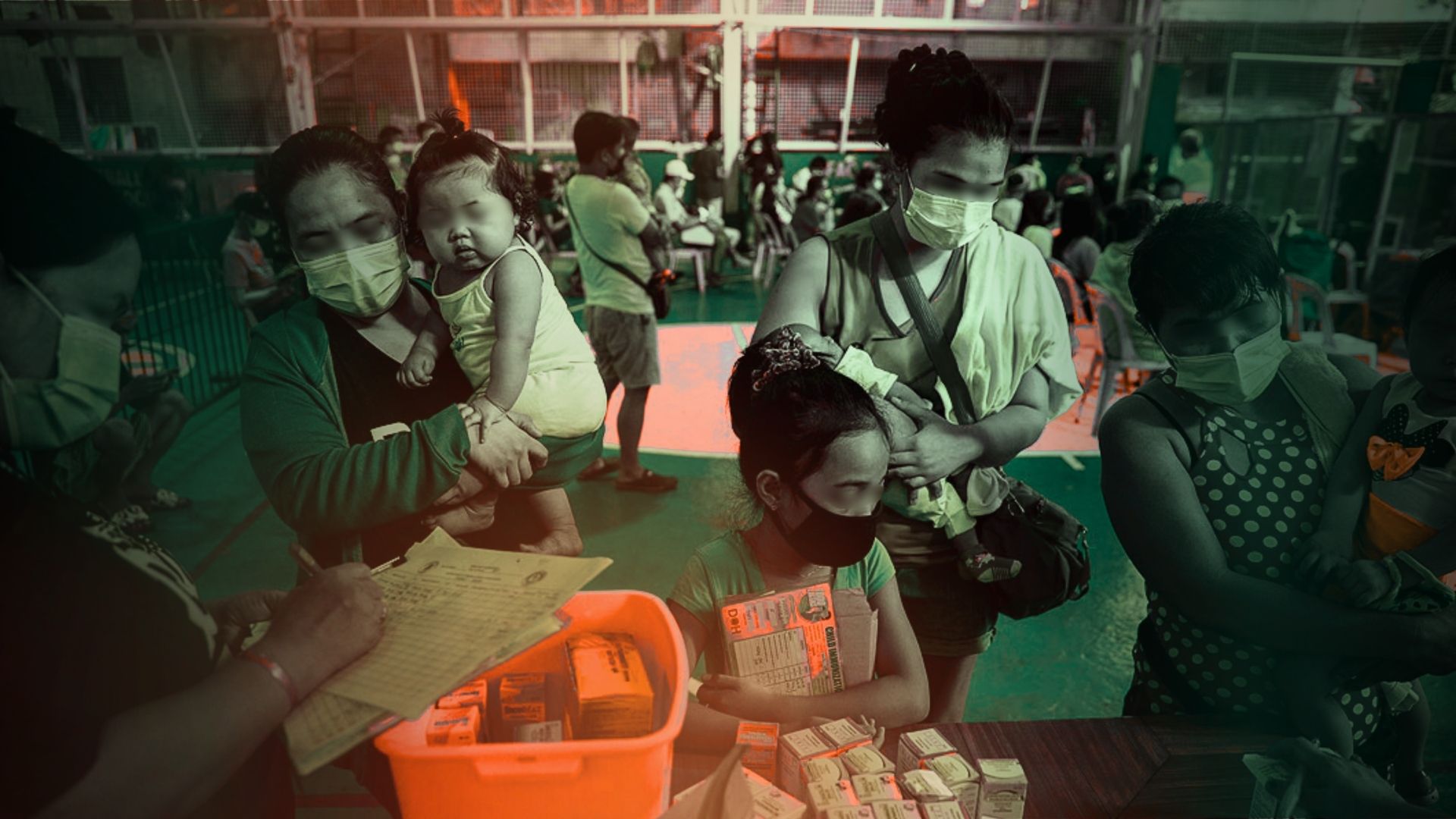
Until now, many Filipinos still pulse with healthcare insecurity and inaccessibility. While hospitals do wait for patients to come, patients sometimes become the ones waiting, even as their bodies start ticking away at their well-being. Through the eyes of the entire nation, healthcare has been treated as less than a necessity.
Gasping for a Lifeline
When health centers are left with nothing to give to patients, tirelessly waiting for an affordable remedy becomes a shaky tightrope. Kara David’s recent ‘Kapit Hininga’ documentary shows Luz Balagtas, a 27-year-old who first had a curable encounter with tuberculosis. Even after attempts to ask for free medicines from centers already distant from his home, his impoverished family is only greeted with prescriptions that they cannot hand over to pharmacies.
Even death becomes part of the possible casualties. In an earlier case, Catherine Bulatao from Caloocan, Bulacan, had a home birth that caused a retained placenta—a problem that can be solved if surgical intervention is quickly given to prevent further bleeding. However, after back-to-back rejections from multiple hospitals due to insufficient blood supply, staff, available rooms, and equipment, Bulatao was declared dead on arrival on the family’s way to the seventh hospital.
These two cases are only part of the many lives that have once tried to cling to those tasked with healing them. Instead of being able to assist, many inadequacies line up: transportation and distance gaps, facility limitations, and a lot more.
Unscaled Utilities
From the hospital room itself to the entire archipelago, there remains a big hole in ensuring one has a place to rest whenever they are sick. In a study on spatial inequality in the accessibility of healthcare services in the country, it was found that for outpatient healthcare facilities, there was less than one facility for 10,000 Filipinos. Besides this, there would be six hospital beds per 10,000 people on average.
At the end of the distance, DOH Undersecretary Dr. Lilibeth David revealed that around 50% of Filipinos cannot access a health center within a 30-minute travel time. A recent commentary from The Situation Report also notes that in 2023, rural patients waited 30% longer for medical consultations than urban residents. Here, one isn’t only fighting the remoteness—they also have to gamble whether there is still space available.
Affordability also becomes an invisible door inside the hospital. A report by Boston Counseling Group (BCG) presented that around 64% of Filipino families cannot afford a P10,000 bill out of pocket, reminding us that each peso poured into treatment remains a life-threatening choice in its own way. While a quick discharge can be seen as a carefree exit from diseases, major hospitals say it is only a quick U-turn back to the ward. An analytical study shows that in government medical hubs like the Philippine General Hospital (PGH), approximately 16% of discharged patients are readmitted within 30 days.
When hospitals and malls are also put side-by-side, the leisure spots still outnumber the health facilities. The International Trade Administration reported that there are approximately 1,341 to 1,400 hospitals nationwide. Yet, according to the Philippine Retailers Association (PRA), the country harbors around 850 operating malls and shopping centers—not counting the thousands of small-scale plazas. In these times, shopping becomes a more accessible remedy than medical attention.
To top it all off, the globe has already spoken about what they observe. The 2024 version of the CEOWorld magazine Health Care Index ranks the Philippines 87th out of 110 countries in terms of healthcare systems. On the other hand, the Sandpiper Global Health Tracker shows that only 29% of Filipinos were satisfied with public healthcare in 2021, lower than the Asia-Pacific average of 61%. With all this, the country continues to witness the system plummet into instability even further.
Hurried Healing
At every striking moment of an emergency, this remains the harsh reality for many children, adults, and the elderly. Although good health and well-being are mandates of the 3rd Sustainable Development Goal (SDG) by the United Nations (UN), people still fall deeper into their conditions just because they lack a handful of pesos, or the nearby centers are already jammed with lots of other patients.
Moreover, assured healthcare holds its weight under the Republic Act 11223, alternatively known as the Universal Healthcare (UHC) Act. With more lives being placed on the line, the country must re-evaluate the current healthcare system to further solidify programs in rehabilitation and treatment—for this is not the path that a sick Filipino must be forced to follow.