










Now Reading: For mothers whose love has no limits
-
01
For mothers whose love has no limits

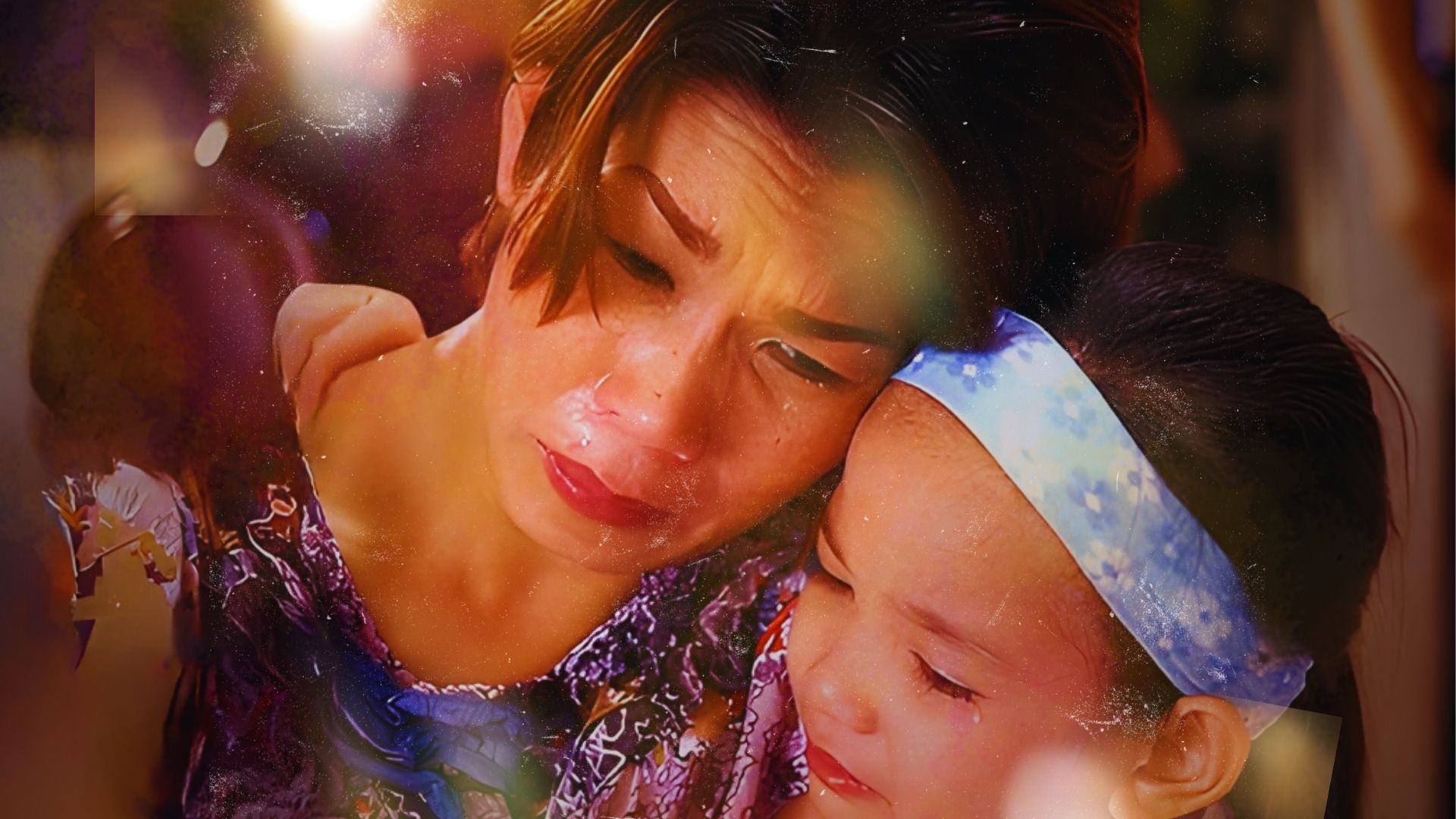
“Sino-sino kaya sa kanila ang kagaya ko na ina? Sino-sino kaya ang maraming taon ding nawalay sa asawa nila? Sa mga anak nila? Isang mahabang paglalakbay ang pagiging isang ina. Pero ganoon pala kapag ina ka — kapag nag-aalinlangan ka, ang laging mananaig ay ang kapakanan ng anak mo. Hindi mo na naiisip ‘yung gusto mo, dahil kung minsan, wala ka nang choice kundi isugal ang sarili mong buhay para sila naman ang mabuhay. ”
- Medy, A Mother’s Story (2011)
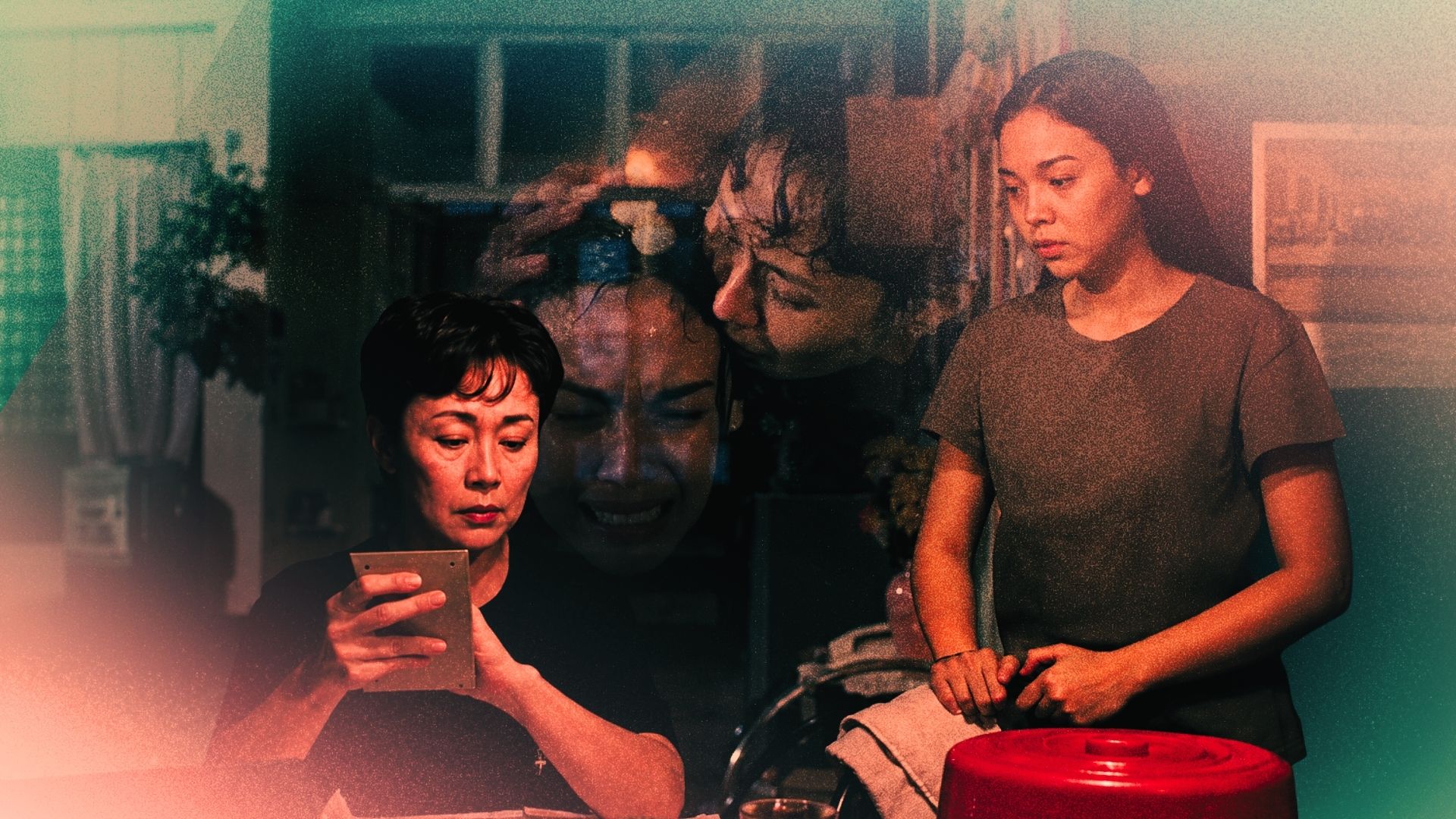
A Mother’s Story (2011), directed by John-D Lazatin, tells the story of Medy (Pokwang), a makeup artist who worked overseas for over seven years. The film begins with Medy being dropped off at the airport, having been recruited by Divina (Michi Valenario) for her concert in the United States. What started as a short-term work visit quickly transforms into a years-long struggle marked by sacrifice, exploitation, and the painful cost of a mother’s love.
Her journey from a short-term overseas worker to an undocumented migrant or TNT (Tago nang Tago), can be seen as she received a call from her then husband, Gerry (Nonie Buencamino) as Queenie (Xyriel Manabat), her second born, suffers from a grave lung ailment. This illustrates how migration decisions are rarely the product of individual ambition alone.
And more often than not, they are calculated household strategies born out of desperation – a response to the absence of accessible healthcare, stable income, and adequate social protection back home and for Medy, staying abroad was not a choice she made for herself. It was a gamble she made for her family.
A mother’s sacrifice knows no limit
At the core of the film is a truth that resonates deeply with Filipino families: a mother will endure anything for the sake of her children. Medy does not stay in the United States because she wants to. She stays because leaving means letting her daughter die, and that is a trade no mother is willing to make.
Every act of hardship she endures–the exploitation, the abuse, the loneliness, the years stripped away from her own life — is made bearable only by the thought that her children are surviving because of it. The film makes it impossible to separate her suffering from her love; the two are not in conflict but are, in fact, the same thing expressed differently. It is precisely this kind of love; unconditional, self-erasing, and relentless, that the film asks its audience to reckon with.
What makes Medy’s story especially powerful is that her sacrifices are never dramatic declarations. They are quiet, daily acts of surrender: another morning in a house that is not hers, another night without hearing her children’s voices, another year added to the distance between who she is and who she hoped to be.
And yet she continues. Not because she has forgotten herself, but because she has chosen, over and over again, to put her children first. The film reminds us that motherhood, particularly for OFW mothers, is not a single moment of sacrifice, because it is a lifetime of choosing others before yourself.
Seven years, one thread at a time
Now, what follows is a story told in fragments of loss. Medy, now undocumented, leans heavily on her high school friend Helen (Beth Tamayo) to help her find work and settle into life in the United States. Helen, however, is far from the ally she presents herself to be.
She takes a cut of whatever Medy earns, controls her access to employers, and keeps her in a state of dependency that mirrors the very conditions Medy was trying to escape back home. Over time, the exploitation compounds. Medy moves from one employer to another, enduring verbal, physical, and emotional abuse at every turn, all while knowing she has no legal ground to stand on.
Back in the Philippines, the family she left behind is quietly unraveling. Gerry, left to manage the household alone, eventually enters another relationship and commits bigamy in Medy’s absence. Her children grow up without her physical presence, and the emotional distance between them widens with every year that passes. The remittances arrive faithfully, but the gaps they are meant to fill are not financial ones.
Invisible and unprotected
Over the course of seven years, Medy works under deeply exploitative conditions. Medy’s struggle reflects the precarious reality faced by undocumented migrant workers, whose irregular status strips them of legal protections and leaves them exposed to those who know they cannot easily ask for help.
What makes her situation particularly difficult to watch is not just the abuse itself, but the silence surrounding it. Medy cannot report her employers. She cannot file a complaint against Helen. She cannot walk into a government office and ask for assistance without risking detention and deportation.
Her undocumented status does not simply limit her options. It effectively erases them. Employers who hire undocumented workers are fully aware of the power imbalance they benefit from. Helen, too, understands that Medy’s vulnerability is her leverage.
The abuse Medy endures is not incidental. It is made possible, and in some ways enabled, by the legal void in which she exists. She is present in the economy, contributing her labor, her skills, and her time, yet she is absent from the protections that the economy is supposed to extend to workers. This contradiction sits at the heart of irregular migration and the film does not let the audience look away from it.
Her story humanizes undocumented migrants not as a criminal by disposition, but as a person trapped by circumstance. Someone who entered irregularity not out of defiance of the law, but out of a mother’s instinct to survive and provide. It is also worth noting that Medy’s gender compounds her vulnerability.
As a woman working in private households, she occupies one of the least regulated and most isolated forms of employment available to migrants. There are no colleagues to witness the abuse, no union to file a grievance with, and no supervisor to appeal to. The home, for many female migrant workers, is both their workplace and their cage.
The film also draws attention to how advanced economies often create demand for exactly this kind of labor, low-status, flexible, and disposable, while simultaneously refusing to extend the protections that other workers take for granted. Medy’s experience is a stark reminder that economic contribution and legal vulnerability can, and often do, coexist. She is needed, but she is not protected. She is visible in the homes she cleans and the families she serves, but invisible to the systems that could have defended her.
The price to pay for remittances
Despite sending money back home and sacrificing her own well-being, Medy’s prolonged absence causes irreparable strain on her relationships with her husband Gerry, her children, and her friends back in the Philippines. The film does not allow viewers to look at Medy’s situation with blinders on.
Instead, it asks the audience to sit with the full weight of what she carries: the social cost of years spent away, the breakdown of her marriage to a husband who commits bigamy in her absence, the emotional alienation of her children, and the slow erosion of relationships she had spent a lifetime building. She sends money home but loses the life she was trying to protect.
The remittances Medy sends are real and they matter. They fund Queenie’s treatment, keep the household running, help fund King’s (Rayver Cruz) education and provide a financial stability that would have been impossible on Gerry’s income alone. But money, as the film quietly argues, cannot parent a child, cannot repair a marriage held together only by obligation, and cannot compensate for the accumulation of ordinary moments that a mother misses while she is thousands of miles away. The financial transaction is complete. The human one is not.
This tension between economic survival and emotional presence is not merely cinematic. It reflects the lived reality of millions of Filipino families who navigate the sacrifice of physical separation, hoping that financial support can substitute, at least partially, for what cannot be replaced.
The Philippines consistently ranks among the top remittance-receiving countries in the world, a fact that is often cited as evidence of the diaspora’s contribution to national development. What is less often counted is the cost absorbed by the families who make that contribution possible, the children raised without a parent present, the marriages that do not survive the distance, and the women who return home to find that the life they were working to preserve has moved on without them.
Migration through film
The film has underlying tones and themes of migration can be seen throughout the film. The underlying themes and concepts of migration emerge clearly throughout Medy’s story. Her situation reflects what scholars describe as irregular or undocumented migration, which is movement that takes place outside the regulatory norms of the sending, transit, and receiving countries, meaning entry or stay in a country without the necessary authorization or documents required under immigration regulations.
In Filipino popular culture, undocumented migrants are called TNT, a term that captures the precariousness and fear of discovery that defines their daily lives. Medy’s story gives a face to this reality: she is not a criminal by disposition but a desperate mother making impossible choices under impossible conditions. The movie powerfully shows labor migration and its accompanying vulnerabilities as Medy migrated primarily for economic reasons, to support her family and fund her daughter’s medical care. However, the film critiques the assumption that migration operates on perfect information or free market access.
In reality, Medy is systematically exploited by intermediaries, by Helen, and by abusive employers, illustrating how the secondary labor market disadvantages migrants based on gender, legal status, and social position. Furthermore, the film reflects the idea that migration decisions are rarely made by individuals acting alone, but by households responding collectively to crisis. Medy’s decision to stay in the United States was driven by her family’s urgent need and the lack of adequate medical financing at home. Migration, in this sense, becomes a form of risk-sharing behavior and household-level investment in survival.
The concept of chain migration is also subtly present in the film. It is Helen, a fellow migrant from the same community, who initially encourages Medy to overstay her visa and helps her navigate life in the United States. Migrant networks like this one often reduce the perceived costs of migration and open doors that would otherwise remain closed, but as Medy’s story shows, that access can come at a steep price of its own.
Finally, the film confronts the deeper social costs of labor migration on the communities left behind. Medy’s prolonged absence leads to family disintegration, strained parent-child relationships, the breakdown of her marriage, and her social disconnection from the Philippines. Labor migration, while economically beneficial in the short term through remittances, can contribute to deeper forms of social underdevelopment in communities of origin, particularly for women and children who bear the quiet cost of someone else’s sacrifice.
More than just a tearjerker
Now, A Mother’s Story is more than just a movie that hits the audience’s hearts emotionally. It is a mirror held up to a social reality that millions of Filipino families know intimately.
Through Medy’s journey, the film confronts viewers with the human cost of labor migration, the fragility of undocumented life, and the invisible labor of mothers who give everything and often receive very little in return. It situates the personal within the political as it reminds us that behind every migration statistic is a person, a family, and an entire world of sacrifice.
Above all else, it is a testament to what mothers are capable of when their children’s lives are on the line: not heroism in the cinematic sense, but the quieter, harder kind — the kind that asks a woman to disappear from her own life so that those she loves can live fully in theirs.