

Now Reading: History left on “read”
-
01
History left on “read”

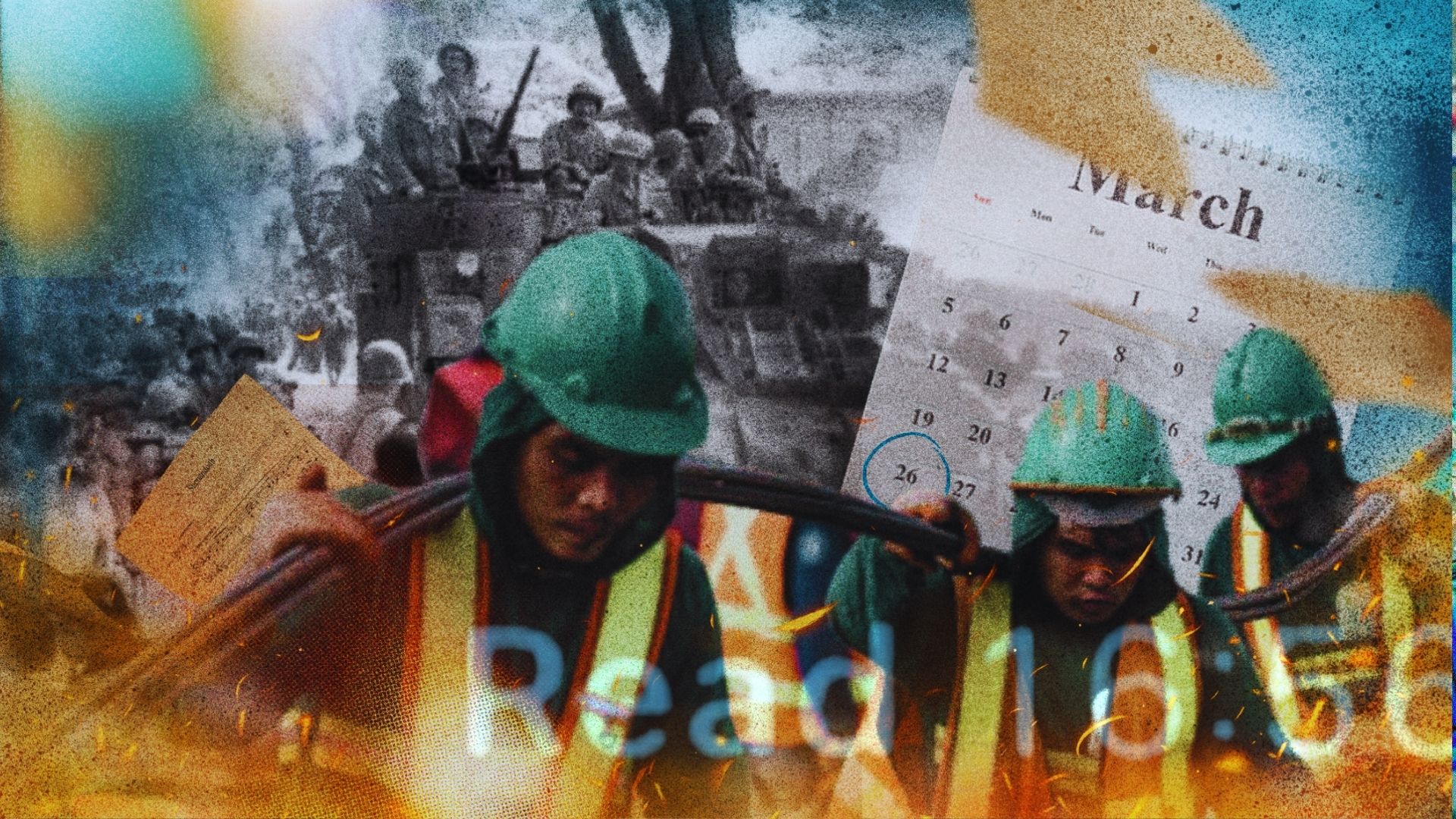
The soil of Cebu is rich, but it is not just the salt of the sea that seasons it—it is the iron of spilled blood and the heavy, accusing silence of a thousand unsung ghosts who bought our freedom with their final breaths.
Every March 26, the frantic pulse of Cebuano life is supposed to steady itself into a collective beat of gratitude. It marks that sweltering day in 1945 when the suffocating smoke of Japanese occupation finally lifted from our horizons and the sun broke over the landing beaches of Talisay. It was the moment a province that refused to break finally breathed again. Yet, as the decades roll by, the vivid red of that sacrifice is being bleached into a dull, administrative gray. What should be a day of fire and remembrance is fast becoming just another square on a cluttered calendar, a date we acknowledge with a nod rather than a heart-on-fire salute.
On the anniversary of the Cebu Liberation held on March 26, we find ourselves at a crossroads of memory. Under Republic Act No. 10359, the day is legally codified as a special non-working holiday in Talisay City but relegated to a mere “special working public holiday” for the rest of Cebu Province. This legislative split does more than just dictate a workday; it is a growing, dangerous friction between our historical soul and our modern-day indifference.
We must stop treating our history as a bureaucratic footnote. A holiday stripped of its heritage is nothing more than a hollow technicality, a “working” holiday that effectively tells our martyrs their sacrifice is secondary to a day’s worth of office spreadsheets.
The “special working holiday” designation for the province effectively lobotomizes the gravity of the liberation, which reduces a monumental triumph of the human spirit to a minor clerical notation.
When the law forces a day of profound blood-debt into the category of a “working” holiday, it creates a shameful paradox. We, as Cebuanos, must ask to honor our liberators while their ears are filled with the mechanical hum of industry and the frantic tapping of keyboards in sterile offices. By forcing the majority to choose between the punch-clock and the monument, we signal that today’s economic output outweighs the very lifeblood spilled for our tomorrow. This “pragmatic” compromise buries the Cebuano resistance under the weight of the daily grind, ensuring that for the average worker, March 26 is just another Thursday where the only thing “special” is a footnote on a payslip.
This lack of immersion is creating a “memory gap” that threatens to leave our youth culturally orphaned, disconnected from the very ground they walk on.
The landing at Talisay is a cold fact in a legal archive, but the visceral, human stories of the local guerrillas who outmaneuvered an empire are disappearing. Without dedicated communal storytelling, heritage treks to our actual battlegrounds, or classroom programs that replace dry dates with the raw words of veterans’ diaries, we are raising a generation that can navigate a global metaverse but cannot find its own roots. If our schools and local leaders fail to turn this day into a living classroom, using “Liberation Trails” or digital archives to bridge the gap, the valor of the 81st Infantry Division and our local heroes will be reduced to a single, forgettable sentence in a textbook no one reads.
A society that values its ledger more than its legacy is a society with no compass. Real progress isn’t just found in a rising stock market; it’s found in people who know exactly who they are and what they owe. We don’t pause our labor to “lose time“—we pause to honor the men and women who gave us the freedom to own our time in the first place. Integrating remembrance into the workday through mandatory symposiums or minutes of silence proves that we don’t have to stop working to start remembering; we just have to stop being indifferent.
March 26 must be reclaimed. It needs to be more than a labor advisory or a social media post; it must be a province-wide refusal to let our narrative die, proving we are actually worthy of the peace we have inherited.
The iron in Cebuano soil deserves more than a passing glance at a memo. If we fail to teach the staggering cost of our liberation, we raise a generation that thinks freedom is a cheap, renewable resource rather than a borrowed treasure. We owe it to the ghosts of 1945 to ensure the silence of their sacrifice is met with the thunder of our gratitude. The doors of our future only remain open because we remember the hands that unlocked them—to do otherwise is to leave our own history on “read.”