







Now Reading:
How to not fall for fake news
-
01
How to not fall for fake news

Isabella Laraga
To assume is to guess because much like what we encounter online, nothing is guaranteed. Fake news is false information deliberately created to mislead or manipulate readers. Its effects range from personal to social and political implications. In 2023, the Presidential Communications Office reported that around nine of 10 Filipinos are either “victims of fake news” or experience difficulties in their everyday interactions with information and media. This shows that misinformation does not affect only a few people, but the majority of Filipinos.
Two months ago, Senator Robin Padilla shared a chain message on Facebook that contained disinformation. However, he is only one of many. If a senator can fall victim to fake news, how can an ordinary citizen expect to fight it?
Fake news comes in many forms, each making information more difficult to verify, especially for citizens who are unequipped with the ability to distinguish fact from falsehood.
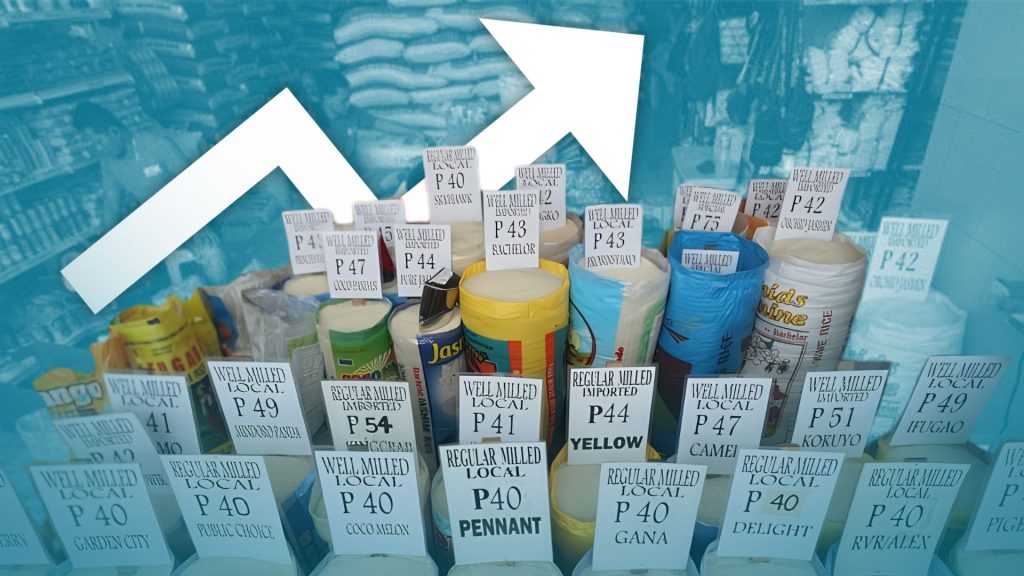
One form is a false connection, which occurs when headlines, visuals, or captions do not match the content of the graphic or article. For instance, using an unrelated headline or visual may be used to support a news story and create a misleading impression. Another form is false context, where truthful information is misused. An example would be posting price hikes from years ago and labeling it as the latest update. These two are among the most common forms of misinformation experienced online.
In the case of Senator Padilla, the chain message he shared is an example of misleading content. This type of misinformation uses information to frame an issue or individual in a way that fits the author’s narrative, such as reposting older news and presenting it as new to an audience.
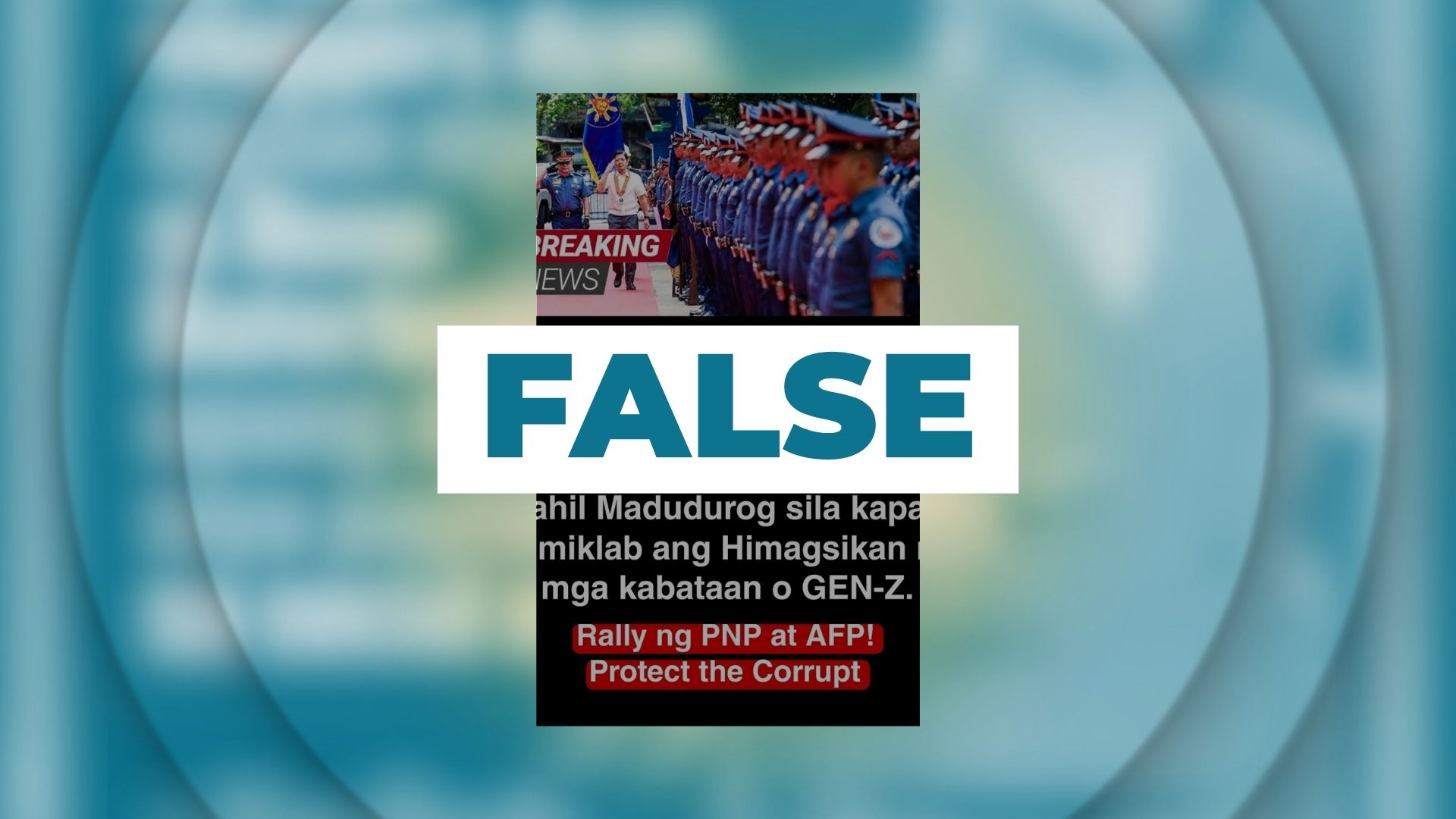
There is also a type of misinformation called imposter content, which imitates legitimate sources, organizations, or public figures to appear credible. In March 2025, posts that were later confirmed to be false showed United States President Donald Trump showing support for former Philippine President Rodrigo Duterte, who has been detained by the International Criminal Court (ICC). The post was falsely attributed to The Washington Post. Meanwhile, Trump did not release any statement regarding Duterte. Peddlers of fake news tend to use the name of a news outlet or government agency to seem credible.
Furthermore, in March 2025, videos showing a crowd chanting, “Duterte!” were circulated online and claimed to depict supporters of former Pres. Rodrigo Duterte in the Netherlands. This is an example of manipulated content as it deliberately distorts genuine information. In this case, the audio of the chants was placed over the video. In reality, the footage was not filmed in the Netherlands but was actually a protest in Serbia.
Moreover, completely made up information designed to look true is what we refer to as fabricated content. In January 2025, when Los Angeles, California, was facing severe wildfires, fake images and clips of the Hollywood sign burning started to emerge. They were proven to be AI-generated, and the famous landmark was indeed not affected.
Lastly, fake news can take the form of satire or parody which uses humor, exaggeration, or irony to comment on real-world issues. For example, “Facebook Apologizes For Giving Mark Zuckerberg A Platform” is a headline from a well-known satirical news website, The Onion. Here, you will know it is clearly satire when you consider that Mark Zuckerberg himself is the CEO of Facebook. Therefore, just because it is funny does not mean it is true.
I think, therefore, I should think more
To successfully evaluate a piece of information, go the extra mile. Seeing news is one thing. Taking a step back to understand it better is another.
For mile one, think about where you saw the information. Was it on social-media platforms, from news outlets, or from government agencies? Check their website, their reputation, and for social media pages, if they are verified or not.
Go beyond the headline. Read the full article. The whole caption of a post. Watch the full video instead of just clips. This is helpful in identifying misleading content and false connections. That one is mile two.
Mile three is to find out about the author. What they are known for, their beliefs and opinions, and who they work for. Understand the background of the writer or uploader. Find out whether they are credible or otherwise.
Now, mile four. Don’t just get to know the author, continue to look for information from other sources. Don’t stop at one post or one headline. Check what other credible media organizations, government offices, or the person being reported on is saying. Evaluate whether they are reporting similar stories with your first source.
Check the date, mile five is for looking back. Consider when you saw the information because some of it is out of date and is only reposted to gather publicity. If brought back again years later, it’s often to mislead readers with irrelevant news.
If it is too absurd to be true, then maybe it’s not. Consider the possibility of satire. Mile six is for checking more reliable sources for credible information.
Examine your biases—that is mile seven. Check prior assumptions. Instead of quick judgment, widen your curiosity. Was there any information you have previously accepted as right or wrong without knowing half the context? Ask the right questions with no exceptions.
For our last mile, mile eight, ask the experts. Communicate with academics, scholars, and experts on the field. Influencers and vloggers can only tell you so much. Go to someone who reads and tracks the latest research and attends conferences and seminars for the certain field.
Don’t think twice, think 8 times
You’re not one, not two, nor three or four. You’ve just gone the extra 8 miles—and yes, you can go the distance.
An MIT study found that, on X, false news travels faster than true stories. It only proves that it is now harder to access factual information. You can no longer believe everything, however, that doesn’t mean that you shouldn’t believe in anything.
Pause and verify before sharing. If the spread of fake news is not prevented, the dissemination of the truth will be hindered.