





Now Reading: In Saan Ako Pinaglihi, a child’s curiosity teaches adults how acceptance is learned
-
01
In Saan Ako Pinaglihi, a child’s curiosity teaches adults how acceptance is learned
In Saan Ako Pinaglihi, a child’s curiosity teaches adults how acceptance is learned

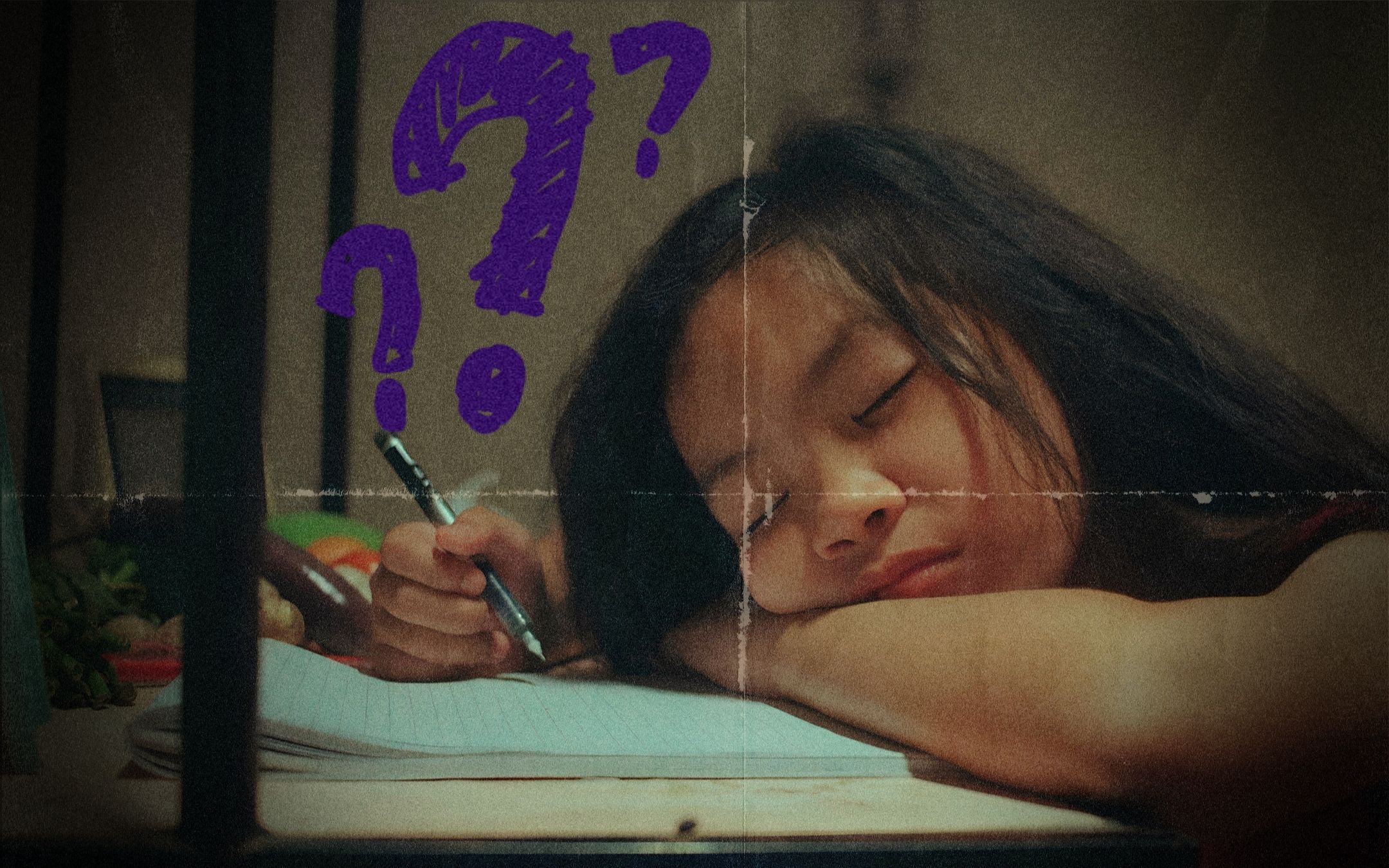
“Saan po ba talaga ako pinaglihi? Sabi kasi nila, pinaglihi ako sa tomboy.”
A simple and amusing question for many adults becomes the driving force behind eight-year-old Chinky’s search for answers. As the daughter of a lesbian couple, she grew up surrounded by love, acceptance, and a community that embraced her family.
Yet when she repeatedly hears people say that she was “pinaglihi sa tomboy,” Chinky takes the statement literally and sets out to discover what it truly means.
This question lies at the heart of Saan Ako Pinaglihi?, a short film directed and written by Rafaela Abucejo. It is an official entry in the Student Short Film Category at the Puregold CinePanalo Film Festival, where it won the Audience Choice Award.
Meet Chinky, ang batang pinaglihi sa tomboy
The story unfolds in a typical Filipino barangay, where Chinky lives with her two mothers, Bing and George, who run a small bake shop called Bekiry. One day, Chinky is brought to school by George, where she and her classmates are assigned to write an essay answering the question, “Saan ako pinaglihi?” What begins as an ordinary classroom activity soon takes an unexpected turn when her classmates tease her, saying, “Pinaglihi ka sa tomboy, so tomboy ka na rin, Chinky?”
This moment sets the story in motion. Not because Chinky suddenly doubts herself or her family, but because she becomes curious about the meaning behind the words she hears. Taking the statement literally, she embarks on a search for answers, allowing the film to explore how children absorb social beliefs and how ideas about gender, sexuality, and family are often learned from the people around them.
With the help of her friends, Diday and Mark, Chinky becomes increasingly curious about who her father might be. At her young age, she already understands that a child is traditionally conceived through the participation of both a mother and a father. This leaves her with a question she cannot easily answer: if she has two mothers, then who is her father?
Determined to solve the mystery, Chinky begins forming her own theories. Could it be Kuya Leo, the friendly tricycle driver who is often seen with Bing? Or perhaps Ate Jenny, the gay parlor owner who shares a close bond with her mother? Following the advice of Diday and Mark, Chinky becomes convinced that the key to discovering where she was “pinaglihi” lies in identifying who her father is.
Through the perspective of a child, the short film succeeds in discussing queer parenthood with warmth, humor, and sincerity. As Chinky searches for answers, viewers are invited to confront the assumptions and beliefs they have long taken for granted.
Her innocent questions expose how prejudice is often not innate but learned. It is often passed down through casual remarks, social expectations, and narrow definitions of what a family should be.
As Chinky continues her search, she encounters different explanations from the adults around her. Each answer only adds to her confusion, forcing her to piece together ideas about family, gender, and parenthood through the limited understanding of a child. Eventually, Chinky discovers that the answer she has been seeking is far more complex than she initially imagined.
She realizes that her family’s legitimacy is not determined by the presence or absence of a father, but by the love and care that surround her every day.
Seeing the world through Chinky’s eyes
What made the short film a crowd favorite is its way of telling the story through the eyes of a child. Discussions surrounding queer families are often framed through political debates, social controversies, or experiences of discrimination. Chinky, however, approaches the topic with neither prejudice nor ideological bias. She asks questions that many adults may find uncomfortable, not because she seeks to challenge her parents’ identity, but because she genuinely wants to understand the world around her.
This childlike perspective softens what could have otherwise become a heavy-handed social commentary. Instead of lecturing the audience about acceptance, the film allows viewers to learn alongside Chinky. Every misunderstanding, theory, and question she raises becomes an opportunity to examine the assumptions society often takes for granted. Through her innocence, the film reveals how arbitrary many of these assumptions can be.
Another strength of the film is its refusal to portray queer parenthood as a source of tragedy. Many LGBTQ+ narratives focus on rejection, violence, or social exclusion. While these stories are important, Saan Ako Pinaglihi? chooses a different route. Bing and George are not defined by suffering. They are simply parents trying to raise their daughter in a loving environment. Their relationship is not presented as controversial within the household; instead, it is treated as an ordinary part of daily life.
This creates an interesting contrast between Chinky’s home and her school environment. At home, she is surrounded by affection, security, and acceptance. At school, however, she encounters classmates who repeat ideas they have absorbed from the adults around them.
The teasing directed at Chinky does not stem from hatred as much as it stems from learned beliefs about what a “normal” family should look like.
Watching the film prompts people to reflect on how society continues to define families through rigid structures. Children are often taught that every family must fit a specific mold: a mother, a father, and children.
Yet reality has always been more diverse than these simplified expectations.
Some children are raised by single parents, grandparents, relatives, adoptive parents, or same-sex couples. What really shapes a family is not its structure but the relationships built within it.
The film also tells something adults often forget: children are capable of understanding acceptance far better than we give them credit for. Chinky’s questions are not rooted in judgment. They emerge from curiosity. It is only when society attaches stigma to difference that children begin to view certain families as unusual.
By presenting queer parenthood through a child’s perspective, Saan Ako Pinaglihi? encourages conversations rather than arguments, understanding rather than condemnation.
At the end of the film, the question “Saan ako pinaglihi?” becomes less important than another question: “Paano ako patuloy na minamahal?”
In Chinky’s world, the answer is clear. She is loved in a home filled with care, support, and acceptance. And perhaps that is what makes Saan Ako Pinaglihi? such a memorable short film. It reminds us that families are not defined solely by biology or tradition, but by the love that holds them together.