

Now Reading: ON SONA 2025 | A government Of illusions
-
01
ON SONA 2025 | A government Of illusions

Justin James Albia
Where is the president?
As towns in Luzon and Visayas drown under relentless rain, and families evacuate with nothing but soaked clothes and rising panic, President Marcos Jr. is nowhere near the storm’s path. Not in a command center. Not visiting evacuation sites. Not even issuing daily briefings. Instead, he’s thousands of miles away—comfortably tucked into a diplomatic suite in Washington, D.C.—shaking hands and sealing trade deals while his nation sinks.
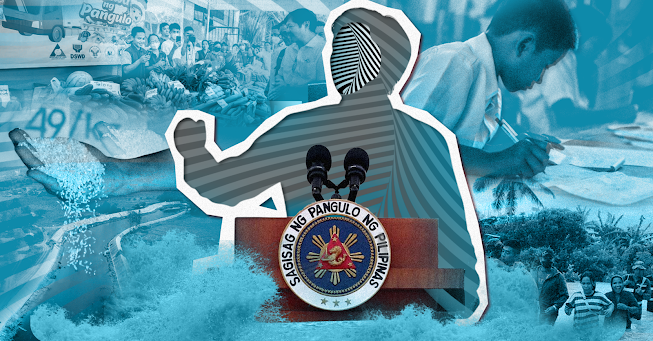
The greatest magic trick this administration ever pulled was convincing the public that progress was happening, even as the country starved, sank, and staggered. It’s governance by illusion: a Bagong Pilipinas built on tarpaulins and press photos, where PR campaigns substitute for policy, and ribbon cuttings masquerade as reform.
This is the trademark of his rule: brushing aside a real, unfolding catastrophe just to keep the fantasy alive.
Even as families waded through waist-deep floods, Marcos pushed forward with plans for his fourth State of the Nation Address (SONA). No delay. No recalibration. Business as usual—as if the suffering of his own people were just background noise.
It’s a style of governance that demands we ask: Who does he really serve? Is the nation underwater, or is it the narrative he’s trying to sell?
As the floodwaters rise, Marcos flies
As Typhoons Crising and Dante hammer large parts of the country in July 2025, where was the President?
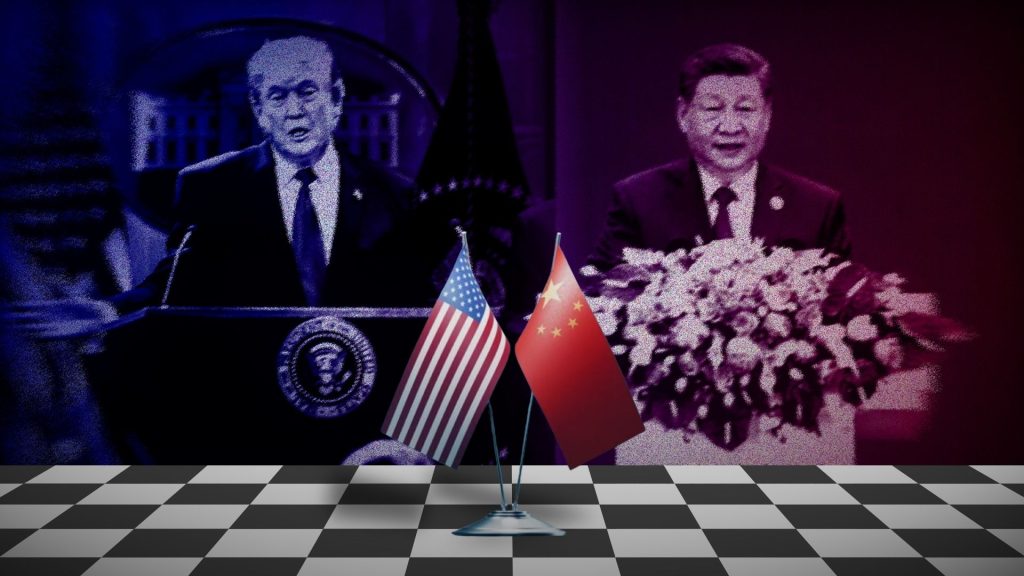
Not on the ground with the people he claims to serve. He is—instead—tucked safely away in Washington, D.C., finalizing a trade deal with former U.S. President Donald Trump. It’s not just a diplomatic trip—it’s a performance. And like many things under this administration, it was perfectly timed to distract.
This isn’t new. Just four months after his 2024 SONA, Typhoon Kristine exposed the cracks in his flood control boasts. Metro Manila and neighboring provinces were submerged. Infrastructure buckled. Relief was delayed. The 5,500 “flood control” projects he proudly cited? Useless. The President’s defense?
“Na-overwhelm lang.” But storms like Kristine are not outliers. Climate disasters are the new normal—and yet the President continues to act surprised, then absent.
Floods are not new. Climate change is not new. What is new is a government that insists on being unprepared every single time. Instead of a proactive policy, we get a President who arrives late, bearing relief bags and rehearsed statements. We don’t need reaction—we need readiness.
His latest absence, however, feels especially callous. While communities drown and farmers lose crops, Marcos was in the Oval Office negotiating a “deal” that imposed a 19% tariff on Filipino exports while giving American products zero-tariff access to Philippine markets. He called it a win. Trump called it “beautiful.” Meanwhile, the Filipino people were stuck in evacuation centers or trapped by floodwaters, once again without their President.
This is not just a case of bad timing. This is a governing style—one rooted in evasion, not engagement. It is leadership from a distance: by plane, by PR, by proxy.
A harvest of hype
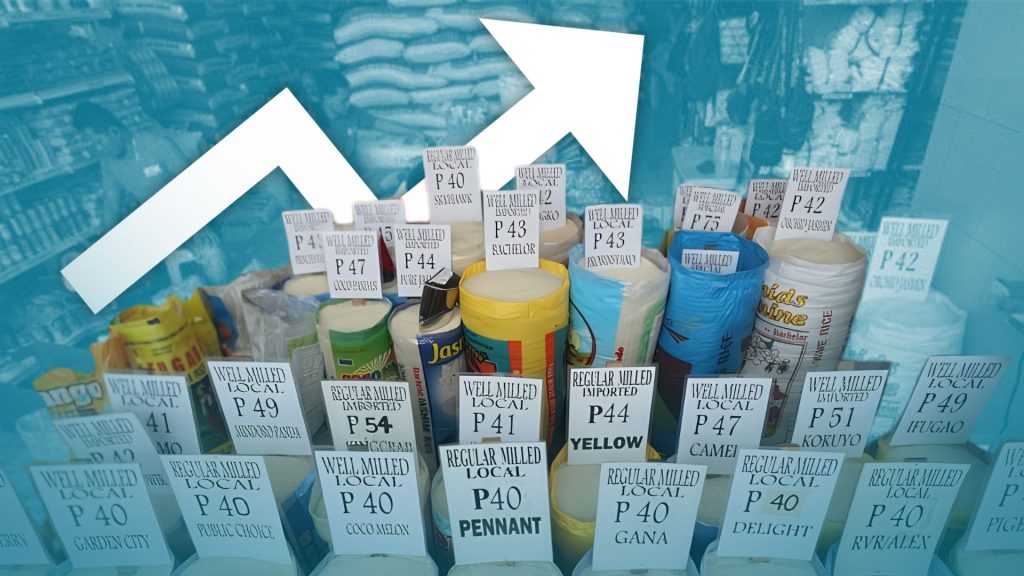
In his SONA, Marcos boasted of a “historic” rice harvest, the highest since 1987. But what he didn’t say? Prices still soared. Rice reached ₱65 per kilo. Hunger deepened. The ₱20/kilo promise he once championed has become a national punchline. And in February 2025, his own Department of Agriculture declared a state of food security emergency—an open admission of policy failure.
To explain this away, Marcos said:
“Totoo, puwersa ng merkado — sa ating bansa at maging sa buong daigdig — ang siyang nagdidikta ng presyo. Bunsod ito, halimbawa, ng giyera, problema sa supply, at puwersa ng kalikasan, tulad ng El Niño na naranasan din sa ibang bansa.”
But these aren’t explanations—they’re evasions. The market is not sovereign. Governance exists precisely to tame it, to cushion the blow of crises. But instead of dismantling rice cartels, investing in post-harvest infrastructure, or securing supply chains, the President rolled out Kadiwa stalls—temporary, cosmetic interventions that reek more of campaign gimmickry than structural reform.
This isn’t just neglect. It’s deliberate inaction in favor of optics. A system where farmers go bankrupt, consumers starve, and only traders thrive.
Funding by law, bragging by choice
Education was another item in Marcos’s list of “achievements.” He congratulated himself for prioritizing education funding, ignoring the fact that it is a constitutional mandate, not a presidential favor. Under the 1987 Constitution, education must receive the highest budgetary allocation. Claiming credit for this is not just dishonest—it’s insulting.
Even worse, he tried to claim credit for 87 higher education institutions earning international recognition. Let’s be clear: those gains were achieved by the schools themselves, not through presidential support. It was academic freedom, not government generosity, that made these achievements possible.
So, where is the bold plan to revamp SUC funding? Where is the agenda to reform the broken public education system? Nowhere—because applause costs nothing, while investment demands political will.
More work, less worth
President Marcos claimed victory over poverty through wage increases:
“With tripartite consensus, minimum wage levels have been increased in various sectors in all regions, including the BARMM, for workers in private establishments. Makapagdudulot ito ng ginhawa sa mahigit apat na milyong mga kababayan natin at kanilang mga pamilya.”
But data tells a different story. According to the National Wages and Productivity Commission, the average monthly minimum wage is only ₱9,606—just 69% of the ₱13,797 official poverty threshold for a family of five. It falls painfully short.
Ibon Foundation puts the average daily minimum wage at ₱442, only 37% of the ₱1,210 family living wage. What Marcos calls “ginhawa” is barely surviving.
This isn’t just a gap. It’s a lie dressed up as progress. The so-called tripartite consensus is a ceremonial process, often skewed in favor of business and government. Workers’ voices are drowned in bureaucratic procedure. And even when wage hikes are approved, they arrive late and far too little.
We don’t have rising wages. We have shrinking dignity
Timing is Everything—Especially When the Cameras Are Rolling
Whether it’s food aid, flood response, or wage increases, Marcos responds only when optics demand it. His ₱60-million aid distribution after Typhoon Kristine? It came only after former President Duterte made a highly publicized visit to the disaster site. The gesture was real. But so was the political calculation.
Even Kadiwa—the most visible of his so-called “pro-poor” programs—only appears near election seasons, only in high-visibility areas, and never as a permanent policy. If it worked, it would be nationalized. But its goal is not transformation—it’s transaction. The illusion of care in exchange for compliance at the polls. This is not governance. This is a staged performance.
Need more proof? Just this July 22, while floods submerged homes and roads across Luzon and Visayas, SONA tarpaulins began going up. When reporters asked Marcos about it—speaking from the Blair House in Washington—he said he was “surprised.”
“Baha na nga, bakit pa kayo maglalagay diyan?” he told them, calling it an “unfortunate misjudgment.”
But what’s truly unfortunate is a President who treats disaster response like a technical glitch—something to “correct”—instead of something to lead. That response wasn’t leadership. It was a stage direction from halfway around the world. And even that was late.
This administration has perfected the art of public relations but failed at the fundamentals of governance. Rice remains unaffordable. Floodwaters rise faster than government response. Education is a repackaged obligation. And aid is political currency.
President Marcos Jr. claims we are building a “Bagong Pilipinas,” facing a “new normal.” But a new Philippines cannot be built on recycled lies, PR strategies, and band-aid politics. What this country needs is not better slogans. It needs truth, leadership, and reform—none of which were found in his SONA, nor in his disaster response.
Until then, Filipinos will continue to suffer—not from natural calamities alone, but from the consequences of a government that mistakes applause for action and headlines for help.