



Now Reading: PAGEANTRY WITHOUT PEOPLE: A nation on mute in BBM’s SONAs
-
01
PAGEANTRY WITHOUT PEOPLE: A nation on mute in BBM’s SONAs
PAGEANTRY WITHOUT PEOPLE: A nation on mute in BBM’s SONAs

Bernadette Soriano
There is a silence more dangerous than denial — the kind dressed in fluency and delivered in full sentences. In three years of State of the Nation Addresses (SONAs), the heir apparent has not merely spoken; he has choreographed language to evade. Syntax becomes a shield. Metrics replace memory. What sounds like governance is, on closer listen, curation. And the nation, addressed but unnamed — nods, not in agreement but in erasure.
The inauguration of absence: 2022 and the performance of clean slates
There was something spectral — not stern, not sympathetic, simply polished in the way President Ferdinand Marcos Jr. first stood before the nation in July 2022. And in that polish, something uncanny gleamed.
In a moment historically reserved for reckoning, he offered instead a spreadsheet.
“We live in difficult times brought about by some forces of our own making, but certainly, also by forces that are beyond our control,” he said.
This was not a summons; it was a shrug. Tonally managerial, syntactically antiseptic. The architecture of the speech was sterile, bereft of the emotional texture that national memory demands. History was not revisited; it was redacted.
The son stood not to remember, but to resume.
If we listen with a psychological ear, this is the language of detachment — avoidant leadership refracted through national optics. He named no ghosts and summoned no wounds. Instead, he intoned: “In terms of the economy, we will implement sound fiscal management… our country must become an investment destination.”
The message was clear: growth, not grief. And yet, the absences echoed. Martial Law, disinformation, institutional decay — these were not confronted but bypassed. BBM’s first SONA was less a speech than an interface. Its purpose was not to remember, but to normalize.
He closed with a chilling finality: “We will endure. Let our Filipino spirit ever remain undimmed… the state of the nation is sound.” But soundness, we must remember, is not synonymous with healing. It merely indicates structural survival… for now.
2023: The slide into spectacle
By the second SONA, delivered on July 24, 2023, the ritual had hardened into routine. What began as omission had metastasized into strategy. The rhetoric remained efficient, depersonalized, and symmetrical.
“One year ago today, I stood here before you, setting forth the plans that we have to improve our economy, bring jobs to our people, improve the ease of doing business,” he began, voice steady, affect muted.
The speech cascaded into familiar metrics: jobs, GDP (Gross Domestic Product), infrastructure. Everything was framed in movement, none in memory. Inflation? Explained away.
“Last year… the biggest problem that we encountered was inflation. Maraming kaganapan sa mundo ang nakapag‑pagulo sa maayos na takbo ng pandaigdigang merkado.” External forces, again. Not failure. Not friction. Just weather. Sociologically, this is the speech of technocracy — where governance is reduced to a series of indicators, and leadership becomes indistinguishable from data analytics. Clean, bloodless, efficient — and profoundly dangerous.
BBM’s language belongs to what critical theorist Jürgen Habermas called systematically distorted communication: where the preservation of public calm supersedes the pursuit of public truth. In this discursive regime, dissent is not criminalized — it is aestheticized out of the frame.
The 2023 sugar importation fiasco, exemplifies this. Bureaucrats moved with haste but spoke with fog. The crisis was proceduralized, not confronted. The victims? Forgotten… until prices rose, and sari-sari stores began to dwindle in stock.
2024: Where syntax softens accountability
By the third SONA, the form had ossified. If 2022 was a soft launch and 2023 a smoother iteration, then 2024 was the perfecting of a language model that speaks without holding back those names without noticing.
“The hard lesson of this last year has made it very clear that whatever current data proudly bannering our country as among the best‑performing in Asia, means nothing to a Filipino, who is confronted by the price of rice at 45 to 65 pesos per kilo.”
There it is again: data first, reality as a footnote. Then, a rhetorical pirouette: “Hindi natin winawalang‑bahala ang inyong mga hinaing at hirap na dinaranas. Sa kabila ng mga hamon… nasaksihan natin ang pinakamataas na ani ng palay.”
Empathy becomes an algorithm. The suffering is heard, only to be counterweighted by agricultural output. The body politic is recognized, only to be promptly re-abstracted. Anthropologically, the SONA has become a national trance. The president speaks, and the nation nods. The ritual persists, and so do the silences.
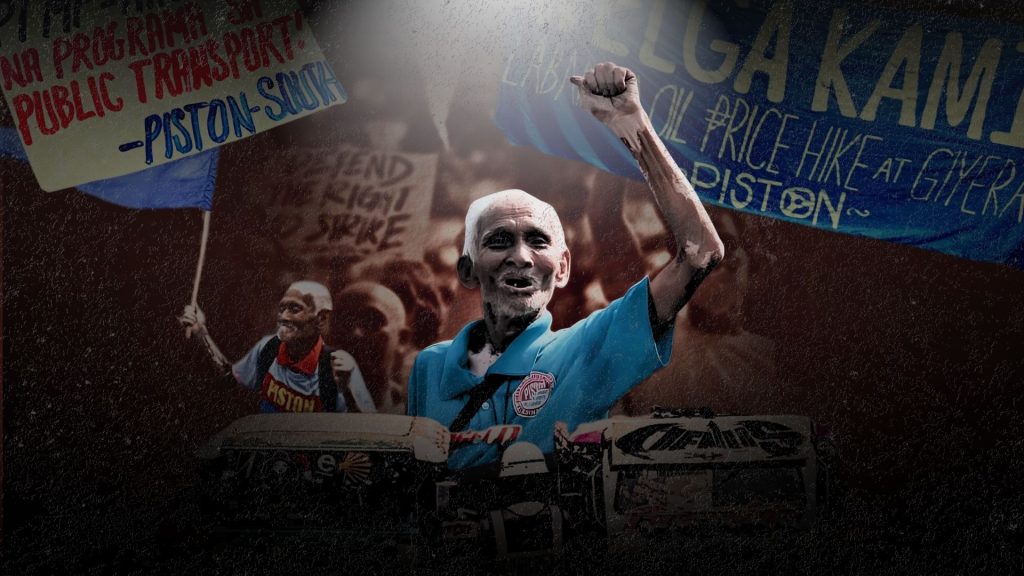
This ritual isn’t unique to the halls of Batasang Pambansa. It echoes in everyday governance: in how urban hunger is addressed through pop-up kitchens but never agrarian reform; in how jeepney drivers, protesting displacement are recast as obstacles to modernization; in how youth activism is met with surveillance rather than dialogue. The SONA may be annual, but its logic unfolds daily — in schools, on screens, in streets.
Consider the marketing of the mandatory ROTC proposal as nation-building: a deeply militarized program presented as a solution to “’discipline’” issues among the youth. But whose discipline? And for whose benefit? The lived realities of students — overworked, underpaid, surveilled — are omitted. Discipline becomes virtue. Protest becomes disruption and the classroom becomes a bootcamp.
A nation spoken through, not with
Across this trilogy of addresses, a pattern crystallizes. We are not being led; we are being told. The Filipino, in these speeches, is not an actor but a statistic. We appear in percentages, never in the first person.
BBM’s brilliance lies not in deception, but in curation. He does not erase — he renames. Poverty is “hunger mitigation.” Protest is “realignment.” Decline is “adjustment.” It is not governance; This is editing.
And yet, editing is not benign. In anthropology, the act of renaming is a form of power. To reframe reality is to overwrite it. Here, we see Michel Foucault’s theory of biopower in full bloom: the regulation of bodies not through force, but through definitions.
Consider the real world: a fisherfolk community displaced by reclamation projects is “relocated for development.” A Lumad school is closed and labelled a “security threat.” Women demanding reproductive justice are offered cash incentives and called “beneficiaries.” Language does not reflect reality; it realigns it.
Just this year, medical professionals protesting the delayed release of their COVID-19 hazard pay were met with silence — until media coverage amplified their frustration. Their demands were not acknowledged in any SONA, yet their labor formed the backbone of every recovery statistic proudly cited.
The state claimed the gains, but not the grief.
What is SONA if not a mirror?
The fourth SONA looms, and while the syntax may remain, the subtext will shift — toward legacy, toward image stabilization, toward a prelude to permanence. It will not be a speech; it will be a soft launch.
But speeches are not just performances. They are contracts. And when a leader addresses a people he refuses to name, the question emerges: Do we even exist in his imagination?
Benedict Anderson once wrote that nations are imagined communities. But BBM’s Philippines is not imagined — it is curated. And curation, for all its elegance, has a price: contradiction is airbrushed, grief edited out, dissent cropped from the frame.
The nation in passive voice
There is heartbreak in hearing one’s nation addressed as a problem to be solved, not a people to be listened to. BBM’s SONAs — gilded in structure, guarded in tone — speak with the elegance of someone who governs an exhibit, not a republic.
Filipinos are mentioned, but rarely named. A nation is invoked, but rarely held.
And this — more than the programs, the rice, the roads — is the real danger: not the lies, but the lyricism that conceals it.
This isn’t just governance. This is revision. And the people, once again, are not the authors.
What BBM offers is not a future. It is a soundscape.
But we cannot eat languages.
We cannot live inside a sentence.
And eventually, someone will have to speak back.