



Now Reading: SONA sinabi mo: What Filipinos yearn to hear this year
-
01
SONA sinabi mo: What Filipinos yearn to hear this year

Francis Ampil and Kristine Claire Edaga
Corruption, ghost projects, budget cuts, and the list seems to never come to an end.
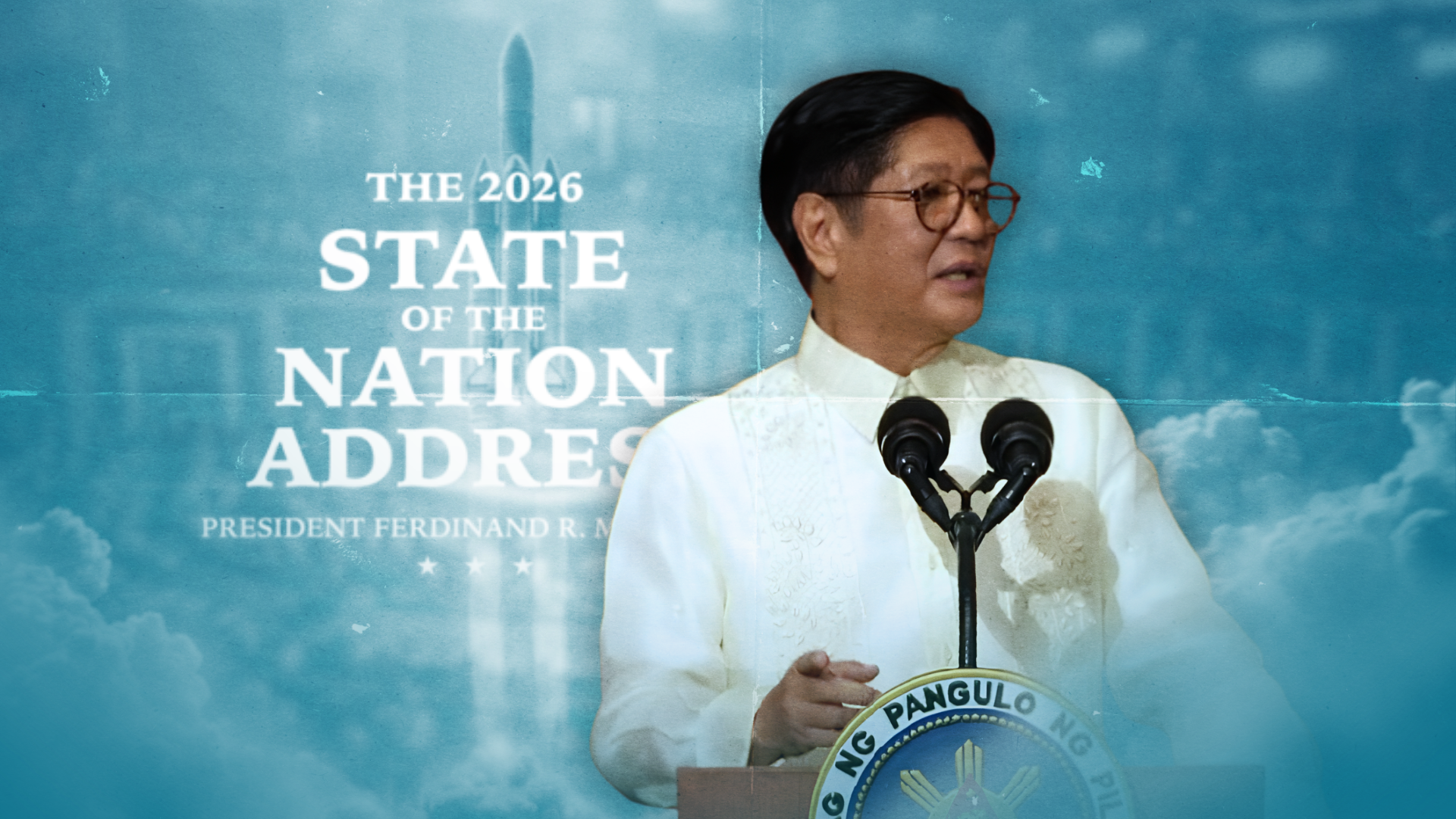
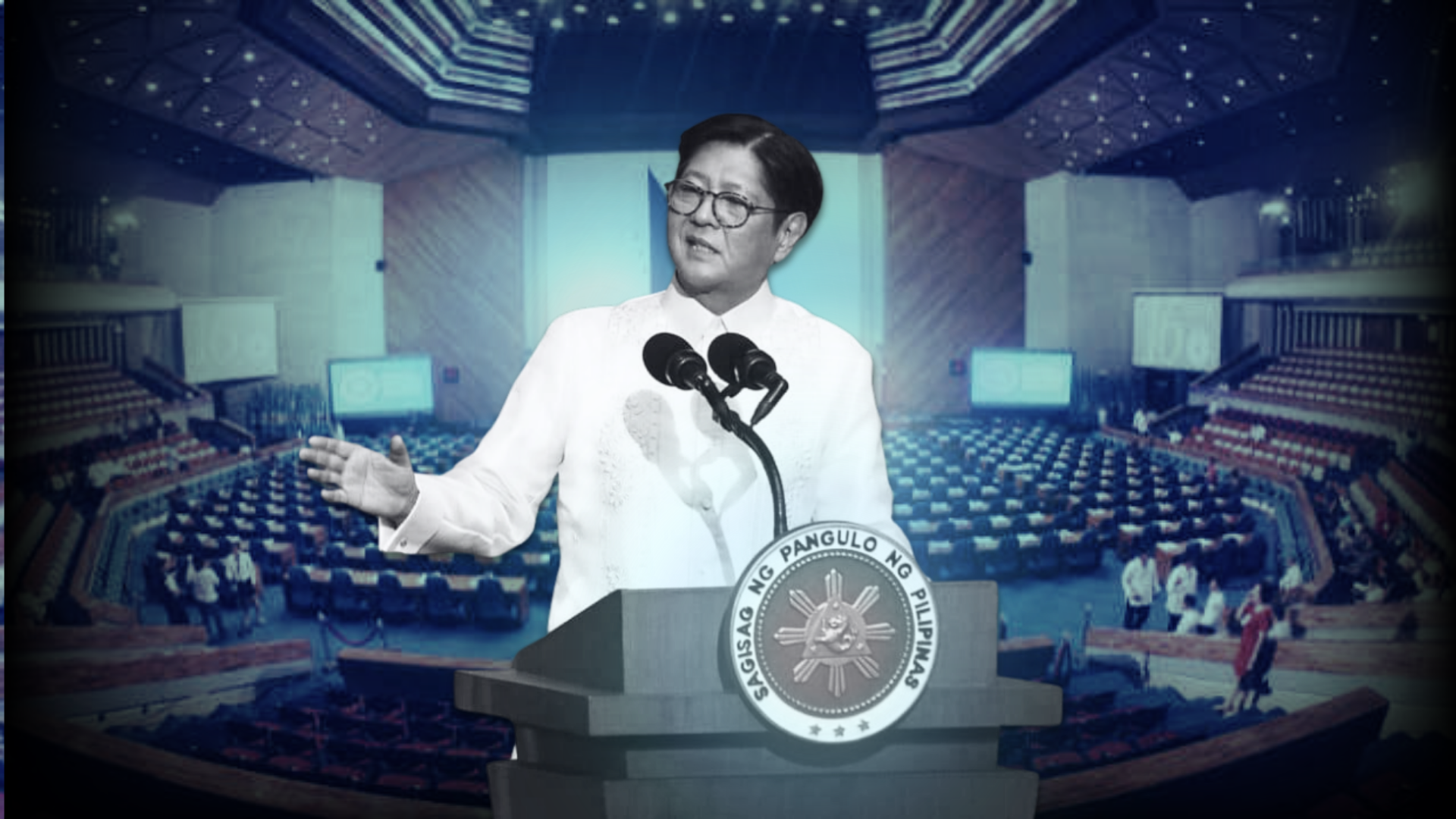
It’s almost one year since President Ferdinand “Bongbong” Marcos Jr. delivered his fourth State of the Nation Address (SONA) as we enter the eve of his fifth.
In a year defined by imprisonment, impeachment, and inflation, amid an unstable and uncertain sociopolitical landscape, we took the time to talk to everyday Filipinos of different sectors, communities, and walks of life and ask what they want to hear from the upcoming 2026 SONA, and, to paraphrase a fellow Filipino, we’ve got expectations.
Sentiments and opinions on national affairs
Many Filipinos look beyond promises, data, and statistics.
Michael, a student nurse from the University of St. La Salle–Bacolod, hopes to hear the economic and social struggles Filipinos face every day in healthcare acknowledged amid corruption cases and calls for accountability, along with a substantial solution.
“Every peso lost to corruption is money that could have been invested in better public hospitals, schools, disaster preparedness, and social services. As a future healthcare professional, I want to hear stronger commitments to improve our healthcare system by addressing hospital overcrowding, making medicine more affordable, expanding mental health services, and ensuring healthcare is accessible to every Filipino,” he said.
He looks forward to the president speaking about concrete and measurable steps, ensuring that economic growth translates into affordable education, accessible healthcare, decent jobs, and a better quality of life ordinary Filipinos can genuinely feel.
Another expectation comes from activists from different advocacy development and engagement groups all over the country, particularly in how the administration will deal with ongoing environmental issues.
For Breech, an advocate for the Negrosanon Initiative for Climate and the Environment Inc., Marcos should start talking about real solutions to rising fuel and electricity costs, the catastrophic climate crisis impacts, environmental destruction, and the growing inequality that continues to burden ordinary people.
“The fight for the environment is also a fight for economic and social justice no Filipino should have to choose between survival, dignity, and a livable future,” Breech concluded his answer.
One thing he further emphasized was the reality that the climate crisis is no longer a distant threat, but a lived reality for millions of Filipinos—disasters further deepening poverty, displacing various communities, and threatening the country’s collective future. Addressing these challenges entails investing in actual sustainable solutions that would not only protect the environment but also ensure that vulnerable communities are not left to carry a system that benefits only a few.
Another issue that Filipinos wanted to be addressed is handling the tensions between the Philippines and other countries, especially defending our sovereignty in the West Philippine Sea.
Johnny, owner of Damgo Coffee Shop in Bacolod City, expressed: “Recent global events, especially the oil crisis, have reminded us that the Philippines remains vulnerable and still relies heavily on other countries for essential resources. We should prioritize building a nation that can defend itself and sustain its own needs during times of crisis, whether brought about by economic disruptions, pandemics, or natural disasters.”
Aine, a journalist and the External Affairs Director of the official institutional publication of USLS, The Spectrum, shares that she hopes that the upcoming SONA would point out disaster management and foreign affairs. For the upcoming address, she hopes not only for clear direction, but long-term solutions for concerns in Philippine tourism.
“I’d like to see how the present administration may respond to broader concerns in Philippine tourism, such as the issues raised in Siargao regarding the behavior of some Israeli tourists, as well as foreign investment and economic security matters like Pax Silica. I hope to see a more nationalistic stance on these matters because they affect both national security and the safety and wellbeing of local communities,” she told us.
Education beyond the budget
Other respondents, such as student leader Hans from the University of the Philippines Visayas, cited a concern that hits closer to home, amidst struggles of both educators and learners—the educational crisis.
According to him, the most important challenge the government should prioritize is the restoration of educational quality.
“I am less interested in hearing another affirmation that education is a priority than in understanding how that priority will be reflected in policy, investment, and institutional reform. If young Filipinos are expected to inherit this nation then we deserve an education system that equips us to lead it,” Hans said.
For some respondents, education is about more than funding. Shan, a state university scholar from the Polytechnic University of the Philippines – Sta. Mesa, looks forward to this year’s SONA goes beyond announcing budgets and lays out concrete solutions to the challenges students, parents, and schools continue to face.
He cited the newest educational program as a prompt for such concern, saying: “Even with [the recent announcement of ₱12.31 billion for the free college program], many students still struggle with competitive admissions, limited slots, and the financial sacrifices that come with staying in school. I want to hear how the president and the government plan to make quality education more accessible not just on paper, but in reality.”
Beyond accessibility, respondents also pointed to the need for safer learning environments, like student council officer Lay, especially after reports of school violence in educational spaces this June have circulated nationwide and made headline news.
“I expect the president to present concrete plans to make schools safer. Schools should be places where students can focus on learning without worrying about their safety. I want to know what concrete steps the government will take to prevent these incidents from happening again,” she stated, expressing her hopes amid the new territory.
That concern resonates not only with students but also with parents, recent reports of violence in schools have left many families anxious every time their children leave for class, like mother-of-two Marjorie.
“[…] Every time I hear news about violence in schools, I can’t help but think about [my children’s safety]. I hope the president takes these incidents seriously and explains what the government will do to better protect students, teachers, and everyone inside our schools,” she concluded.
The cost of making a living
While the government often points to economic gains, many Filipinos say they have yet to feel them in their everyday lives. For workers trying to make ends meet, like tricycle driver Rodel, rising prices remain the issue they hope Marcos Jr. will address in this year’s SONA.
Noting the price hike as one of the biggest challenges to making a living wage in his field, he states: “Every increase in gasoline prices takes away a huge part of what we earn. After paying for fuel, there’s barely anything left for food, bills, and my family’s daily expenses. I hope the government can provide real solutions because drivers like us are finding it harder to make a decent living.”
The burden of inflation and its effects on the livable income of the working class extends beyond transportation. The same concern was shared by Aling Chelie, a market vendor. From her experience, rising prices have affected both sellers and consumers, making it increasingly difficult for small businesses to survive.
“The prices of almost everything we sell keep increasing, but we can’t simply raise our own prices because our customers are also struggling. Some leave without buying anything, while others buy much less than they used to,” Aling Chelie expressed along with her hope that Marcos Jr. will prioritize lowering the prices of basic goods since it is becoming harder for vendors to survive.
For Iris who commutes everyday, their cost of living is measured not only in pesos but also in the hours lost to traffic and unreliable public transportation, a sentiment that echoes the experiences of other commuters elsewhere.
“Before I even get to work, I’m already tired. I spend hours stuck in traffic or waiting for public transportation, and by the time I get home, I’m exhausted. Projects like MRT-7 have been under construction for years, yet commuters are still waiting for better transportation,” she shared together with her desire for the President to tell everyone when these projects will finally be completed.
At the intersection
After all is said and done, the Filipino people in this day and age evidently care for a multitude of issues—and for good reason.
As a society of different collectives, identities, and urgent problems, we bear witness to an unprecedented age, continuously surprising us as we realize how far the rabbit hole goes. But it goes without saying, to advocate for one concern is to advocate for all of them, that one person’s problem is another’s as well, as Andy, a member of the LGBTQIA+ community and one of the organizing leads of Negros Pride said.
They recognized the difficulties experienced by Filipinos in the previous year, which makes them all the more jarring with every administrative report that shows an improvement to our national development and growth. As challenges compound onto one another, they hope intersectionality can be recognized in finding remedies for the structural issues in our society.
“The president should address the ineffective systems at their core and pursue solutions that respond to all sectors without asking marginalized communities to settle for less. […] In the country the current administration is building, I would ask: among the Filipino people, how much space is there for us, [the queer community?]” Andy said if they were given a chance to question Marcos Jr. and his administration.
The SONA has never been a solid foundation for what citizens across the country can anticipate in the year ahead. Achievements may be skewed, promises may fall through, and expectations may never be met—at least not easily.
But what it never fails at doing, especially with outspoken Filipinos like these, is to set the standard—a frame of reference to see where our government wants us to think it’s become versus what it actually is in the lived reality, like what educator Hector says.
His comments may strike a chord with the average Joe, especially those who have experienced the forms of poverty the country has been deprived of and subjected to the SONA as a sort of litmus test, saying: “The SONA is a political exercise of rhetoric and a play of power. If honest, it could help the country. If manipulated, it is an insult to the daily suffering of Filipinos at home and abroad.”
He ended with his own concerns on the state of the country, saying: “[Right now, the Philippines] is poor, kept poor, and poorly educated and [fed.] The right, relevant, and responsive education along with a healthy sustainable diet is imperative, and must be prioritized. [So, my question to the President is,] why are we still poor?”
So, if and when our nation lies nowhere near the address given, may its state be one of accountability as a means of grace.