







Now Reading: The devils who wear Prada
-
01
The devils who wear Prada

Bernadette Soriano & Angeline Ashlee Marquez
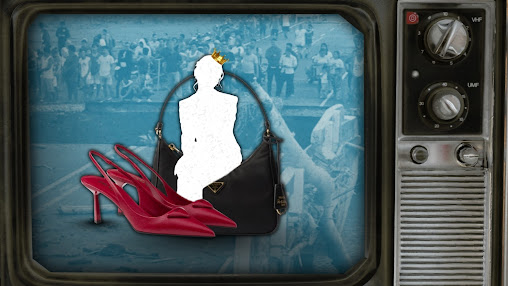
Nothing says ‘public service’ like a ₱28,500.00 Prada bag funded by public works projects that never get finished, or how a family’s european summer vacation costs hundreds of thousands taxpayer money that conveniently becomes classified as “travel funds” or “pocket money” for the personal expenses of political dynasties.
Meanwhile, students sit in crumbling classrooms without proper textbooks, while hospitals lack basic medical supplies and equipment. Roads remain unpaved and flood-prone, bridges stay half-built for years, and promised infrastructure projects exist only on paper and in inflated budget allocations. The irony deepens when these same corrupt politicians deliver their same old same bland speeches about fiscal responsibility and serving the common good; all while their lifestyles grow increasingly extravagant—a stark contrast to public salaries that supposedly reflect humble public service.
Even going as far as having shopping sprees that transform into diplomatic representation expenses with five-star resort stays becoming “official conference venues” and private jets suddenly becoming necessary for “urgent government business.” These officials have mastered the art of bureaucratic alchemy, turning personal indulgences into legitimate government expenditures with nothing more than creative paperwork and convoluted accounting. Yet somehow, despite acting this way, they still have the audacity to carry themselves with righteous authority as they continuously lie through their teeth, bearing the titles of government officials all while double crossing the people they are meant to serve.
The Nepotism conveyor belt
Some countries have national industries; all while the Philippines has a national pastime turning surnames into careers. And like any well-run enterprise, there’s a system. Imagine a factory floor where the product isn’t refrigerators or cars but heirs to the throne—thrones, plural.
The workflow is predictable: the baptism, ideally with press coverage for the archives; the society-page debut to signal the child’s belonging to the silk-lined class; the overseas “education” (quotation marks earned when the school’s prestige matters more than the grades); the triumphant homecoming framed as sacrifice for the motherland; the decorative yet lucrative government post; and finally, the “election” victory that is less a competition than a coronation. The result? A public servant so polished they could double as showroom furniture—complete with the faint scent of imported cologne and inherited entitlement.
Consider Gela Alonte, daughter of Biñan’s mayor Angelo “Gel” Alonte and niece of Congresswoman Marlyn “Len” Alonte-Naguiat. On TikTok, she cheerfully confessed she wouldn’t know how to respond to criticism of dynasties—“Paano ba ’yan, nasa political dynasty ‘yung pamilya ko… I mean, controversial.” A line so breezily self-aware it could have been drafted by a family PR intern.
Claudine Co, influencer heiress to a real estate and construction empire, offers another model unit. Her Instagram is a gallery of private jets and designer hauls. Luxuries critics say are subsidized by government flood-control contracts.
Then there’s Jammy Cruz, who stumbled into the public eye via a Chanel bag photo, only for internet sleuths to trace its leather straight to her family’s infrastructure project wins.
Even the “soft power” influencers like Vern and Verniece Enciso follow the template. Their curated European escapes are quietly co-sponsored by a father entrenched in the Bureau of Customs, an institution so consistently accused of corruption it could trademark the allegations.
Celebrity nepo babies are the softer version of the same product—less dangerous, equally manufactured. Atasha and Andres Muhlach, Cassy and Mavy Legaspi: christened under spotlights, paraded in glossy spreads, polished abroad, and ushered into acting gigs as if returning to their rightful set. They inherit applause, not legislation; fan mail, not fiscal budgets—but the pattern is identical.
The difference lies in the payload. A celebrity heir inherits an audience. A political heir inherits the apparatus: laws, taxes, entire bureaucracies. The surname becomes not just a calling card but a governing principle.
This isn’t just a mere leg up; it’s the quiet replacement of merit with inheritance, sanctioned by tradition and ratified by voter fatigue. And by the time the conveyor belt spits them out at oath-taking, we’ve been so thoroughly trained to clap that we forget we’re watching a factory defect being sold as a luxury model.
Lifestyles of the nepokids
In the Philippines, political dynasties operate less like public servants and more like luxury brands: exclusive, aspirational, and curated with the precision of a Paris runway. Their business model isn’t governance; it’s legacy marketing, selling a surname as though it were a limited-edition collectible.
Consider the Discaya family, whose latest public chapter reads like a Forbes profile gone deliciously rogue. Their fingerprints are all over government flood control projects—some still wading through the murky waters of investigation—yet they glide past scrutiny in a cavalcade of forty luxury vehicles. Rolls-Royce Cullinans. Bentley Bentaygas. Chrome is so polished it could reflect an entire GDP. Estimated value? Somewhere between ₱300 million and ₱465 million. The choreography is almost admirable: keep the image pristine, maintain just enough plausible deniability, and drape it all in the illusion of civic duty. Meanwhile, as rivers swell and highways crumble, their driveway overfloweth—not with stormwater, but with imported steel and leather upholstery.
Similarly, Claudine Co navigates public life like a walking, talking billboard for inherited privilege. Her social media feeds read like a carefully curated catalog of excess private jets, designer ensembles, and locales that seem perpetually sun-drenched and Instagram-ready. All the while, her family’s firm has been a conspicuous recipient of government infrastructure and flood control contracts, a detail that inevitably casts a shadow over the origin of her lavish lifestyle. The juxtaposition is striking: while ordinary commuters squint at potholes and flooded streets, Claudine’s timeline gleams with carefree luxury, a visual reminder that some fortunes are not merely earned but conferred—by contracts, connections, and the silent acquiescence of a public left to watch from the sidewalks below.
These stories are not isolated indulgences; they’re case studies in a broader Philippine phenomenon—the ritualized flaunting of wealth by those whose proximity to political power often traces back to public contracts and taxpayer money. The optics are as consistent as they are infuriating: while political heirs cycle between Parisian boutiques, Santorini rooftops, and Mykonos yachts, the average Filipino wrestles with underfunded services, impassable roads, and infrastructure that fails exactly when it’s needed most. The recent floods in Manila, and Quezon City, are a case in point—flood control projects tied to politically connected contractors collapsed under pressure, leaving devastation in their wake. Yet those at the top continued their itineraries uninterrupted, champagne flutes in hand.
The gap between these worlds is not just economic. It’s geographic, educational, and psychological. Political heirs are ferried through elite schools abroad, armed with degrees and accents that double as armor. These institutions are less about academic rigor than about networking: the forging of global alliances that will later translate into appointed posts, lucrative partnerships, and an unassailable place in the hierarchy. Their ability to decamp to a Manhattan apartment, a Singapore penthouse, or a Mediterranean villa ensures they remain physically and emotionally distant from the fallout of their decisions at home.
And therein lies the real architecture of impunity: when consequences are a continent away, accountability becomes optional. Policy failures ripple through barangays and cities, but never through their dinner parties. Corruption scandals are headlines in papers they don’t read. The country becomes a business they visit, not a home they inhabit.
The juxtaposition of luxury and civic neglect exposes a fault line in Philippine governance so wide it could swallow entire budgets. Opulence, often bankrolled by the very taxes meant to alleviate public suffering, coexists with a national tolerance for mediocrity and decay. Layered atop this is the insulation of global privilege, creating a near-impenetrable barrier between these dynastic heirs and any form of reckoning.
But privilege this entrenched is not immutable. Transparency, oversight, and sustained civic vigilance can pry open the machinery that feeds it. The question is whether the public is willing to not only watch but intervene—because without pressure, the conveyor belt of inherited power will keep running, gilding each new heir in the same untouchable sheen.
How Political Nepotism Shapes the Nation
Political nepotism in the Philippines operates through a complex interplay of generational wealth, ill-gotten gains, and entrenched political connections. Powerful families, such as the Marcoses, Villars, and Dutertes, have long leveraged the people’s funds and resources—often accumulated through questionable or corrupt means—to influence policy decisions and control disaster response efforts. This concentration of power enables political dynasties to prioritize their own interests over the welfare of ordinary Filipinos.
This can be noticed as disasters from typhoons, flooding, or even infrastructure failures strike, as the response is frequently shaped by these political networks. For instance, during Typhoon Haiyan/Yolanda, some reports highlighted how relief efforts were unevenly distributed, with certain areas receiving more aid due to political affiliations. Similarly, infrastructure projects in regions controlled by influential families often receive disproportionate funding, while poorer provinces remain neglected.
Instead of directing aid and resources to the most vulnerable communities, assistance is often funneled to areas that support or benefit these ruling families, exacerbating inequality and prolonging the suffering of marginalized populations. This dynamic reflects a distorted version of the “trickle-down effect”, where tax breaks and benefits intended for corporations and the wealthy are expected to eventually benefit the broader population. In reality, however, the advantages rarely reach those in need, instead reinforcing existing power structures and social disparities.
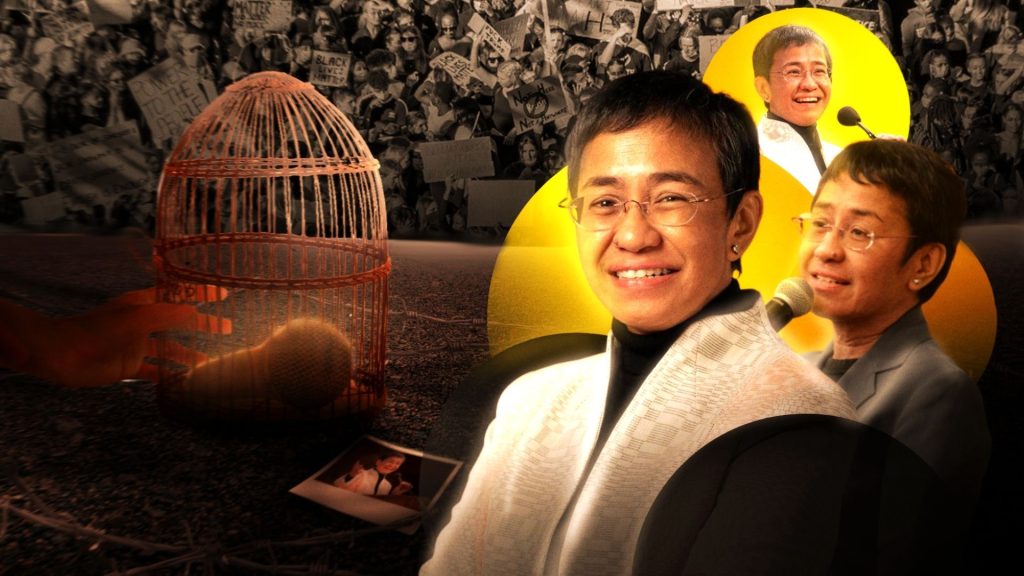
Moreover, this system silences critics and dissenters through intimidation, legal challenges, or co-optation, while loyalty is secured through patronage, government contracts, and political appointments. This remains a hot topic, as many journalists and activists who have the courage to expose corruption or human rights abuses linked to powerful families often face harassment, false allegations, or even sudden death. Media outlets aligned with these families frequently help manufacture narratives that conceal corruption and mismanagement, further undermining public awareness and accountability.
That said, political nepotism erodes democratic principles by weakening transparency, accountability, and equal representation. As public trust in government institutions diminishes, social cohesion frays, threatening the nation’s stability and its prospects for inclusive and sustainable development.
Flip the switch
When the government repeats the same mistakes they claim to correct, it becomes crucial for us, the Filipino people, to reclaim our power by holding our leaders accountable. History has shown that complacency allows corruption and inefficiency to thrive. We must not let these pressing issues fade away or be deflected by unrelated distractions. Instead, we must keep our eyes wide open to the truth and demand transparency and responsibility from those in power.
The challenges we face today require more than passive observation—we must actively engage in this new era of governance by exercising our rights and fulfilling our civic duties. Democracy is not merely a system of government; it is a continuous process that depends on the vigilance and participation of its people. By staying informed, speaking out against injustice, and participating in community and political processes, we help build a government that truly serves the common good.
As stated in the 1987 Philippine Constitution Article 2, Section 1, sovereignty resides in the people, and all government authority emanates from them. This means that politicians and public officials should fear the people, not the other way around. The power of governance is granted through the people’s trust, and it is both our right and duty to demand accountability and integrity from those who hold public office.
To counter the conveyor belt of privilege that often perpetuates corruption and abuse of power, we must wield transparency, citizen oversight, and civic engagement as our strongest tools. Transparency ensures that government actions remain visible and open to scrutiny, preventing abuses behind closed doors. Citizen oversight empowers communities to monitor and evaluate the performance of their leaders, while active civic engagement fosters a culture of participation and responsibility.
When public servants understand that they are accountable to an informed and vigilant citizenry, they are more likely to govern with honesty and fairness. In reclaiming our power, we affirm that democracy thrives not on the silence of the people but on their active voice and participation. Let us stand united in demanding a government that respects its mandate, upholds justice, and truly embodies the will of the Filipino people.