






Now Reading: The man or the bear?
-
01
The man or the bear?

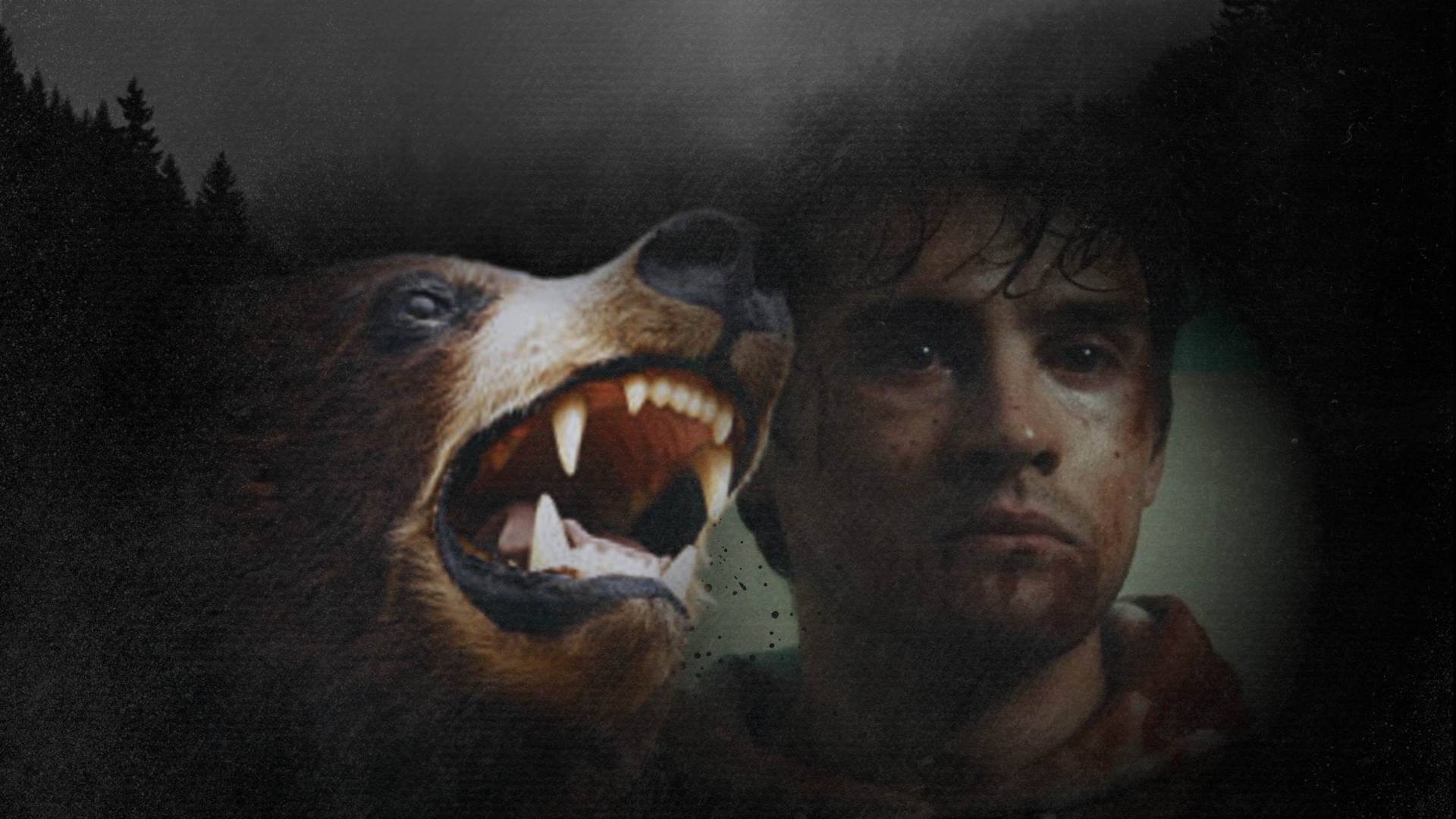
“What would you choose, the man or the bear?” Women’s safety is often discussed as some sort of spectacle, highlighting how the true precarity of their everyday lives is treated as some sort of trade-off over a systemic crisis demanding a concerted solution.
Discourse surrounding the film Obsession (2026) further highlights this through a staggering failure in media literacy. Many viewers have seemingly dumbed down the film, reducing its narrative to a simple horror flick about crazy girlfriends or a supernatural wish “gone wrong.”
Obsession (2026) is not a possession story or a set of jump scares and gore scenes. The film explores the fragile masculinity and patriarchal entitlement that breed predators in plain sight. Watching the protagonist Bear’s transition from a lonely “nice guy” to a selfish abuser victimizing both Nikki and Sarah mirrors the forms of violence women experience at least once in their lives. In a country where at least 36 women experience abuse daily, all the aggressions depicted in this film serve as a chilling reminder of the dangers inherent in today’s dating scene.
The viral social media debate, where women were asked whom they would rather be alone with in the woods, is answered by the film with horrifying certainty. Bear’s name seems like a deliberate choice: a bear is often regarded in pop culture and children’s media as a warm-hearted, cuddly being, yet in reality, it is one of the most dangerous and relentless predators in the wild.
In relation to this, the film establishes Bear as a figure of the male loneliness epidemic, suffering from a form of limerence or an obsessive crush stemming from his low self-esteem and a lack of purpose. Nikki was the perfect object of his fixations, being nice to him when he moved, and the only one who called after his grandmother died. He becomes intensely attached to her as his sole source of emotional safety. This attachment is unhealthy and unrooted in a genuine love, but rather in a desire to own a woman who exists merely as a prize to be won.
Real-life love is indeed filled with complex, flawed, and often tragic human connections, but Bear is obsessed with an idealized conception of it, seeking unconditional affection and happy endings at the expense of reality. This egoism and insecurity boil over into a refusal to accept rejection, viewing a woman’s no as a problem to be solved rather than an autonomous choice and boundary to be respected.
Bear’s initial wish to be loved by Nikki “more than anyone in the entire world” is the seed of his unsoundness. To fulfill this wish, Nikki’s entire identity had to be erased and replaced by an entity that served to quench Bear’s own depraved desires. This is a familiar representation of the dangerous tendency of men to degrade and harm women once their romantic fantasies are challenged. Bear was willing to watch the woman he supposedly loved be imprisoned in a psychological hell just so he could receive the validation and sexual access he felt he was owed. Nikki, much like many other women stuck in toxic relationships, had her free will stripped away. Every intimate encounter was a form of assault, an act of rape that Bear proceeded with despite full knowledge of how Nikki saw him only as a brother.
Even more so, Bear’s cowardice and lack of responsibility are evident even in his treatment of his cat, Sandy, who likely died due to his own neglect by carelessly leaving his pill bottles open. Instead of being accountable, Bear simply stuffed the body in a garbage bag and returned to stalking Nikki’s Instagram, an acute awareness and deflection of blame that defines his character. When the wish begins to destroy Nikki, Bear does not proactively help her or even call to cancel the spell immediately. He calls to ask if he can alter it, hoping to keep her affection while merely tweaking the demonic side effects to be more convenient for him. Abusers rarely want to destroy their victims completely; they want to break them just enough to render them compliant, codependent, and quiet.
The peak of Bear’s narcissistic cruelty occurs when the real Nikki briefly breaks through her trauma to beg for an end to her suffering. His response is not remorse, but a defense of his own ego: “What is so bad about being with me?” He views her unimaginable suffering as a personal slight against his value as a partner, essentially telling her that her agony is not that bad as long as he feels loved.
This is the evil personified: the average man who harbors hostility and revenge against those who reject them. Partners like Bear are dangerous because, at the moment they feel disempowered, they weaponize that perceived victimhood to justify horrific acts once they are given the means to act on their impulses.
Toxic online subcultures like “incels” and the aggrieved “nice guys” operate on this same form of fragile masculinity, which inevitably ruins the lives of women in their orbit. Because Bear could not accept a simple boundary, Sarah was murdered, and Nikki was left to face a lifetime of legal and psychological consequences. The film’s devastating conclusion is a stark allegory for how the legal and social systems fail victims of abuse.
Only about 55% of countries globally have comprehensive laws addressing domestic violence, leaving millions of women without legal recourse. Additionally, the UN and WHO report that less than 40% of abused women ever seek any formal help. Of those who do report recurrences of abuse, nearly 90% stop contacting law enforcement, often due to a belief that police will not be helpful or fear of retaliation. These low reporting and high turnaway rates underscore a profound gap between the scale of domestic abuse and the institutional protections available to survivors. When women do take the high-risk step to report violence, recounting their experiences can trigger feelings of Post Traumatic Stress Disorder (PTSD) on top of prejudiced judgment and a fragmented justice system that fails to protect them, leading to a phenomenon known as attrition.
Furthermore, survivors like Marivic Genosa, who act in self-defense, are frequently criminalized, left to pick up the pieces of a life shattered by a man’s ego. Genosa admitted to killing her abusive husband and initially received a death sentence in 1998, but successfully appealed by invoking Battered Woman Syndrome (BWS), leading the Supreme Court to issue its final decision on the appeal and order her release on parole.
Obsession (2026) proves that the most dangerous monsters are not multo or aswang, but those men who believe their loneliness justifies the violation of another human being. Bear is not a misunderstood man but a manipulative predator who used a nice guy persona as a method of disguise for his true threat.
The man in the woods IS far more dangerous than the bear, precisely because he believes that a woman’s love and life are a debt owed to him. If society does not stop enabling this egoistic preponderance of harm and intervene, women will continue to pay for it with their lives.