









Now Reading: The Problem Isn’t Her — It’s Us
-
01
The Problem Isn’t Her — It’s Us

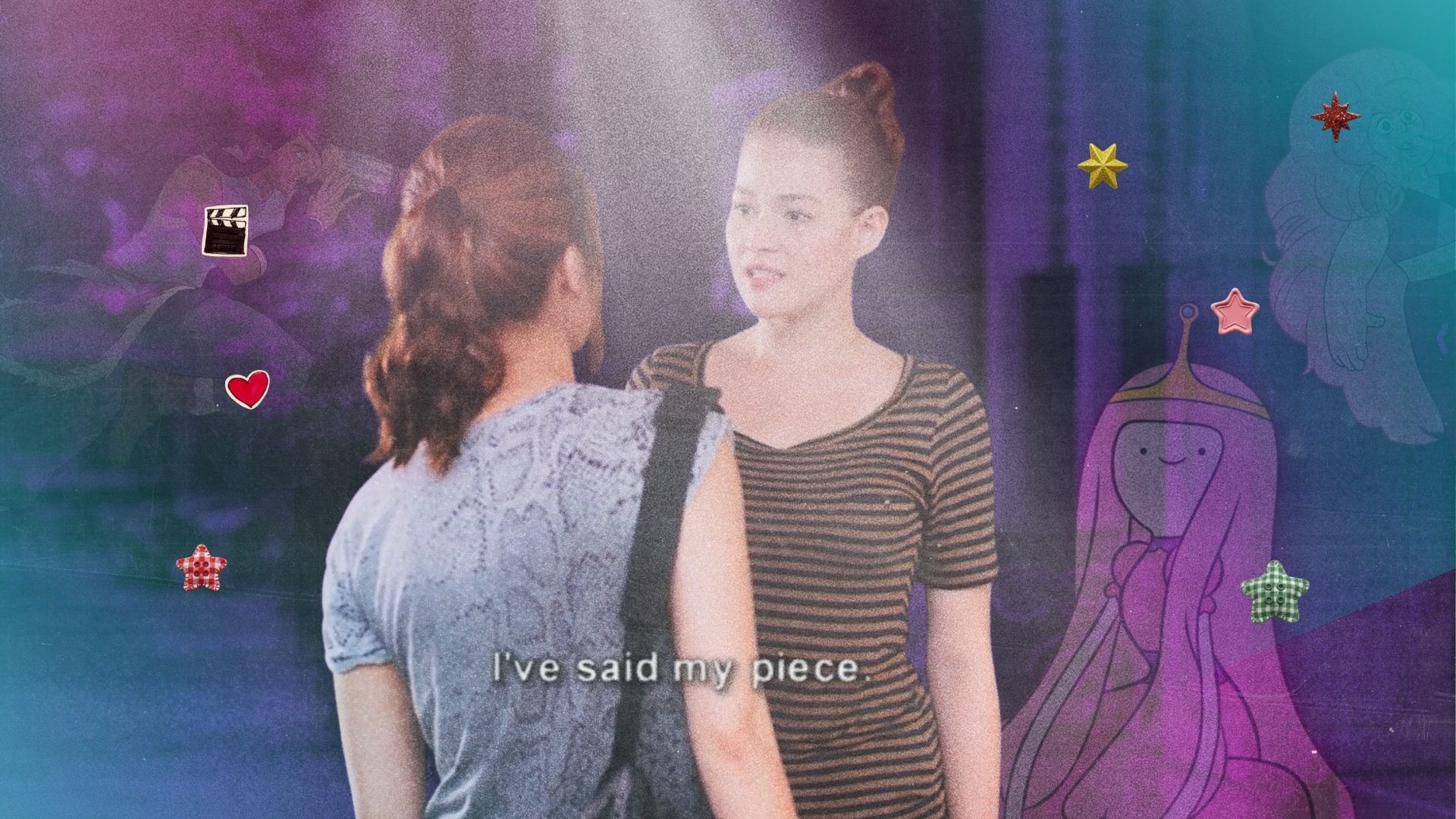
There is a particular kind of frustration reserved for complicated women, both in fiction and in life. It is not the clean, satisfying frustration we feel toward a well-written villain; it is a messy, defensive kind of irritation, one that is less about the woman herself and more about what she refuses to be. This is the impulse that drives audiences to label a woman as “annoying,” “too much,” or “hard to like,” as if her difficulty were a flaw in her character rather than the very feature that makes her human. We demand complex female characters, yet when they finally arrive, we punish them for the very traits that give them depth.
We have spent decades romanticizing the male antihero. Walter White (Bryan Cranston) from Breaking Bad (2008-2013) poisons a child and yet, the audience calls it compelling television. Tony Stark (Robert Downey Jr.) from Marvel’s Iron Man is arrogant and self-destructive, yet we place him on a pedestal. Don Draper (Jon Hamm) from Mad Men (2007-2015) betrays everyone he loves and we still root for his redemption by the final episode. We grant these men the grace to be broken. We allow them to be “cool” in their cruelty, even romantic in their ruin, yet we rarely extend that same curiosity to women. Let a woman be morally gray, emotionally guarded, ambitious to a fault, or simply unwilling to be “pleasant,” and suddenly the audience’s empathy hits a ceiling. Her complexity becomes a character flaw. Her survival becomes selfishness.
This pattern shows up everywhere: in live-action prestige dramas, in blockbuster films, and closer to home, in the nuanced world of Philippine media. We see it when Bobbie Salazar is branded “cold” for building walls around a heart that has been broken too many times, or when Joy Fabregas is called “selfish” for daring to choose her future over a romance. Even when their choices are rooted in self-preservation, we judge them for not being softer, for not making their pain more palatable to the people watching. Perhaps nowhere is this more visible than in animation, a medium so often dismissed as children’s entertainment that its most psychologically rich female characters are overlooked entirely, their depth written off before it is ever truly seen.
Meanwhile, in animated stories, Princess Bubblegum from Adventure Time is called controlling, Korra is called weak, and Rose Quartz from Steven Universe is branded a fraud. Each label is a shortcut, a way to avoid the uncomfortable labor of sitting with a woman’s internal war. We mistake their survival instincts for malice and their vulnerability for failure. We see the armor and call it arrogance, never stopping to ask what it was built to protect. These are not just missed readings of fictional characters; they are missed opportunities to witness the full, unfiltered depth of the female experience.
These women, whether drawn or live-action, fictional or familiar, were never written to be easy. They were written to be true. The discomfort they stir in us is not a design flaw; it is a mirror. It forces us to confront why we are so unsettled by a woman who refuses to be a supporting character in her own story. It asks us to reckon with a standard we have long applied without question: that a woman must be likable to be worthy of our understanding. She doesn’t. The problem was never her. It was always us.
Misreading Complex and Strong Personality Women
The disconnect between what we say we want and what we actually tolerate often begins with how we define “strong.” In modern discourse, a strong woman is frequently celebrated only when her strength is palatable; when she is an invincible warrior, a flawless leader, or a beacon of quiet grace who never cracks under pressure. She is allowed to be powerful, but only in ways that remain comfortable to witness.
But when a character’s strength is born from trauma, or when her strong personality manifests as prickliness, ambition, or a refusal to compromise, the audience’s praise often curdles into a trial. We claim to want depth, yet we treat the messy, lived-in evidence of that depth as a moral failing. We misread these women because we are searching for icons of perfection rather than portraits of people who have had to harden themselves just to survive.
This misreading is particularly prevalent in characters who prioritize their own agency over the comfort of those around them, including and especially the protagonist. Whether it is the pragmatic resilience of a woman navigating a world that was never built for her, or the defensive walls erected by a girl who has known nothing but war, these traits are frequently weaponized against them.
We see the surface: the coldness, the controlling nature, the erratic rage, the sharp edges. Yet we refuse to examine the architecture beneath it. We do not ask what had to happen to a person before she became someone who leads like that, loves like that, or fights like that. By labeling these women as “unlikable,” we strip away their history and, in doing so, we strip away their humanity. We ignore the crushing weight of leadership, the particular loneliness of being the “first” or the “only,” and the deep-seated fear of vulnerability that drives their most criticized decisions.
To misread these women is to deny them the very complexity we claim to crave. We see the armor they wear and judge the metal for being cold, never pausing to consider the person inside who is simply trying to stay whole.
These characters did not become difficult in a vacuum: they became difficult in response to a world that gave them very little room to be anything else. When we peel back the labels of “nag,” “villain,” or “fraud,” we do not find a monster. We find a woman who has been asked to carry impossible weight, make impossible choices, and do it all without ever making the people around her uncomfortable. We find someone who refused. And we find, in that refusal, something far more radical than strength: we find truth.
Burden of a Daughter
On paper, Bobbie Salazar (Bea Alonzo) from Four Sisters and a Wedding (2013) has everything. She holds a master’s degree from Columbia, maintains a high-flying corporate communications career in New York, and has a devoted partner ready to marry her. By every conventional measure, she is the Salazar sister who “made it.” And yet, in the court of audience opinion, Bobbie is frequently cast as the cold one. She is the distant achiever, the difficult sister, the one who is hardest to love. The irony is that her coldness is not a sign of indifference; it is the accumulated cost of being the person who never stopped carrying everyone else.
Following her father’s death, she was pressed into the role of a silent provider, financing her family’s life from across an ocean. She built her career not in spite of her family but largely for them. In return, she received not gratitude but the particular invisibility that the middle child knows too well. Her relentless drive for excellence was a coded plea for her mother’s attention, a desperate attempt to be noticed by a woman who, despite Bobbie’s achievements, always seemed to reserve her favoritism for the siblings who stayed behind.
This is the wound the audience tends to skip past. We see the sharp edges: the pragmatism, the emotional guardedness, and the hesitation to commit. Then we read them as personality flaws rather than the logical conclusions of a lifetime spent sacrificing personal needs for the collective good. Bobbie conditioned herself to prioritize the family’s happiness over her own. She adjusted her heart to fit the shape of her responsibilities because she believed it was what she was meant to do.
Her most iconic moment is the raw, unraveling confrontation where she cries, “Bakit parang kasalanan ko?” This is the second the armor finally shatters. While this family confrontation is often cited as a favorite cinematic moment, Bobbie is still frequently misread even in her most vulnerable hour. To the casual observer, she is seen as dramatic rather than devastated, or demanding rather than finally, desperately asking to be heard. But that line did not resonate because it was theatrical. It struck a nerve because it gave a voice to the silent labor of every “strong one” who has ever been punished for their own strength.
Bobbie was never cold; she was just a woman who had been strong for so long that her family, and the audience, forgot to ask if she was okay. We mistook her exhaustion for arrogance, and in doing so, we proved exactly why she felt the need to keep her guard up in the first place.
Cost of Candy-Coated Leadership
Princess Bubblegum (Hynden Walch) is the quintessential fairy-tale ruler. She is the pink, benevolent creator of the Candy Kingdom, a scientist-monarch dedicated to the safety of her people. Yet, as Adventure Time (2010–2018) progressed, she became one of the most polarizing figures in animation. While fans cheer for the chaotic freedom of other characters, Bubblegum is often branded as a “dictator,” “controlling,” or “cold.” The irony of her character is that she is criticized for the very hyper-vigilance that allows everyone else in the Land of Ooo the luxury of being carefree.
As a being who emerged into a post-apocalyptic wasteland, Bonnibel did not inherit a kingdom; she built one from the literal dirt. She is a survivor of a world that was cruel and empty, a history that forged her into a radical utilitarian. Every “controlling” action she takes, from her extensive surveillance networks to her morally gray experiments, is a response to the trauma of nearly losing everything. She does not play god because she is power-hungry. She plays god because she is the only one in the room with a long enough lifespan and a high enough IQ to see the extinction-level threats on the horizon.
This is the complexity the audience often fails to grasp. We see her pragmatism and her “god complex” and we read them as villainous traits. We forget that Bubblegum is a mother who created her own children, only to realize they were too fragile to survive without her constant intervention. Her character arc is a slow, painful deconstruction of this “perfect” facade. When she is eventually deposed and forced to live in a small cabin, we see the armor finally crack. We realize that her need for control was never about ego; it was about fear. She is a woman who spent centuries convinced that if she loosened her grip for even a second, everyone she loved would die.
When she finally learns to trust others and step back, it is not a “redemption” from being a villain. It is a recovery from a multi-century burnout. Princess Bubblegum was never a tyrant. She was a leader trying to solve the impossible equation of safety in a chaotic world.
Villain of Someone Else’s Narrative
Since the film’s release in 2009, Summer Finn (Zooey Deschanel) has served as the poster child for the “cold” woman who breaks a “nice guy’s” heart. In 500 Days of Summer (2009), she is frequently cast as the antagonist because she does not provide the protagonist, Tom Hansen, the happy ending he feels he earned. We see her through the hazy, nostalgic lens of Tom’s obsession, and because she refuses to fulfill his fantasy, the audience often brands her as manipulative or unfeeling. The irony is that Summer is perhaps the most honest character in the film. She is criticized not for lying, but for maintaining boundaries that Tom refuses to respect.
The disconnect lies in the Manic Pixie Dream Girl trap. From their very first meeting, Tom does not see Summer as a person; he sees her as a solution to his own dissatisfaction. He projects a fantasy onto her, believing that because they share a taste in music, she must be “The One.” Summer, however, is explicit from the start: she is not looking for anything serious. She states her needs clearly and repeatedly. Yet, because she eventually finds love with someone else, the audience treats her previous honesty as a betrayal. We punish her for changing her mind, as if she were a character in a script rather than a woman in the real world.
This is the complexity that years of “Team Tom” discourse has ignored. We see Summer’s warmth and her shared moments with Tom, and we read her eventual departure as “leading him on.” We forget that a woman’s kindness is not a binding contract for a relationship. Her “difficulty” is simply her refusal to be a supporting character in Tom’s coming-of-age story. When she finally finds a partner, it is not a twist designed to hurt Tom; it is the reality of a person who found what she was looking for after a season of searching.
The film’s non-linear structure mirrors Tom’s selective memory, and the audience often falls into the same trap. We remember the “Expectation” while ignoring the “Reality.” Summer was never really a villain. She was a woman who was tired of being a muse and wanted to be a person. We mistook her honesty for malice, and in doing so, we proved that we would rather a woman lie to make us comfortable than tell the truth and make us think.
A Heroine With the Weight of a World
Coming off the heels of Aang, a protagonist defined by his gentle, pacifist nature, Korra (Janet Varney) was an intentional departure. She was brash, physically imposing, and intensely headstrong. Yet throughout the four seasons of The Legend of Korra (2012–2014), she was often met with a specific kind of audience hostility. Many critics called her “annoying,” “arrogant,” or “the worst Avatar” because she did not possess the immediate spiritual wisdom of her predecessor. The irony is that Korra was punished for having a human ego, even as she was tasked with saving a world that constantly told her she was no longer needed.
Korra’s strong personality was not a character flaw but a survival mechanism for a girl who had been told since the age of four that her entire identity was tied to a title. Unlike Aang, who ran away from being the Avatar, Korra ran toward it with everything she had. She tied her self-worth to her power, and when that power was repeatedly stripped from her through trauma and political upheaval, she spiraled. Her brashness was actually a deep-seated insecurity: the fear that if she was not the strongest person in the room, she was nothing at all.
This is the complexity that many Legend of Korra detractors overlooked. We saw her hot-headedness and read it as arrogance rather than the desperate bravado of a teenager trying to live up to a legend. We judged her for losing fights, ignoring the fact that she was the first Avatar to navigate a modern world where her role was fundamentally questioned. Her journey is one of the most honest portrayals of PTSD and recovery in animated television.
By the final season, the “arrogant” girl we met in the pilot is gone, replaced by a young woman who is quiet, empathetic, and profoundly scarred. The audience that called her “weak” during her recovery failed to see that surviving her own mind was a greater feat than any battle she had ever won. Her softening was not defeat; it was the final shedding of a facade that had become too heavy to carry. Korra was never “too much.” She was a girl burdened with a world-ending legacy who had to learn how to be a person before she could be a god.
Ambition as a Key to Survival
In Philippine cinema, the female lead is traditionally defined by her capacity for sacrifice. Joy (Kathryn Bernardo) in Hello, Love, Goodbye (2019) is an OFW who sends every centavo home, a daughter who puts her dreams on hold for her family, and a romantic interest who is expected to choose love over everything else. Joy disrupts this entire narrative. While audiences often praise the selfless heroine, Joy was met with a divided reaction. To some, she was “stubborn” or “selfish” for refusing to let go of her ambitions for a man.
She lived in a state of high-stakes calculation: working as a domestic helper in Hong Kong while studying to become a nurse, making her life a grueling cycle of labor and longing. She does not have the luxury of being “easy” or “soft” because her survival, and the survival of her family, depends on her resolve. When she meets Ethan (Alden Richards), a man who offers her the warmth of a traditional romance, her hesitation is read by some as playing hard to get or being unfeeling. In reality, Joy understands a truth that many miss: for a woman in her position, love can be a trap that keeps her small.
This is the complexity that layers Joy’s character beyond the typical rom-com trope. We see her ambition and read it as a rejection of Ethan, when it is actually an affirmation of herself. Her refusal to stay in Hong Kong for love is not a lack of affection; it is a refusal to be a supporting character in someone else’s life. Her most poignant struggle is the guilt that comes with wanting more. In Philippine culture, a woman’s utility to her family often defines her worth, and Joy’s strong personality is her way of fighting against being reduced to a paycheck.
When she finally chooses to leave, it is not a sad ending to a love story. It is the triumphant beginning of a life. The discomfort the audience feels at her departure reveals a bias we have long carried: we would rather see a woman happy and stagnant in a relationship than fulfilled and moving toward her own future. Joy was never selfish. She was a woman who realized that loving someone should not mean losing herself.
A Crystal Gem Full of Secrets
In Steven Universe (2013–2019), no character is more polarizing than Rose Quartz, voiced by Susan Egan. For much of the series, she was revered as a saintly revolutionary, the benevolent leader who gave up her status as Pink Diamond to save Earth. However, as her history was unraveled in reverse, the audience’s adoration turned into a specific kind of vitriol. She is frequently branded as a “fraud,” a “manipulator,” and a selfish child who left her mess for her son to clean up.
Her character was defined by a desperate, clumsy attempt at growth. Born into a rigid, colonialist hierarchy as Pink Diamond, her strong personality was initially a mask for her powerlessness among the other Diamonds. Her transformation into Rose was not an act of deception for the sake of malice; rather, it was a radical, if deeply flawed, attempt to shed a persona built on destruction. Her tendency to keep secrets was the survival tactic of someone who had to reinvent herself from the ground up while fighting a war against her own family.
This is the complexity that many viewers struggle to forgive. We see the casualties of the war and her lack of foresight, and we conclude that she lacked empathy entirely. We forget that Rose was learning how to be human while simultaneously being a god. Her distance and her forgetfulness toward the consequences of her actions were the result of a being who had been taught for eons that individuals did not matter. Her journey was about unlearning her own divinity. We punish her for not being a perfect mother to Steven, ignoring that she spent her final moments trying to give him the one thing she never had: the agency to be whoever he wanted to be.
Rose Quartz was never the villain of the story, nor was she the perfect hero. She was a person who made catastrophic mistakes in the pursuit of a beautiful idea. We mistook her evolution for betrayal, and in doing so, we showed that we find it easier to love a static icon than a woman who is constantly, messily changing.
What Lies Beyond Their Strong Facades
The common thread between these complex women is not a lack of emotion, but a surplus of responsibility. When we look beyond their strong facades, we do not find the cold, calculating figures their critics describe. Instead, we find a collection of women who have been forced to navigate a world that demands they be “easy” while handing them the hardest tasks imaginable.
Beyond the facade of Bobbie Salazar is not arrogance, but a deep-seated fear of being dispensable. Beyond Princess Bubblegum’s control is the crushing weight of a multi-century burnout. For Summer Finn, the facade of coldness is simply a boundary meant to protect her personhood. For Korra, it is the armor of a girl who does not know who she is without a fight. For Joy Fabregas, it is the grit required to choose her own future. For Rose Quartz, it is the hope that her mistakes do not define her forever.
The problem with how we read these women is that we treat their strength as a permanent state of being rather than a choice or a necessity. We forget that a strong personality is often a fortress built to house a very soft, very vulnerable center. When we label these women as “annoying” or “unlikable,” we are effectively telling them that their survival is an inconvenience to our comfort.
To truly see these characters, and the real women they represent, is to accept that difficulty is not a flaw. It is the evidence of a life being lived on one’s own terms. It is the sound of a woman refusing to be a supporting character in her own story. We have spent so long asking these women to be nicer, softer, easier to love, that we missed what they were actually offering us: the truth. And the truth, as it turns out, was never the problem. We were.