





Now Reading: When morality becomes conditional
-
01
When morality becomes conditional

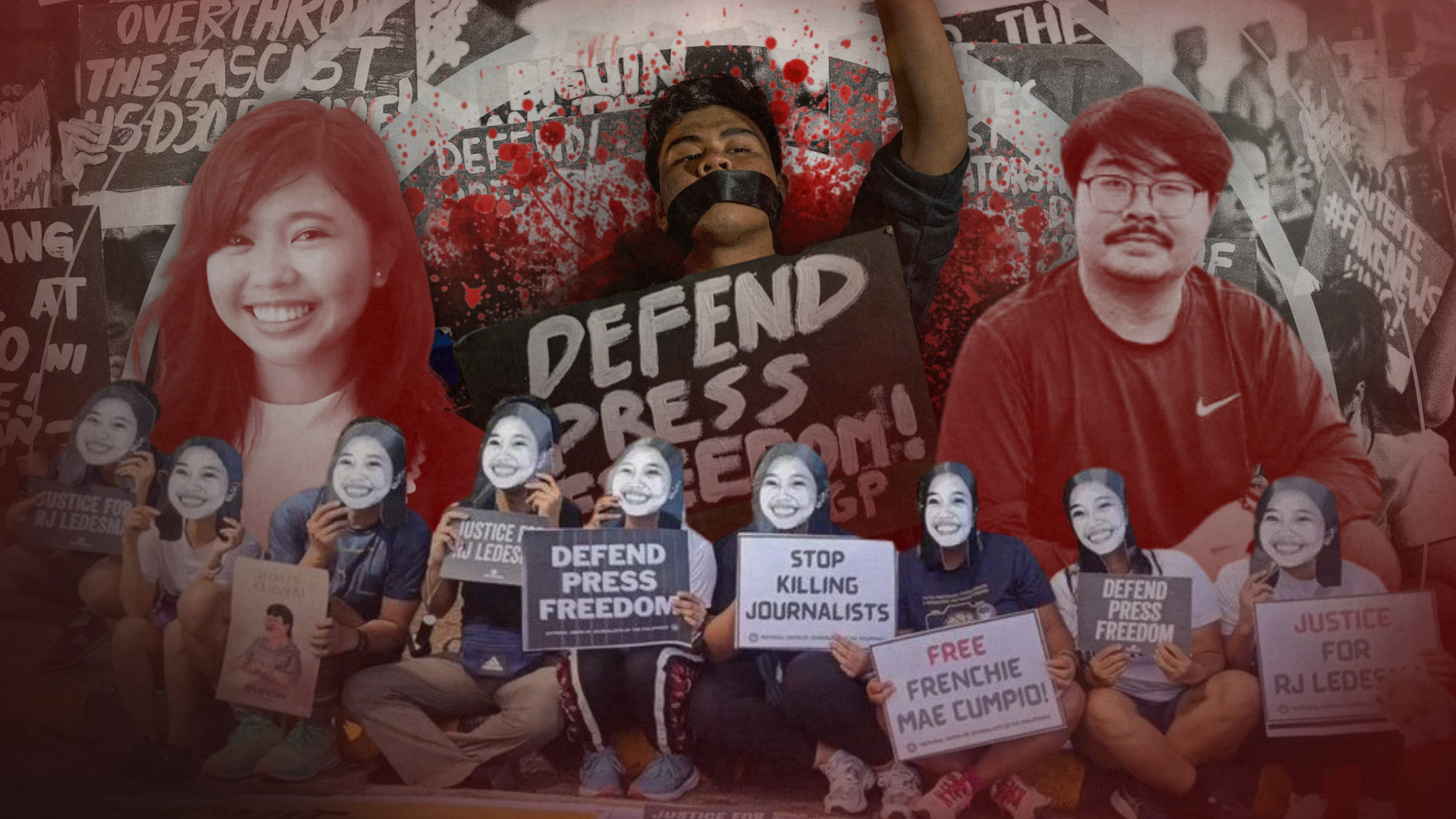
In a country that continues to grapple with threats to press freedom, the killing of community journalist RJ Nichole Ledesma, who served as the regional coordinator for the Altermidya Network and an editor for Paghimutad-Negros, is a direct attack on the very institutions meant to hold power accountable, made even more deeply saddening as it comes at a time when we commemorate World Press Freedom Day on this 3rd day of May.
While the Philippines now ranks 114th out of 180 countries in the World Press Freedom Index released by Reporters Without Borders (RSF), slightly higher than its 116th rank last year, our country remains one of the most dangerous countries in the world for journalists.
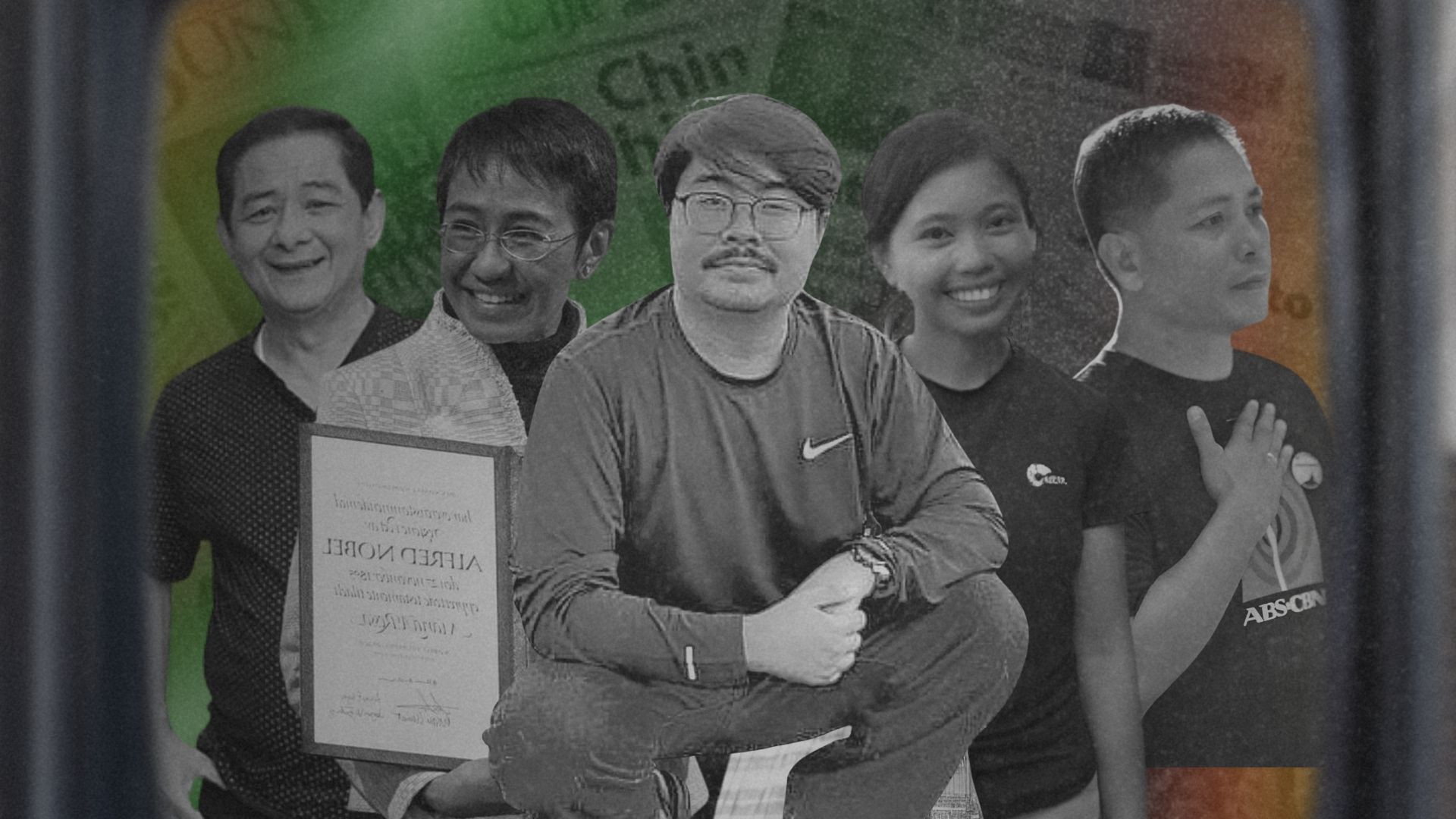
From the media shutdowns and mass killings of journalists during the Martial Law era to the present status quo, the press has never truly been safe. This is especially evident during former President Rodrigo Duterte’s administration, marked by the shutdown of one of the country’s largest media networks, ABS-CBN, and the threats and legal cases filed against Rappler and its CEO, Maria Ressa.
Historically, attacks against journalists, including student journalists, have been rampant, and even now, the same dangers persist. The killing of RJ Ledesma once again proved this reality.
Ledesma was one of the nineteen (19) fatalities in Barangay Salamanca, Toboso, Negros Occidental, along with student leader and activist Alyssa Alano, after an alleged military encounter with the New People’s Army (NPA) on April 19, 2026. He was there doing community work and immersion reporting on the effects of renewable energy projects on vulnerable farmer communities. Additionally, Paghimutad Negros, the community media organization led by Ledesma, which focused on human rights and grassroots reporting, had long been subjected to red-tagging. Ledesma was also the seventh nominee of the Kabataan party list in the 2022 elections.
Human Rights Advocates Negros (HRAN) claimed that Ledesma was not at the initial clash site at Sitio Sinugmawan in Barangay Salamanca. He was attacked in a separate community at Sitio Plariding.
These accounts raise serious contradictions, especially that the armed troops, including many Filipino citizens, were questioning Ledesma’s presence at the site.
What is even more disturbing is that the killings of journalists are rationalized as “deserved” because they are perceived as threats to democracy simply for holding power to account and unmasking the truth. The system fears this role of journalism.
Even more devastating? The fact that many Filipinos have normalized media attacks to the point that they dehumanize a journalist’s death.
These stigmatizing attitudes triggered a massive public discourse. Not only did it spark varying opinions, but it also exposed an underlying infectious disease affecting many Filipinos.
#TatakDDS Questionable Morals
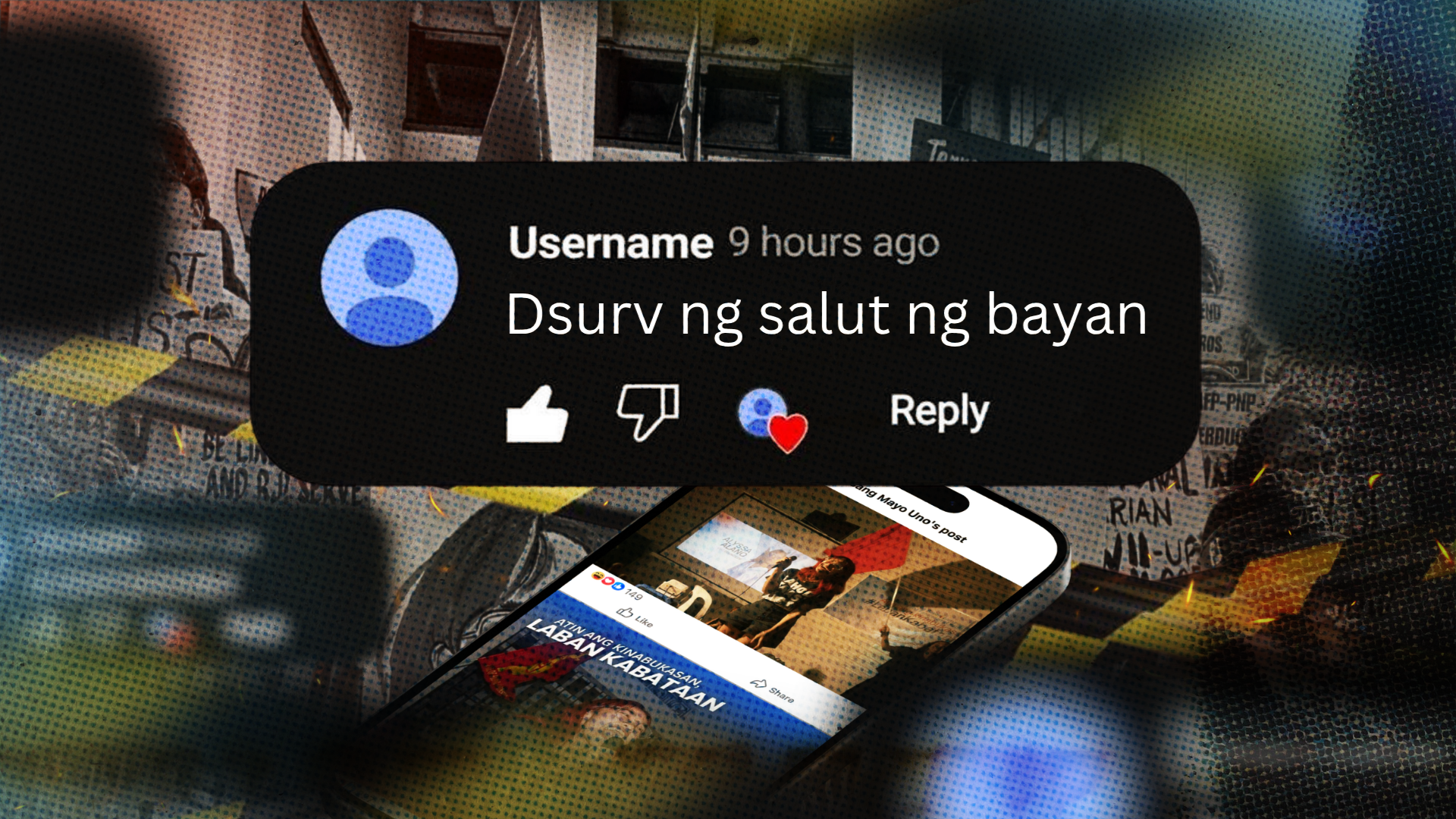
Scroll through the social media posts, statements, and news about the death of Alano and Ledesma, and you will find laugh reactions and extremely disturbing comment sections. The disturbing pattern? Many of them are Duterte Diehard Supporters (DDS).
The most obvious symptom of acquiring this infectious disease is losing your moral compass.
If you’re actively scrolling through your social media feeds, you might have already encountered posts about Alano and Ledesma. And for sure, you came across related posts with laugh reactions and comment sections that not only ridicule their death, but also celebrate it.
Mind you, they are not trolls hiding behind anonymity. They are real people, using their real names and identities, to throw off mockery and dehumanizing language towards the death of an activist and a journalist who was there to understand the unheard communities and marginalized sectors.
The last thing you would want to read, when a fellow Filipino dies, are comments of celebration, as if it deserves a big round of applause.
If you are someone who joined the “corned beef” fiasco, laughed in every related post, and proudly flaunted your DDS hashtags across social media pages, think properly.
Your morality’s direction might have been going down somewhere hopeless.
Many DDS selectively call for due process and protest only when it affects them, or their Tatay Digong, perhaps, but lose all critical judgment when it comes to fundamental principles that affect others.
Ironically, they have a habit of refusing to understand activism and its close ties to protests and rallies, even tagging activists and journalists as “NPA,” “komunista,” or “terorista,” but in the course of Duterte’s ICC arrest, they held protests to call for his release.
Empathy, for them, becomes conditional.
In many related cases like Ledesma’s, it is extended only to those who fit a preferred narrative and denied to those who are labeled otherwise. Once a person is a UP student, an activist, or a journalist, their death becomes easier to dismiss, easier to ridicule, and easier to accept.
The “Armed” Narrative Escape
Alano and Ledesma were described as “innocent civilians” who worked closely with peasants and farmers to understand their conditions. In contrast, AFP Chief General Romeo Brawner Jr. maintained their stance that Alano was not innocent. Accordingly, she was armed and fighting, and was found wearing a combat rig with a magazine pouch, which he described as an indication of active participation in the hostilities.
He further emphasized that her presence in the area was questionable, dismissing the narratives that she was there solely for civilian purposes. The AFP remains firm with its claim that she was directly engaged with government forces during the encounter.
The AFP’s pattern of narratives seems familiar. The concept of “nanlaban” and “armed” was commonly heard during the War on Drugs of former President Rodrigo Duterte. The same exhausting script, which seemed rehearsed, was likewise used multiple times as a defense to justify inhumane violence in the past.
When Kian delos Santos was killed, authorities claimed he was armed and had fired at them. It was later revealed that the gun was intentionally planted, and CCTV footage showed how he was dragged to the very place where he was executed.
The Politics of Narrative
These recurring accounts ultimately reveal not just differences in perspective but also conflicting claims, sometimes shaped by political propaganda and blind loyalty.
Slowly creeping into our system, the rhetoric popularized during the Duterte administration reshaped how Filipinos perceive justice itself. The normalization of terms like “nanlaban” and “armed” conditioned the public to accept violence as a reasonable conclusion rather than a matter requiring accountability.
Over time, this logic extended beyond the war on drugs and into other spaces of dissent.
Some Filipinos consume information, especially on social media, without scrutiny. Even when a verified report is presented in front of them, they refuse to acknowledge it because it doesn’t fit the narratives they want to believe in.
This creates a public easily swayed by misinformation and disinformation, making us prone to propaganda that distorts reality.
This is where journalism becomes crucial. Without journalists, the public is left vulnerable to one-sided accounts. The more these narratives reach a wider audience, the more they shape public perception, which could gradually turn contested claims into widely accepted realities.
Journalism is a platform that interrogates narratives, verifies facts, and reports fact-checked coverage.
However, again, the contagious disease we are talking about has already reached a point where everything is already integrated into humor.
The ‘Corned Beef’ Humor
I really get how Filipinos are naturally funny with their jokes and humor. However, when “corned beef” becomes something that appears more frequently in posts rather than in recipes, mainly as a slur disguised as “dark humor,” there’s really something that we need to dissect here.
The corned beef humor is tied to long-standing narratives that frame activists and journalists as enemies. Context-wise, the term is used to mock the bodies of those killed in armed encounters, for instance, Alano and Ledesma, reducing them into something processed, disposable, and stripped of humanity. Many people now use the term so casually and comfortably that it begins to feel contagious.
This is the danger of having no firm moral grounding. You allow yourself to be swayed by memes that look witty to you, but in reality, are already draining bits of your moral senses. You think as if it’s just harmless online humor, without realizing you’re becoming someone who devalues journalism and activism and their significance in our country’s history.
And no, you’re not being funny. You’re becoming an enabler of a system that is exactly the reason why activism exists in the first place.
Beyond Political Disagreement
When people celebrate a journalist’s death, something fundamental has already been lost. If this continues, the danger is no longer confined to political ideologies. It is no longer a matter of political disagreement. This is already a collective moral disease, which, when left unquestioned and impenitent, would lead to an erosion of humanity.
There is a need to confront how information is consumed, and how narratives, especially those tied to political fanaticism, shape public judgment.
More importantly, it calls for a return to basic civic responsibility. Question before concluding, verify before judging, and refrain from spreading baseless accusations and labels without evidence. Citizens, regardless of political affiliations, all share a role in resisting the culture of dehumanization that has taken root in public discourse.
And at the center of this political discourse is journalism.
On World Press Freedom Day, this responsibility becomes even more urgent, especially in a country where journalists continue to face threats, attacks, and killings. When journalists are silenced, what follows is not just the loss of voices, but the weakening of democracy.
The last thing we would want to witness is a society that slowly loses its ability to recognize injustice when it is already in front of it.