







Now Reading: When schools refuse to pause
-
01
When schools refuse to pause


When disasters keep striking, the last thing students expect is to be tested for something other than survival.
In the wake of recent calamities that left parts of Cebu dealing with power outages, damaged roads, flooded communities, and unsafe living conditions, some universities have pushed through with major examinations. This has created a growing concern among students who are still coping with disrupted routines, unstable internet access, limited study environments, and the emotional strain brought by the disasters.
The problem arises from the gap between the realities students face in the aftermath and the academic expectations placed on them, raising questions about fairness, accessibility, and the responsibility of institutions during recovery.
At Southwestern University (SWU) PHINMA, Typhoon Tino compounded the disruption already caused by the magnitude 6.9 earthquake on September 30. While the administration offered some accommodations and had previously adjusted learning modalities and deadlines, the updated examination schedule in November still placed heavy demands on students facing flooded homes, power outages, and widespread disruption. For many, meeting academic requirements under these conditions felt nearly impossible, fueling frustration, anxiety, and a growing sense that survival alone was no longer enough to keep up with university expectations.
The backlash was loud and immediate. After filing a formal request for dialogue, the Supreme Student Government (SSG) engaged with university administrators to discuss grade leniency and alternative options. For many students, preparing for major exams while dealing with aftershocks, flooded homes, unstable electricity, and lost study materials was simply unrealistic. The heart of the call was clear, academic expectations must reflect the conditions students were actually living through, not the conditions the university assumed them to be in.
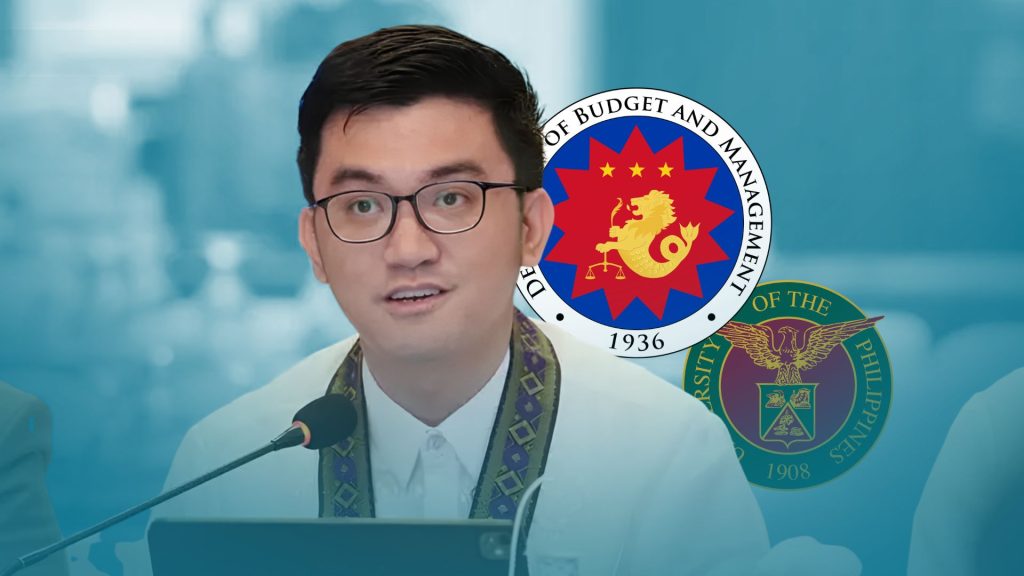
In an exclusive interview with SSG Vice President Duke Emia, he underscored just how far from “normal” the situation had become. He highlighted that the academic calendar had already been off-track long before Tino hit, with the earthquake delaying the end of the first semester and pushing the start of the second from late November to December. According to him, the one-week extension granted after Tino was nowhere near enough for recovery, especially when the exam week would immediately be followed by completion requirements, enrollment, and the start of a new semester on December 1. Students were expected to transition from disaster response to academic performance without pause.
Mr. Emia also emphasized that the SSG did not rely on online forms, making it unrealistic due to connectivity issues, but instead initiated call brigades and text blasts to assess student conditions. They prioritized severely hit communities, yielding an estimate of 300-400 affected students, not counting those unreachable or living in areas outside their immediate coverage. He noted that nearly half of the university population comes from outside Cebu City, making them even more vulnerable during back-to-back calamities.
During the meeting with the administrators, Mr. Emia urged the administration to release a public statement explaining its decisions, arguing that transparency would ease confusion and show accountability. Instead, the initial response was merely a reiteration of policy. When a statement was eventually posted the next day, on a private Student Life page rather than a public platform, it brought more frustration than clarity. Mr. Emia argued that keeping crucial announcements private was counterproductive, especially when parents, guardians, and non-members of the group needed access to timely updates. Other PHINMA campuses, he noted, have public student support pages; SWU PHINMA’s decision to keep theirs private only fueled suspicion that the administration expected backlash.
He also expressed concern about the widening gap between instructors and students, pointing out that some faculty comments were escalating tensions and that administrative intervention was needed. And beyond immediate concerns, Mr. Emia stressed the absence of long-term disaster preparedness plans. Despite promises made in previous dialogues, such as involving the SSG in decision-making committees and granting access to the university’s continuity plan, these commitments, he said, have not been formally implemented.
For Mr. Emia, the issue cuts deeper than scheduling or deadlines. “No amount of time is enough for a student body that suffered so much,” he said. Even in the best conditions, students struggle to keep pace with competencies; adding two calamities and ongoing aftershocks makes that struggle almost impossible. Yet, students were still expected to function as if uninterrupted study time existed. “Do they think we were on locked-in mode to study for a whole month?” he asked, pointing out that some students were still scraping mud out of their homes while being reminded about exam coverage.
Ultimately, Mr. Emia insisted that the SSG must be treated not as a messenger but as an active stakeholder in decision-making. Students look to the SSG for guidance and representation, and without genuine collaboration with the administration, the gap between policy and lived reality will continue to grow.
The university’s insistence on holding exams as planned reveals a system more invested in maintaining order than in understanding the disorder students are forced to live through. When hundreds report being displaced, cut off from electricity, shaken by aftershocks, and overwhelmed by the physical and emotional aftermath of two calamities, the only responsible response is flexibility. Yet, what students received instead were reminders of policy, assurances of “fairness,” and instructions to individually prove they were struggling. This is a model that treats hardships as an exception rather than the environment everyone is navigating. The administration may see this as continuity, but students see a refusal to acknowledge reality.
And this is where the harm lies. Education only works when institutions recognize lived conditions, not abstract standards. When a university demands normal performance in conditions that are far or anything but normal, it shifts the burden of disaster response onto the very people already carrying its weight. If the institution wants to uphold excellence, it must first ensure its students are in a position to pursue it. Right now, they are being asked to succeed in spite of the system, not because of it.
The struggle for academic leniency is not isolated to SWU PHINMA only. Across Cebu, similar calls for compassion have reached institutional levels. At the University of San Carlos (USC), the Supreme Student Council (SSC) responded to the impact of Typhoon Tino and the preceding earthquake by submitting a position paper and a formal letter of appeal to the Commission on Higher Education (CHED) Region VII office. Their appeal was grounded in data from a post-typhoon sensing survey showing that the majority of Carolinians preferred either a full suspension of classes or a shift to asynchronous learning due to displacement, flooding, unstable connectivity, and mental fatigue.
CHED responded decisively. After a dialogue with the USC-SSC, the Commission formally endorsed the student council’s appeal to the university administration, acknowledging the need for compassionate, student-centered adjustments during declared states of calamity. This endorsement included the call for a no-fail policy, academic leniency, and flexible learning modalities. Communication between CHED and USC continued in the following days, with the Commission forwarding the SSC’s position paper, sensing form results, and appeals directly to the USC president for immediate review.
The SSC’s sensing data reinforced their case, with 82 percent of respondents reporting significant difficulty or total inability to accomplish academic requirements after the earthquake and typhoon. Students cited unstable internet, unsafe living conditions, financial strain, loss of electricity, and ongoing aftershocks. Many asked for clearer communication, extended deadlines, and structured mental health support. Others requested the opening of university facilities for charging, refuge, and relief operations. These are calls for urgent responses to the reality of a student population still in survival mode.
In time, USC issued a revised academic calendar that moved final exams to December 9-13 and pushed the next semester to January 20. It was a concession made only after CHED’s guidance and the SSC’s continuous voice out. While not all student demands were granted, the adjustment illustrated a very important point on how institutions can adapt when students’ lived conditions are taken seriously.
Many people think that academic leniency, revised calendars, and clearer communications are signs of relaxed standards, but instead, they fail to acknowledge that education must remain responsive to human experience, especially when that experience is defined by calamity.
The experience of Cebu Normal University (CNU) offers another instructive example. On November 7, the CNU-Federation of Supreme Student Councils submitted an appeal to conclude the first semester of the 2025-2026 academic year in light of disruptions caused by earthquakes and Typhoon Tino. The administration approved the appeal on November 12, effectively ending classes immediately, canceling final examinations for most students, and allowing alternative assessments or midterm grades to suffice. This decisive action prioritized student safety, welfare, and recovery, demonstrating that institutions can uphold academic standards while responding compassionately to extraordinary circumstances.
CNU’s approach reinforces the principle that academic continuity must align with student capacity and well-being. By concluding the semester early and providing flexible alternatives for assessment, the university recognizes that rigid adherence to schedules can undermine learning rather than support it. This example highlights that when leadership is willing to adopt policies to real conditions, education becomes a tool for recovery rather than an additional burden. It serves as a benchmark for other institutions still struggling to balance academic expectations with the human realities of disaster-affected students.
The compounded devastation from Cebu’s magnitude 6.9 earthquake and Typhoon Tino extends far beyond homes and roads. The earthquake alone caused an estimated P3 billion in infrastructure damage, affecting bridges, ports, roads, and historic buildings, while Typhoon Tino added another P810 million in destruction, including P327 million in agricultural losses and P483 million in public infrastructure.
In Talisay City, Cebu, this translated into severe disruptions for schools. Of 33 private and 25 public elementary and secondary schools, only 13 were able to reopen for face-to-face classes starting November 13, according to Mayor Samsam Gullas. Students faced flooded classrooms, damaged learning facilities, and unstable access to electricity and internet, further hampering their ability to resume studies even when official schedules permitted.
The scale of destruction demonstrates how deeply calamities disrupt the very structures that enable learning. With classrooms damaged, utilities unstable, and schools only partially operational, students encounter barriers that no amount of personal effort can overcome. Academic policies and schedules must reflect these realities prioritizing student welfare and recovery as essential components of educational continuity. Decisions on exams, deadlines, and learning modalities should center on creating feasible conditions for all students to engage meaningfully with their studies.
Students are not machines that can simply resume function after a disaster. Yet, phrases like “life goes on” are thrown around as if students can flip a switch and pick up where they left off. How can life go on when the very life left in us has been shattered by floods and earthquakes? Appeals from SWU, USC, and CNU student councils reveal the same truth that exams and deadlines carry meaning only when students are actually able to engage with them.
A little compassion and consideration can change everything. These appeals are voices for those who cannot speak, students swallowed by floods, aftershocks, and lost homes. The last thing on their minds should be an exam that decides their academic standing while they are still rebuilding the life that calamity tore apart.
Universities must embed disaster preparedness into every part of academic life. Academic calendars, learning modalities, and communication channels must protect students first. True academic continuity exists when students can focus on learning instead of just surviving. Investment in flexible learning, mental health support, and emergency response is a right every student must have. Education succeeds when students are supported, and it fails when they are left to navigate destruction alone.
Beyond policies and schedules, leadership matters. Administrators must listen, respond, and take accountability. Empty assurances and rigid deadlines erode trust and deepen trauma. Students need decisions that reflect the reality of their lives, not the convenience of the institution. When universities act decisively and compassionately, they signal that education values people over processes, and that the promise of learning can survive even the harshest storms.
Because after all, learning dies when survival becomes the lesson. And an institution that ignores its students’ survival forfeits the right to demand their success.