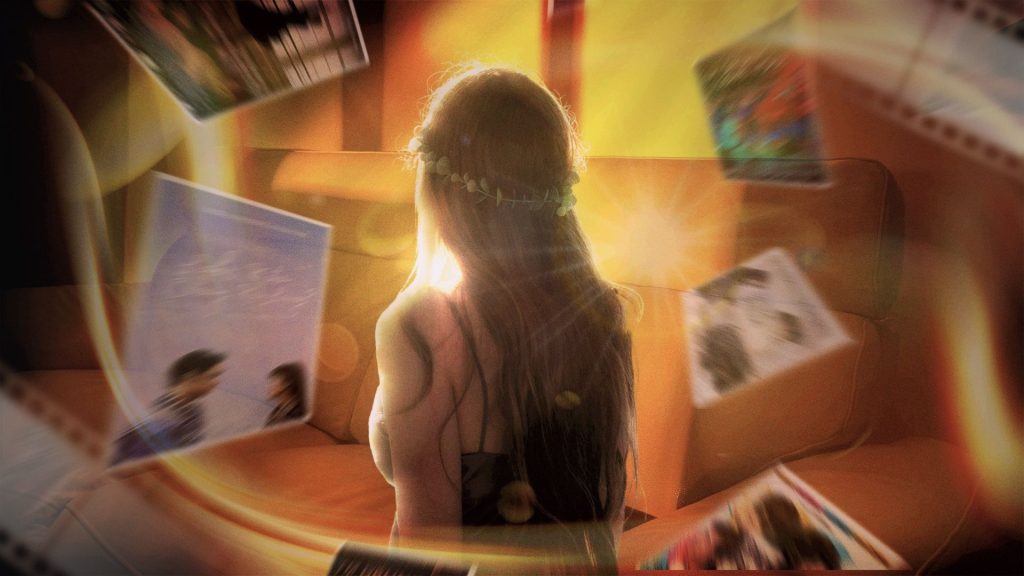











Now Reading: When the past won’t just pass by
-
01
When the past won’t just pass by


Shean Jeryza Alibin and Stela Militante
Not all ghosts haunt. Some simply sit with us in silence.
There are moments when the past would just suddenly knock on our doors like an uninvited guest—suddenly and without warning. Sometimes it happens in moments when we find ourselves in a familiar place or see familiar faces.
Maybe it’s at the city park where we used to run with childhood friends, or in a street where street food vendors dwell.
In other times, it’s just passing by our old school—racing in the hallway with peers, giving artfully made and carefully crafted love letters and gifts to our school crush, walking in wet school uniforms with friends after forgetting an umbrella, playing piko, patintero, and sipa during recess, and, of course, raising our teacher’s blood pressure with our youthful mischief.
Every now and then, our taste buds would explode because of a familiar taste—and that would instantly make our hearts ache. Maybe it’s your office friend’s home-cooked meal that oddly tastes like your Lola’s adobong puti, or when you abruptly hear the old melody your lolo used to sing to you to sleep. Or perhaps it’s when the people no longer here with us knock softly in our hearts once again.
However, no matter how old we grow, how tired we become, and how many times we face the same rain, some moments refuse to fade—some that still linger in the deepest chambers of our hearts.
It remains timeless amid the passing of storms and the fleeting warmth of sunshine. With just the melody of a song that once cradled our hearts, the photographs of people who used to know us best, and the familiar images of snacks we loved so much, we are suddenly transported back into a certain place, time, and feeling.
This is exactly what the We Still Talk About You trend does.
The quiet knock
Making meaningful waves on TikTok earlier this year, this trend undoubtedly and instantly intertwined loving and longing hearts.
Just like when the familiar hymn of the country’s Christmas anthem since 2009 envelop our ears, a forgotten yet familiar scene flashes into mind: a cozy home brimming with the aroma of freshly cooked sweet spaghetti, juicy hamon, and hot bibingka where the laughter of our younger selves with our siblings and cousins echoed, while our grandparents gathered us for Christmas presents.
And it’s the same for people still aching for their pawsome and purrfect companions who have run free from this world. We still long for the touch of their fur, the trace of their scent, and the glimmer in their adorable eyes.
And it doesn’t stop there.
The trend also brings back quiet memories we sometimes keep to ourselves. Like the last hug from someone we love or the way they smiled before they bid goodbye. It reminds us of people who once made our world feel safe, people we still miss. Sometimes, it’s their voice we remember. Sometimes, it’s just the way they embrace us tightly or call us by a nickname no one uses anymore.
Even just for a few seconds, they’re with us again. And in that moment, the ache softens.
And then someone joins the trend and posts a photo of our favorite childhood or teenage snack. Like the timeless polvoron or the tasty Yahoo biscuits. Just like that, with one look, or one bite, we travelled back in time, again.
From pets to people, from food to places, it all comes flooding back.
And maybe that’s why this trend hits home for so many of us. It’s not just about going viral but about going back. Back to the people we miss, the places that raised us, the food that filled more than just our stomachs. It brings us back to moments we thought we had forgotten and the moments that still live quietly inside us.
Why we love to reminisce
Nothing tickles us as much as this trend: nostalgia. It has a strange way of unexpectedly appearing, sometimes while we’re simply savoring the moment, and then suddenly we’re quietly experiencing the jolt of long-forgotten memories.
This yearning for the past isn’t just being emotional or sentimental, according to psychologists.
Research indicates that nostalgia has an important role in helping us maintain a stable mental and emotional well-being, offering solace, identity, and stability at times when life seems uncertain.
Experts claim that it is closely related to the two aspects of happiness—hedonic and eudaimonic well-being. The “earthly pleasure” or “feel-good” kind of happiness, hedonic well-being, occurs when we feel more pleasant emotions than negative ones. It is the simple joy of being happy and fulfilled in life.
Eudaimonic well-being, on the other hand, is more profound; it involves realizing your inner potential, discovering vast and meaningful purpose, and living as your most authentic self. Personal development, deep connections, and a feeling of purpose in life are the driving forces of this kind of well-being.
As explained by Professor Ziyan Yang of the Chinese Academy of Sciences’ Institute of Psychology, nostalgia is sort of a “mental time travel” that gives people feelings of relaxation, affection, and belonging. According to Professor Yang’s study, nostalgia not only allows us to feel good and relaxed, but also changes how our minds perceive life threats or stressors. It can sharpen our senses in the face of danger and even reduce physical pain.
In a way, this suggests that nostalgia can work like a protective shield for our bodies and minds.
Yang’s study found that when people view nostalgic photos or clips, these have a relieving effect that reduces mild emotional pain. Moreover, deeply reflecting on these personal memories has been found to ease even stronger discomfort. Brain scans from Yang’s research also indicated that when we experience nostalgia, for example, while passing by a “We Still Talk About You” reel on TikTok, brain regions connected to self-reflection, emotional regulation, and reward processing can be activated.
Why this trend hurts and heals at the same time
Who would’ve thought that a simple post, reel, or content that happened to appear on our “for you” page could spark something therapeutic and peaceful?
The ‘We Still Talk About You’ trend allows us to remember a chapter long closed, but when we remember, it’s not just as simple as our minds replaying old footage on tapes; they’re reshaping our emotional state and allowing us to heal from the wounds we haven’t had the chance to talk about.
And perhaps that’s why we can’t help but share nostalgic memories with people through the twist of this trend. Who would’ve thought that in a single span of seconds, you could be brought back to a spectrum of emotional memoirs that take you back in time?
Remembering is deeply personal, but making those memories come alive again prevents people from isolation and puts an invisible red string between us and the people we once shared laughter, tears, or even intimate feelings with.
Through this trend, remembering becomes a shared experience.
In uncertain times, these memories anchor us to a place and time we didn’t know we truly belonged to. It is when we are reminded of who we once were and who we’ve become now. It offers the simple truth that the past can’t just pass by: it still lives within us.
The past that stays with us
The truth is, the past does not fully go away as it gently resides in the deepest chambers of our hearts.
It lives in the songs that suddenly make us stop and stare at the window. In the smell of something cooking that makes us feel like we are back home. In the places that still feel like they know us, even if everything around them has changed.
The We Still Talk About You Trend shows us that we are not alone in this feeling. We are not the only ones who miss people we can’t talk to anymore and desire for moments we wish we could live again.
Indeed, it’s okay to look back and hold on to the people, places, and memories that helped shape who we are now.
And this is the trend’s most beautiful part. That even as we grow older, move forward, and keep going, some parts of us never really leave because the heart never forgets the moments it felt most at home.