
Now Reading: Why asking “Why?” may be the most honest expression of faith
-
01
Why asking “Why?” may be the most honest expression of faith

Mikaela Dela Cruz, Gweneth Pablo, Zyle Salazar
“Totoo ba talaga ang Diyos?” (Is God truly real?)
That question often lingers in a child’s mind. For their parents, grandparents, or anyone around them, however, it can provoke an entirely different reaction. They had simply asked why they had to wipe a handkerchief on the feet of religious statues. Now, every pair of eyes in the room seemed to dig deep into their soul.
They had just spoken of something never doubted before.
In a nation where faith is deeply woven into culture, doubt is often mistaken for defiance or, even worse, cultural affliction. That judgement, strengthened by heavy silence, served as the rite of passage for many Filipino youth who had begun questioning beyond what they had been taught. Yet for that child, the question wasn’t out of rebellion but out of a genuine thirst for understanding.
In that heavy silence, it became clear: they had entered the lonely, quiet reality of the unknown.
Pursuing the ‘whys’ and ‘why nots’
Human beings are naturally driven by curiosity. Long before children understand the complexities of the world, they begin asking questions: “Why is the sky blue?” “Why do leaves fall?” “Why does it rain?”
As they grow older, however, those questions become even more personal. “Why do people believe different things?” “Why do certain traditions exist?” “Why do some ideas feel unquestionable while others are open to debate?”
Growing up inevitably means encountering new perspectives outside their childhood bedrooms. High school and college friends introduce new ideas and perspectives. Books and nighttime scrolls open doors to unfamiliar ways of thinking. Personal experiences—grief, love, or witnessing the quiet hypocrisies of institutional religion—have a way of fracturing what once felt certain. Somewhere along the way, curiosity stops being just about understanding the world and starts becoming a way of understanding oneself.
Psychoanalyst Erik Erikson described adolescence as a period of identity exploration, during which individuals begin to examine the beliefs and values they have long accepted, gradually forming their own convictions. Questioning, then, is not necessarily an act of rebellion. Sometimes, it is simply part of growing up.
The impulse to question is hardly new
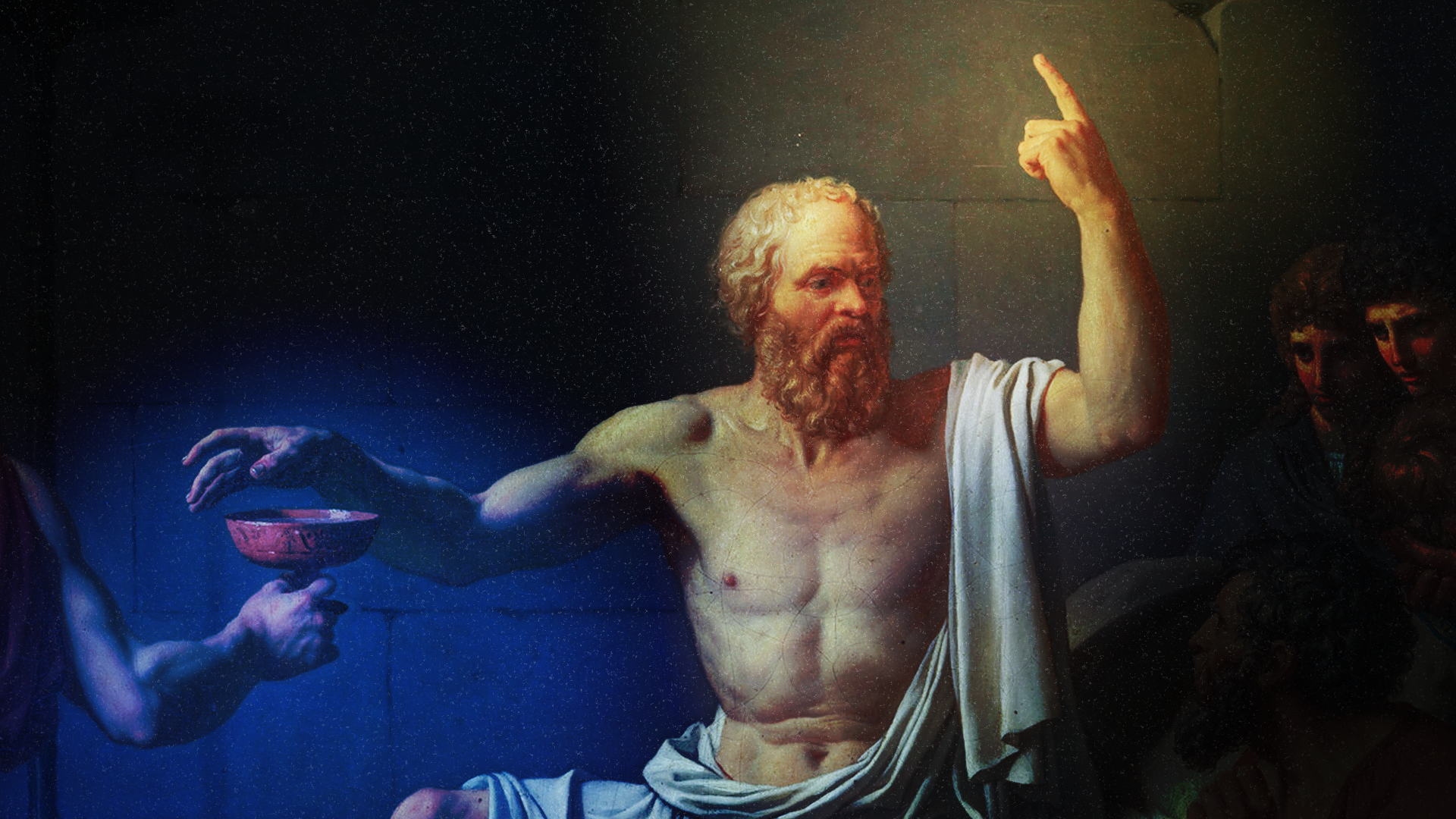
Centuries ago, the Greek philosopher Socrates declared that “the unexamined life is not worth living,” suggesting that wisdom often begins with the courage to examine what one thinks they know.
One of the philosophical positions that emerged from this tradition of inquiry is agnosticism.
The term “agnosticism” itself was coined in 1869 by biologist Thomas Henry Huxley. Coming from the Greek agnostos, meaning “unknown” or “unknowable,” it gave a name to a position that many had quietly occupied for centuries: the space between certainty and doubt. To Huxley, agnosticism was not a creed to be followed but a commitment to pursue truth wherever reason might lead, even if that journey ended with more questions than answers.
For some, it becomes a period of reflection, one in which people examine their beliefs rather than immediately abandon them.
Others, however, arrived at a different conclusion. Rather than remaining in a state of uncertainty, they eventually ceased to believe that an all-knowing deity exists. Atheism, derived from the Greek atheos, meaning “without god” or “godless,” refers to the absence of belief in a deity. Different conclusions, perhaps, but often born from the same impulse—the desire to understand what is true.
Yet these questions can feel especially isolating in the Philippines, where faith is deeply interwoven into family, culture, and everyday life.
Being the odd one out
That isolation becomes easier to understand when viewed within the country’s religious landscape.
Religious rituals—from attending mass to venerating saints—have long been woven into familiar parts of Filipino life. Most Filipinos identify as Christians, while some are Muslims. Since the Spanish colonial period, the Filipinos have predominantly become Christians, with the majority under the Roman Catholic denomination. The country is also among the world’s most religious societies, with 73% of Filipinos who believe that religion is “very important” in their lives, according to the 2020 Social Weather Stations Survey.
Surrounded by an overwhelmingly theistic society, those who identify as agnostic or atheist may find themselves feeling isolated. The 2020 Census of the Philippine Statistics Authority recorded nearly 44,000 Filipinos who reported having no religious affiliation—a small but visible reminder that not everyone arrives at belief, or doubt, in the same way.
However, these data points fail to capture the quiet anxiety of living as a statistic in a culture that demands conformity. Many of them feel as if they stand exposed in a room, with all sharp gazes focused on every action they make.
Behind those percentages are real human stories. It is the college student who silently mouths the prayers at the dinner table just to retain peace. It is the young professional who loves their deeply religious mother but dreads the inevitable Sunday Mass. And the student who grew up in a Catholic school but no longer knows how to answer when asked what they believe. Because the words “agnostic” and “atheist” still carry an unspoken stigma of coldness or moral decay, many choose to carry their doubts in silence.
The courage to question
Perhaps certainty is not the most definitive expression of faith after all. In the movie Conclave, Cardinal Thomas Lawrence reflected that “Our faith is a living thing precisely because it walks hand-in-hand with doubt. If there was only certainty and no doubt, there would be no mystery—and therefore no need for faith.” Whether one truly embraces their religion, agnosticism, or atheism, the act of questioning should not be mistaken for a moral failure.
It may even be the beginning of embracing a faith that has been consciously chosen rather than merely inherited.
For a long time, society has treated doubt as a defect. We worry that if someone strays from the conventional, they will immediately be devoid of qualities that make them a good person. However, compassion and empathy do not vanish when dogma does. The same empathy that makes a person a good Christian or Muslim is the same empathy that drives an agnostic to care for their neighbor.
There is nothing wrong with wondering and asking
Doubt is often mistaken for defiance, and disbelief is sometimes seen as a rejection of morality itself. Yet, questioning has never been exclusive to religion. It exists in science, in history, and in every attempt to understand the world more deeply. Just as a child once questioned why the sky is blue, asking why we believe the things we do is not an act of rebellion, but an act of becoming.
And should faith survive honest questioning—even after every difficult question has been asked—it is no longer merely inherited, but undeniably one’s own.
Perhaps the rise of agnosticism and atheism is not a sign of a broken culture, but of something profoundly human: the willingness to seek answers, even at risk of finding uncertainty, and the courage to be honest about where those answers lead.
It takes an immense amount of love and courage to look at your family, your history, and your country, and say, “I want to find my own way.” After all, a faith that has never been questioned remains an inherited or borrowed one.
It is a hand-me-down coat that may have been lovingly passed on, yet one that may never truly fit.