









Now Reading: More than a recognition
-
01
More than a recognition

In the realm of campus journalism, there are some things often touted as triumphs of skill, yet they became the first and foremost crucibles of hope—the school’s press conferences. These are not just mere contests. These are considered a forbidden path towards discovery, mentorship, and somehow the messy, exhilarating reality of reporting.
With these platforms, young scribes were able to have a glimpse of the wider world, meet seasoned practitioners, and learn that stories to be told are not for trophies, but it serves as a mirror of the society. And contest journalism leverages the doors, yet only for those willing to step through with curiosity and conscience, not just about the ambition to be named the best during the awarding ceremony.
Likewise, victory is seductive. It attracts journalists to be at the top-notch of the contest and have the medal that clacks and certificate at hand. To be hailed as a regional champion, earning the ticket to the national stage.
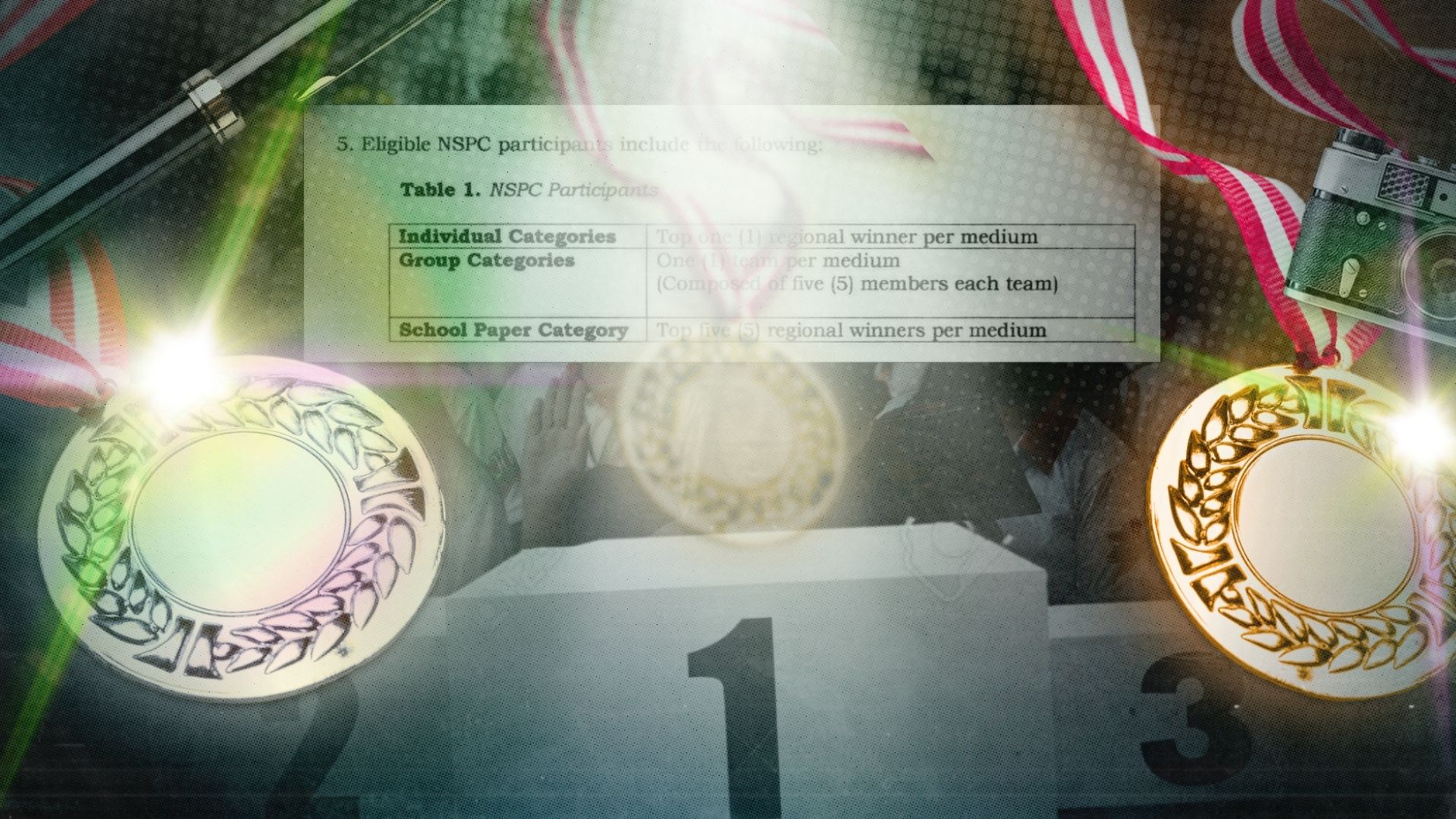
As outlined in the recent Department of Education Memorandum No. 021, s. 2026, only the top regional winner per category in both individual and group contests advances to the National Schools Press Conference 2026 (NSPC). Bequests the challenge to be first or to be forgotten.
Yet the pursuit of excellence immediately halts its purpose.
In the past years, when campus journalists often viewed their peers as rivals instead of fellow truth-seekers, when medals mattered more than mastery, the original intent evanesced.
Since the heart of contest journalism is not recognition, it is about the growth we acquired along the process of becoming. With the experience at our core, we tell the best stories that emerge not from ambition alone, but from curiosity, empathy, and humility. And every competitor is a teacher, and every story a lesson waiting to be learned.
Meanwhile, the noise of the victory of others echoes the remnants of pain beholding by those who fell short of winning a place in their respective categories.
Recently, allegations of misconduct for the School Year 2025 – 2026 press conferences flooded the Facebook group, SPEAK UP: Campus Journalism Community. Wherein scribes expressed dismay and their worst experiences. Yet, some spread rumors that swirl, unverified and amplified, threatening to corrode the very foundation of the press these conferences are meant to uphold.
When winning is ephemeral, then integrity is permanent. To begrudge a peer’s success may sting, but to forsake fairness, transparency, and ethical reporting is fatal to the soul of journalism.
But, contest journalism does not close its chapter in basic education.
Because in the tertiary level press conferences, advancement acknowledges opportunity, not just talent, a tacit nod to the truth that journalism thrives when more voices are heard.
It offers a slightly wider path, wherein five regional winners advanced in the Luzonwide Higher Education Press Conference (LHEPC), which last March 17 – 19 held its final edition before giving way to the inauguration of the National Higher Education Press Conference (NHEPC) in 2027.
With this shift from basic education to higher education press conferences, it reshapes the given opportunity. Perhaps basic education offers a narrow, unforgiving path with only one advance in the nationals. And higher education is broader, inclusive, institutionalizing the top-five referendum.
The journey may differ, but the mission persists. To deliver truthful, ethical reporting, anchored in service rather than spectacle.
Maybe tertiary platforms expand the horizon, reminding us that journalism flourishes when inclusivity trumps exclusivity. Yet the divide is stark when regions like Visayas and Mindanao remain underdeveloped in press platforms.
Between the lines, these three major islands will have their own milestone where scribes were capable of framing facts with courage, clarity, and empathy. The NHEPC is not merely a contest, but it is a responsibility, a charge to uphold the craft and, ultimately, the public trust. These conferences are crucibles not only of skill but of moral discernment.
Perhaps medals measure execution, but stories measure character.
Some tend to forget that when we solely focus on recognition alone, it propagates apathy, distorts purpose, and erodes social awareness. We must remember to be rooted for truth, for it endures even when it is inconvenient, unpopular, or dangerous.
Because campus journalism proves its worth not in applause but in accountability, in the courage to challenge falsehood, injustice, and silence.
Sadly, success in today’s context is increasingly defined by likes, shares, and trophies. The chase for applause threatens to eclipse duty. Journalism risks becoming performance art, a spectacle where empathy, responsibility, and conscience are optional. The press is a tool for the public, not a stage for validation.
Hence, young scribes must reclaim the essence of their calling. Due to the reason that conferences were never meant to abet rivalry, ego, or envy. The contests exist to hone skills, collaboration, and conscience.
To affirm, we must be courageous, have a conscience, and to rectify that every word can confront falsehood in order to afflict the comfortable and comfort the afflicted. Whereas the pen is not a trophy, but a lever for accountability, a shield for truth.
Reforms are overdue. Adjudication must be transparent. Ethics orientation must be mandatory. Regional journalism, or any press conferences, it must be supported, especially in underrepresented areas. And with the rise of NHEPC 2027, it must ensure that no talent is silenced by geography or resources.
The NSPC 2026 must not be a hindrance to re-establishing the real core of scribes. To build connections and comrades along the way rather than being grounded in rivalry seated with ego and pride.
Above all, at the end of the day, the highest recognition a campus journalist can claim is not a certificate, medal, or lanyard with press ID.
It is the choice to serve the public with honesty, empathy, and courage.
Because contest journalism is not about winners and losers. It is toward the enduring responsibility carried by every young journalist who lifts a pen.
Every scribe must keep in mind that recognition fades but responsibility continues to exist.
And true victory lies in stories that challenge, illuminate, and unsettle— stories that live long after the applause has faded.