









Now Reading: NOT JUST WORDS: The Journalist’s Creed beyond NSPC
-
01
NOT JUST WORDS: The Journalist’s Creed beyond NSPC
NOT JUST WORDS: The Journalist’s Creed beyond NSPC

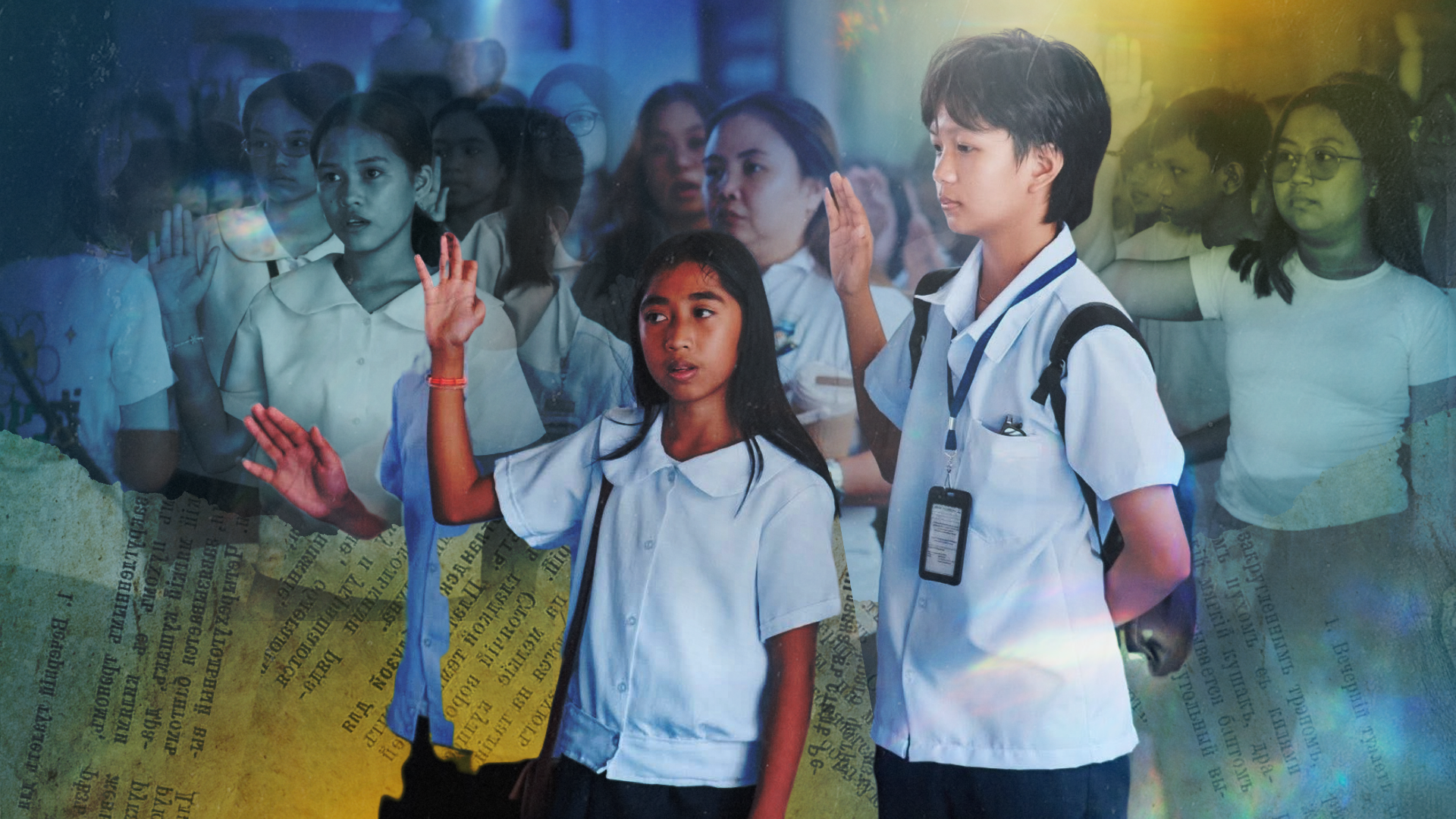
“I believe that the public journal is a public trust.” We’ve all said it. We’ve stood in crowded auditoriums with our right hands raised, reciting the Journalist’s Creed until the words blurred together. But let’s be honest, in the middle of a high-stakes National Schools Press Conference (NSPC), are we actually living those words, or are we just chasing a score sheet?
It’s easy to be a “journalist” when you’re wearing a delegate ID and competing for a trophy. The real challenge is what happens when the lights go out and the competition ends.
So, what exactly is the “Journalist’s Creed?”
The Journalist’s Creed is a statement that defines what journalism should be and what journalists should stand for by talking about the truth, responsibility, independence, and service to the public.
While the journalist’s creed isn’t necessarily technical and does not tackle or explain how to write and structure a story, it answers the deeper question of what kind of writer a journalist should be.
It was written in 1914 by Walter Williams, the founding dean of Missouri School of Journalism. At this time, journalism didn’t have clear ethical standards. There were newspapers, but there was no shared understanding of what responsible reporting should be like. Some publications were openly biased, others were influenced by business or politics, and accuracy of reports was not really prioritized.
Williams immediately noticed this problem and believed that journalism should be something that needed structure — not just skills, but values. Hence, he created the creed as a foundation for future journalists, especially students.
Why the creed was necessary — and still is
Journalism carries influence; it can shape public opinion, inform decisions, and even change events. But this influence comes with a risk.
Without ethical grounding, journalism can turn into misinformation, propaganda, or clickbait. This is why the creed exists in order to prevent these occurrences. It draws a line that journalism is not about what is easy to publish but about what is right to publish.
This idea connects directly to the modern code of ethics, such that one from the Philippine Press Institute (PPI), which emphasizes:
- Not suppressing or distorting facts
- Correcting errors immediately
- Avoiding conflicts of interest
- Respecting people’s dignity and privacy
These modern rules are basically extensions of what Williams already started in 1914.
Veteran journalist Mike Fancher, former executive director at The Seattle Times, reflected on the journalist’s creed 40 years after its publication, asking on how is this still applicable in today’s era.
He concluded that while technology advances, with many now being able to publish contents online, ethics still remain in journalism which differs it from other published contents. Campus journalists are still being taught to practice transparency, accountability, engagement with readers, and fact verification. Wherein these ideas don’t replace the creed — they just update how it’s practiced already.
Where the creed meets real NSPC practice
This very same idea applies in NSPC. Winning doesn’t automatically make someone a good journalist — but the ethical decisions even under pressure do.
In events like NSPC, where speed, skill, and accuracy matters, the creed serves as a reminder that journalism goes beyond competitions, mirroring core values in journalism in general.
The creed directly translates into campus journalism through the principles of truth, independence, and public service. It connects to the PPI standards by demanding accuracy over a winning angle, ensuring we don’t distort facts just to impress a judge. It calls for an independence that is “unafraid,” meaning we report on student issues even when it’s uncomfortable for school officials. Ultimately, it grounds our work as a public trust, reminding us that we write to inform our fellow students, not to collect trophies.
Beyond NSPC
The creed continues beyond the stage and beyond any competition. It represents the idea that true journalism is what happens when there is no medal at stake—like choosing to verify a rumor before posting it or giving a voice to a student who is being ignored.
If the creed only lives in a convention hall, it’s just a performance. But if it follows us back to our newsrooms, it becomes the standard that separates a real journalist from a mere contestant.