





Now Reading: ASEAN solons probe PH response to Negros killings
-
01
ASEAN solons probe PH response to Negros killings
ASEAN solons probe PH response to Negros killings

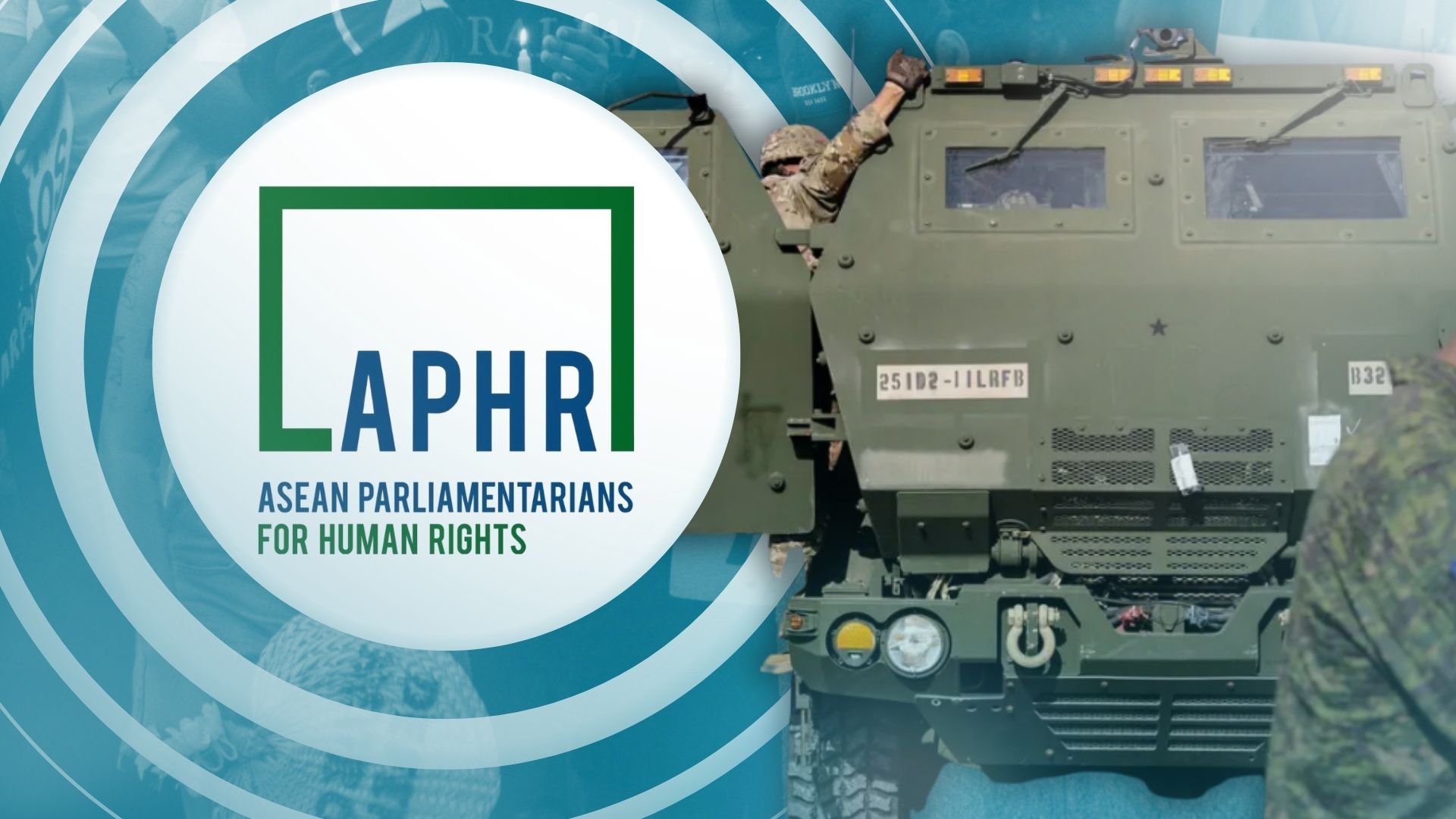
The Association of Southeast Asian Nations (ASEAN) lawmakers are calling on the Philippine government to ensure accountability over a deadly military operation in Negros Occidental, framing the issue as a test of the country’s leadership as incoming chair of the said bloc.
The appeal came from the ASEAN Parliamentarians for Human Rights (APHR), a group of current and former legislators across Southeast Asia, following the April 19 operation in Toboso town that left 19 people dead.
Among them were nine civilians identified as community journalists, university students, researchers, Filipino-American advocates, a local resident, and two minors.
APHR called for independent investigations without military involvement, along with a halt to operations that could put civilians at risk.
They also urged authorities to provide protection and assistance to families displaced by the violence, citing international humanitarian law (IHL) that classifies the willful killing of civilians as a grave breach of the Geneva Conventions.
“As the 2026 ASEAN Chair, the Philippines must lead by example—not by silencing those who speak truth to power but by protecting them,” APHR said in a statement.
“Nine civilians were killed in Toboso, including a journalist and two minors. An operation that cannot distinguish between armed combatants and community workers is an indiscriminate attack that violates international humanitarian law. The AFP must be held accountable,” APHR Chairperson Mercy Chriesty Barends stated.
The group has since carried out fact-finding expeditions on human rights issues throughout the region and collaborated with civil society organizations.
APHR also raised concerns about broader conditions surrounding the incident, pointing to the Anti-Terrorism Act of 2020 and the practice of red-tagging, citing how it was used to target journalists, activists, and community workers.
“The AFP does not operate in a vacuum. These killings happen because the Philippine government allows them to. A government that kills civilians and calls them terrorists cannot lead a region toward democratic governance,” APHR board member Wong Chen uttered.
In the country, the Commission on Human Rights has begun an investigation of the incident, putting emphasis on the IHL which states that in situations of uncertainty, people should be assumed to be civilians.
Military claims
The AFP has maintained their own take on the incident, claiming that firearms were found at the scene and that all 19 dead were members of the New People’s Army (NPA).
General Romeo Brawner Jr., head of the Armed Forces, reaffirmed that the people slain were rebels, despite conflicting reports that questioned if any of the victims were civilians.
Civilians who have died during the encounter were believed to have engaged in community-based works in Negros Occidental.
Community journalist RJ Nichole Ledesma was said to be working in the region, while University of the Philippines students Alyssa Alano and Maureen Keil Santuyo, along with researcher Errol Wendel Chen, were reportedly documenting the conditions of sugarcane workers.
Others were said to have been staying with or assisting local communities at the time.