










Now Reading: ABSOLUTE CINEMA: When silver screens lose their luster
-
01
ABSOLUTE CINEMA: When silver screens lose their luster

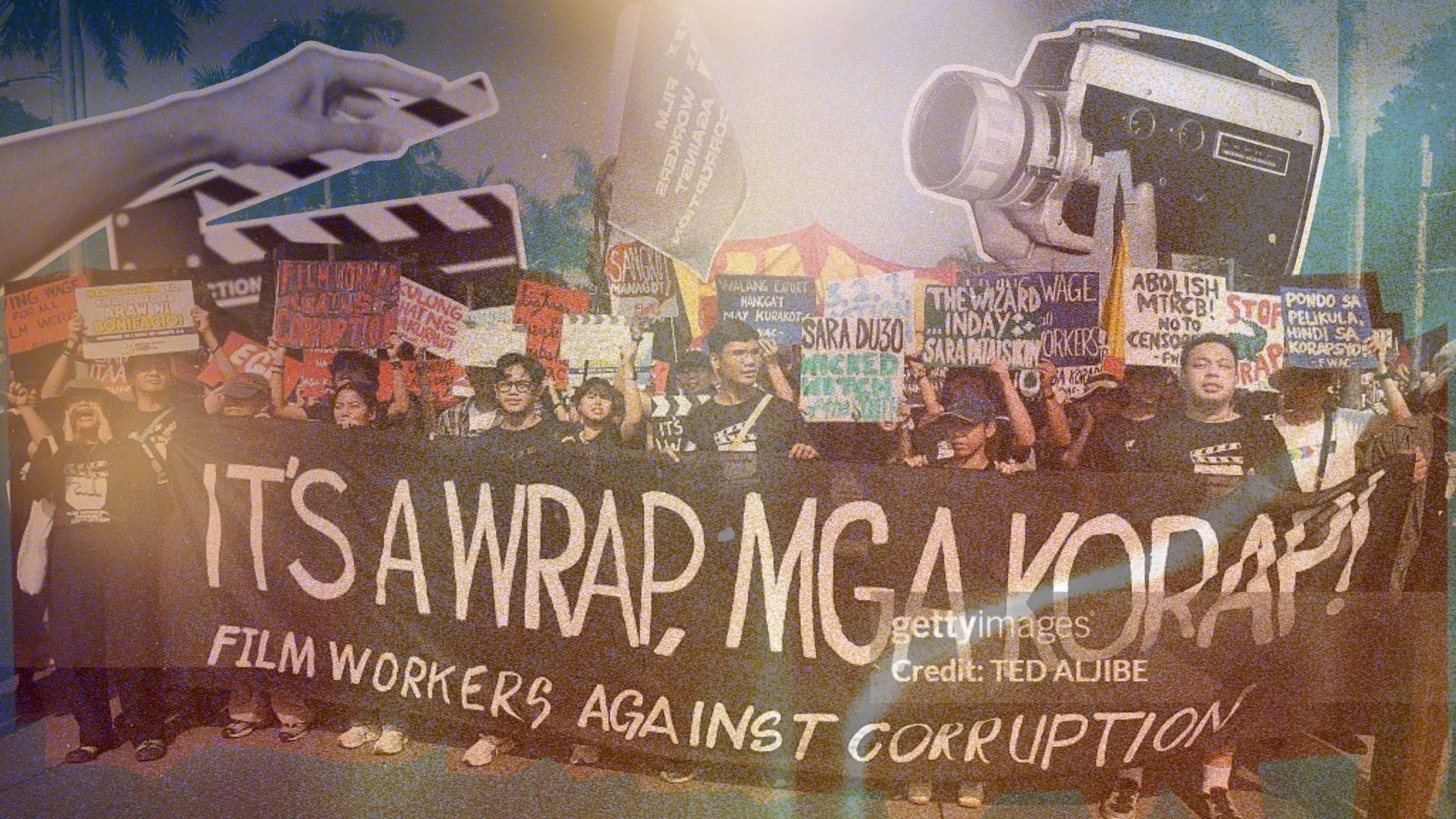
While other countries treat film as both culture and capital, what comes knocking on the doors of Filipino filmmakers are rising costs, shrinking audiences, and policies that arrive a little too late.
Behind the spectacle of premieres and red carpets often masks a stark and sobering reality for the Philippine film industry. Recently, actress and filmmaker Bela Padilla stepped into the halls of Congress to champion the Local Film Industry Development Act.
While her advocacy is fueled by passion, it is also a race against a clock that is ticking loudly for a sector now teetering on the edge of obscurity. Padilla’s recent participation in a House committee hearing served as a wake-up call, that while Filipino talent is celebrated on the global stage, the domestic infrastructure supporting it is crumbling under the weight of taxes, high costs, and a shifting digital landscape.
On a Shoestring
Making films in the Philippines today is no longer just creative—it is increasingly unsustainable, burdened by limited support and the quiet stigma that cinema is a path unlikely to sustain those who choose it. For many, pursuing film is no longer seen as a viable career, but a risk taken more out of passion than promise of return.
In an industry where resources are scarce and recognition is uncertain, even the most dedicated filmmakers are often left to create with little assurance that their work will be valued at home.
The industry is still grappling with a slow post-pandemic recovery, marked by a steep decline in production. In the first half of 2025 alone, theatrical releases dropped by 15% compared to the previous year. From once producing hundreds of films annually, the country is now down to a fragile output of only 30 to 50 films a year. At the center of this decline is the brutal reality of skyrocketing costs.
Production expenses have surged by 35% since the pandemic, making filmmaking a high-risk endeavor. For independent filmmakers, this crisis is no longer just about telling stories but surviving long enough to tell one.
Ironically, in global platforms like Davos and Venice, where Padilla firsthand witnessed through her speaking engagements at the World Systemic Forum, Filipino filmmakers are praised for their ability to produce high-quality work despite shoestring resources. But this admiration rarely translates into local sustainability.
“The reaction was always the same. They’re amazed at our output when our budgets are so low. Honestly, I always get sad when I hear a Filipino put down a local film or review a local film harshly and compare our work to an international project that has a budget we can only dream of, because I see foreigners appreciate our work more than we do,” the artist said.
Cut out of the frame
The struggle extends from the director’s chair to the cinema seat. For the average Filipino, the “movie-going habit” has become an expensive luxury. Over the last decade, ticket prices have spiked by nearly 50%, with standard admission now ranging from ₱300 to ₱400 and premium screenings reaching as high as ₱1,000.
In contrast, streaming platforms like Netflix and iFlix offer subscriptions ranging from ₱129 to ₱550 per month. The shift is inevitable, but not to the extent that audiences are abandoning films—they are simply choosing more affordable ways to consume them.
At the same time, the tax environment adds another layer of strain. The Philippines remains one of the most heavily taxed film industries globally. Roughly 33% of a film’s gross income is diverted to municipal taxes, with another 12% for VAT and 8% for various other fees.
This means that more than half of a film’s potential earnings are stripped away before they can be reinvested into the next project. Before profits can even be realized, a significant portion of earnings is already gone. For an industry struggling to grow, this is not just restrictive, but it is crippling.
Behind the scenes
Prominent industry figures like Charo Santos-Concio and Dingdong Dantes have also echoed the same sentiments, urging the government to finally recognize entertainment as a legitimate economic engine rather than a mere hobby or a source of easy tax revenue.
The proposed Local Film Industry Development Act, supported by Representative Javi Benitez, seeks to address these exact pain points. The bill aims to establish a Philippine Film Commission to provide institutional support, streamline funding, and ensure fair equity for both creatives and producers.
This bill proposes the creation of a national film commission, alongside funding mechanisms, incentives, and policies to ensure fairer compensation for creatives. It also includes provisions for safer working conditions, particularly for women, with support from groups like Gabriela Women’s Party.
On paper, it is comprehensive. But the question now remains whether it can keep pace with the scale of the problem or not at all.
Padilla herself noted the gap that, while countries like the UK have progressed to actively uplifting female filmmakers, the Philippines is still working toward basic protection.
Erased from narratives
Beyond the finances, the industry also sparks a debate over creative freedom. The Movie and Television Review and Classification Board (MTRCB) has drawn criticism for its push to expand authority over streaming platforms under proposed legislation. Filmmakers argue that this risks overreach, especially in light of controversial “X” ratings given to politically sensitive works.
Critics and filmmaker groups argue that this constitutes an unnecessary overreach and a threat to artistic expression, pointing to high-profile “X-ratings” for documentaries like Alipato at Muog as evidence of a shift toward censorship rather than simple classification. These regulatory hurdles, combined with high review fees that can exceed ₱12,000 per submission, create an environment where the next “Golden Age” of Philippine cinema feels further away than ever.
Yet, long before today’s debates on taxation, streaming and censorship, Philippine cinema had already endured a paradoxical peak under the regime of Ferdinand Marcos Sr.
Even in the years of Martial Law in the Philippines, filmmakers like Lino Brocka and Ishmael Bernal produced some of the country’s most acclaimed works while navigating strict censorship, but still confronted inequality, urban decay and political unrest. Cinema, at the time, became both an artistic refuge and a subtle form of resistance.
It was a time when stories were carefully framed to slip past regulation, that while the pressures today are different, the struggle to tell stories has long been part of Philippine cinema.
Keep the cameras rolling
Taken together, these realities paint a picture of an industry caught in a tightening frame. Production is declining, audiences are shrinking, costs are rising, and control—both economic and regulatory—is becoming more concentrated. And yet, Filipino filmmakers continue to create, driven by persistence and passion, despite receiving little to nothing in return.
Bela Padilla’s message remains one of cautious optimism. She believes that one does not need to be an elected official to help the industry, though she is grateful for the lawmakers who are finally paying attention.
As the bill moves through the legislative process, the film industry seeks a future where Filipino films are appreciated as much at home as they are in Venice or Davos. For Padilla and Filipinos, the success of this legislation isn’t just about keeping the cameras rolling.
It is about ensuring that the stories of the Filipino people do not fade into silence and that silver screens never lose their luster.
We cannot just simply stare at our wounds forever. It is high-time to reclaim what cinema can be and should be—an absolute one free from the chains that lock creativity and stifle Filipino stories.