










Now Reading: WVSU students wear black ribbons in protest vs recognition program speaker
-
01
WVSU students wear black ribbons in protest vs recognition program speaker

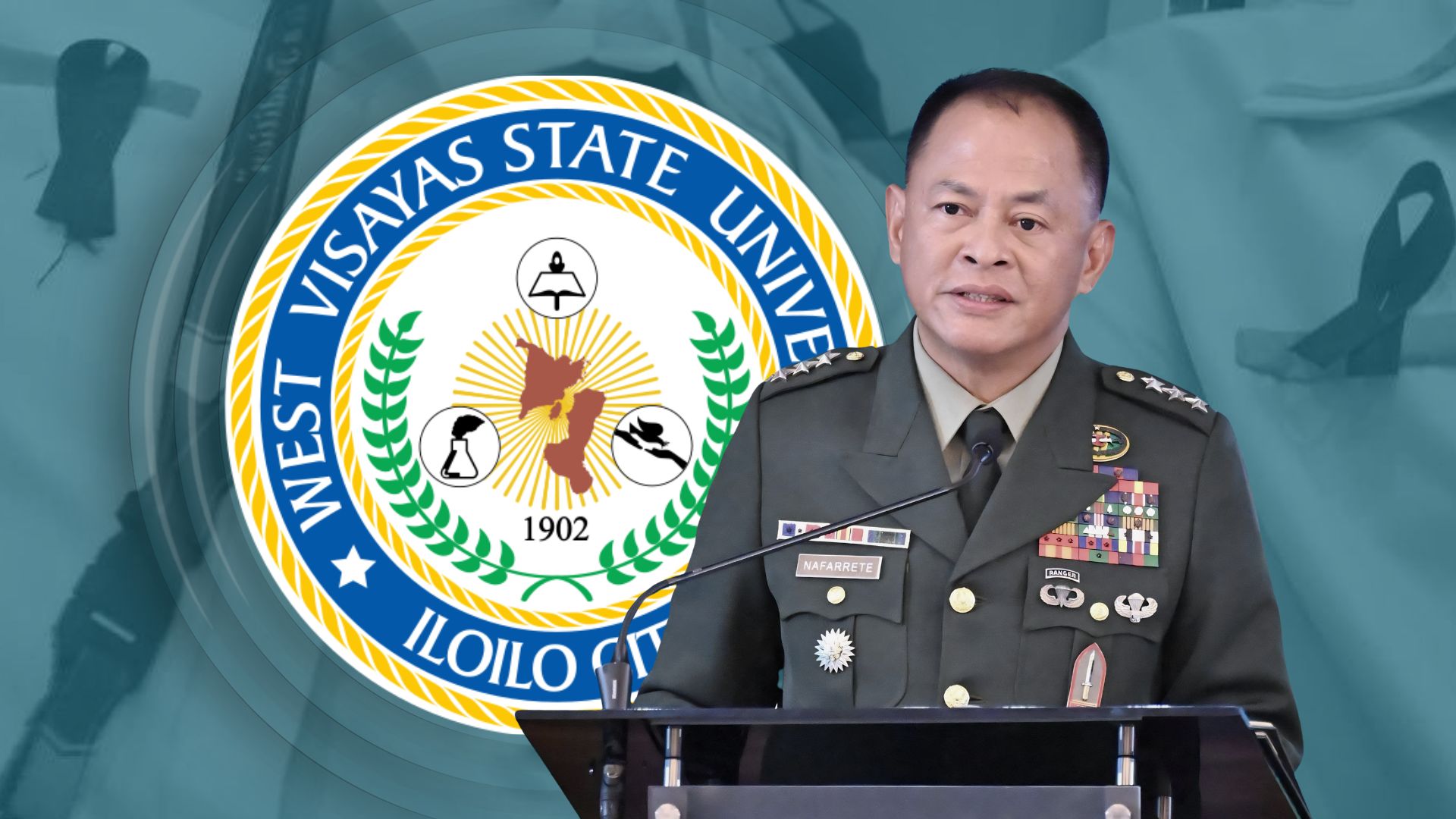
Several students attending the 2026 University Recognition Program at West Visayas State University on June 3 wore black ribbons to protest against the selection of Philippine Army Commanding General Antonio Nafarrete as the event’s guest speaker.
Students attached the black ribbons on their academic uniforms as a sign of dissent in accordance with the call of WVSU University Student Council to express opposition to Nafarrete’s invitation.
The council, through a statement on June 1, said that they “deeply resonate with the grave concerns raised by the student body” regarding the selection of Nafarrete as the program speaker as the institution he represents is said to be linked to human rights violations.
The statement cited militarization conducted under Nafarrete’s command, including incidents in Mindoro and Negros Occidental that reportedly resulted in civilian deaths.
They also expressed concerns over red-tagging of student organizations and the militarization of academic spaces in the campus.
“We firmly believe that the serious allegations of human rights violations associated with leadership under his command directly contradict the humanitarian values, justice, and peace that WVSU stands for,” the statement read.
Student organizations including SAMASA-WVSU and the League of Filipino Students-WVSU also released statements opposing Nafarrete’s participation in the recognition program.
Admin response
WVSU administration acknowledged the concerns raised by student groups and campus stakeholders.
The university stated that Nafarrete had been invited because he was a distinguished alumnus of the WVSU Laboratory School and a public servant.
University officials said his nomination underwent the selection process conducted by representatives of the University Senior Curriculum Council and the Graduation Committee.
“His presence is not an endorsement of any political position or agenda,” the university said in its official statement.
The administration also reiterated its commitment to academic freedom, human dignity, and opposition to intimidation and oppression.
Press restriction reports
Meanwhile, reports from student journalists indicated that several campus publications were denied entry to the venue during the ceremony.
According to the reports, publication staff were informed that they needed authorization letters or permits to cover the event.
The Panay chapter of the College Editors Guild of the Philippines (CEGP) condemned the restriction and described it as a violation of students’ right to information and an attack on press freedom and editorial independence.
Nafarrate’s presence in WVSU prompted criticism from the studentry, questioning the appropriateness of the invitation.