









Now Reading: Heritage in Hooves: Lives, legacy, and livelihood behind Cebu’s last moving monuments
-
01
Heritage in Hooves: Lives, legacy, and livelihood behind Cebu’s last moving monuments
Heritage in Hooves: Lives, legacy, and livelihood behind Cebu’s last moving monuments

G.H. Villiagracia
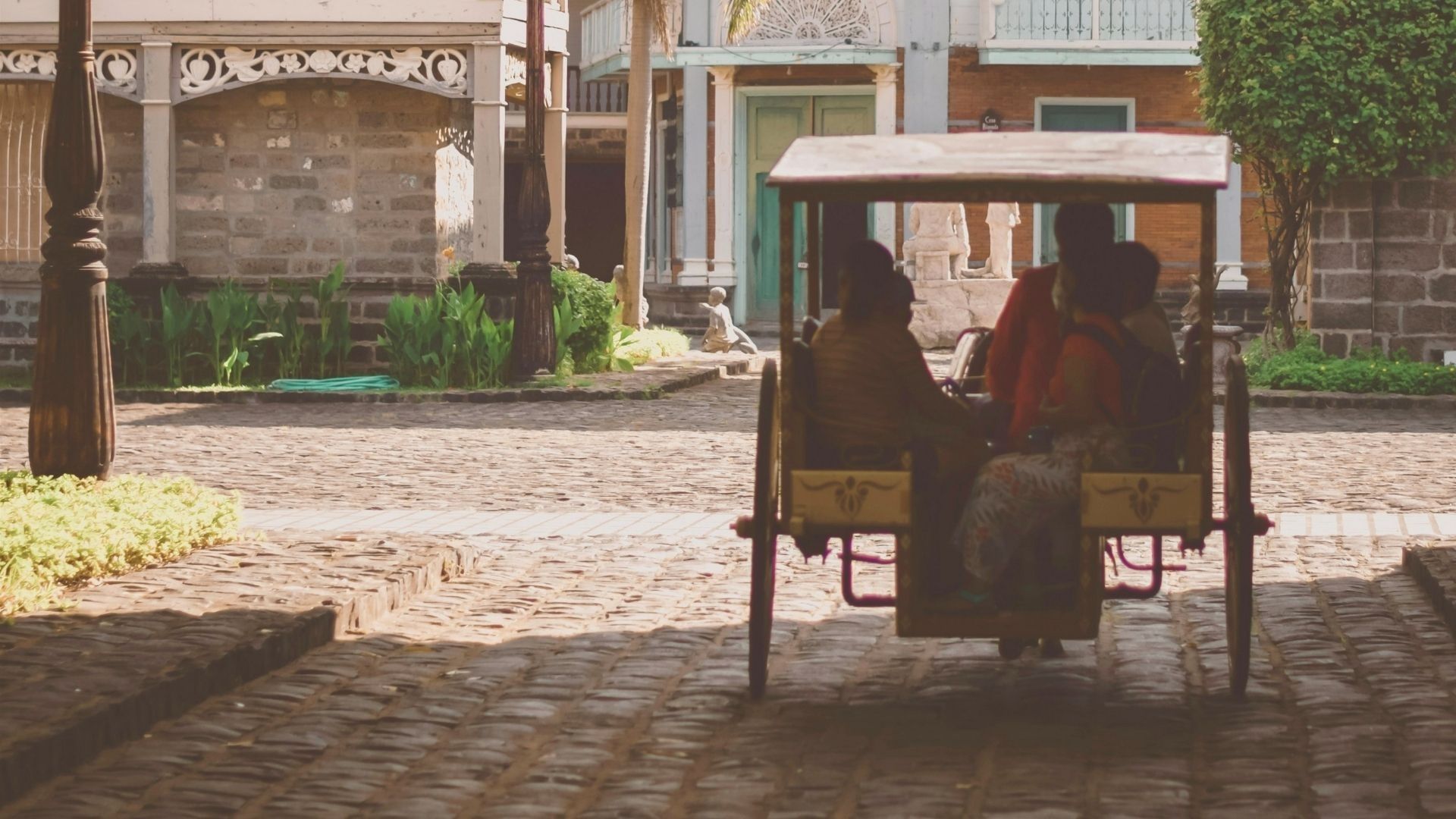
Cebu is often remembered through its monuments that refuse to move. Old churches stand still. Shrines outlive centuries. Heritage remains where history left it. Yet, in its aging downtown maze, these memories do not stand frozen in stone. They breathe, they roll, and they gallop along Leon Kilat Street against the rush of time.
This very tension between permanence and motion takes form in the lives of tartanilla drivers who have carried the tradition for decades even in the midst of the slow disappearance of their peers from the routes they once shared and a world that has forgotten the sound of hooves cracking against concrete roads.
For kutseros like Julieta Gempisao, these horse-drawn carriages, where only 40 units remain today, go beyond being just living, moving memories of the past. They have always been what carried them through the streets of life.
First rides and half a lifetime
Every morning begins long before passengers step into the tartanilla. At 61, Julieta wakes to a routine built over half of her lifetime. At nine o’clock, she tends to her seven-year-old Avatar and nine-year-old Balinget, her horses, for another day along Cebu City’s old and bustling center.
“Pag-mata nako, atimanon nako sila (mga kabayo), ligo-an nako, bahogan, maglimpyo saila higdaan,” Julieta shared. “Human nako pamahaw, mu-adto jud ko saila tugkaran, saila quadra.”
(When I wake up, I take care of them [the horses]. I bathe them, feed them, and clean their bedding. After I have breakfast, I really go to their place, to their stable.)
Once one of her horses is ready, Julieta steps into the weathered frame of her tartanilla, gripping the worn leather reins with practiced ease. She guides the carriage out of the quadra and onto the road toward Leon Kilat Street, where the city’s remaining tartanillas line up and wait for passengers. It is a journey she has made day after day for the past 30 years.
As she steers through the winding streets, the noise of the city slowly fades behind her. And in that motion, something familiar returns. She is a young girl again, sitting high on a wooden bench beside her father. It was in those early years that she learned the soul of a kutsero, her small hands guided by his calloused ones as he taught her how to command both the horse and the streets.
“Akoang papa ang nag-tudlo sa akoa ani (ang pagka-kutsero),” Julieta recalled. “Sauna, magkuyog-kuyog ra gyud ko saiyaha. Tapos inig-uli mu-ingon man ko nga ‘akoy dala pa,’ hantod nakakat-on ko.”
(My father taught me this [being kutsero]. Before, I would just tag along with him. Then every time we went home, I would say, ‘I’ll take the reins,’ until I learned.)
For her, every trip to Leon Kilat traces the same road back to where it all began — a young girl next to her father, learning a craft that would carry her through half of her life. She followed her father’s route as a kutsero and with it came a living that would stretch across decades.
“Pag-minyo nako, gihatagan mi’g duha ka kabayo,” she remarked. “Dugay natong duha ka kabayo nako, wala nato sila. Kaning duha ron, si Avatar og si Balinget, dugay dugay na pud.”
(When I got married, we were given two horses. I had those two horses for a long time, but they’re gone now. These two I have now, Avatar and Balinget, I’ve had them for quite some time as well.)
Thirty years later, what remains is not just a job measured in hours, but a livelihood that shaped a family’s entire direction. The tartanilla, she explains, is what allowed her children to finish school and move into professions she once only dreamed of.
“Nakapatapos ko og duha nako ka anak tungod lang aning pagka-kutsero nako, maestra og seaman,” Julieta shared. “Nagpaskwela pako sa akoa crim og HRM ron.”
(I was able to send two of my children to school because of being a kutsero — one became a teacher and the other a seaman. I am still supporting my child who is taking Criminology and HRM now.)
“Ni-ana akoa pinaka-maguwang nga di jud sila makalampo kung wala ko nahimong kutsero,” the 61-year-old added.
(My eldest said they would never have made it through if I hadn’t done this, if I hadn’t become a kutsero.)
The ones who carry the ride with her
Yet, for three decades, Julieta has never carried the weight of the tartanilla alone. At the front of every ride, cutting through Cebu City’s heat, traffic, and long hours, are the companions who have shared the burden beside her.
For Julieta, Avatar and Balinget are more than horses pulling a carriage through the city streets. Across years of long days and uncertain earnings, they have become family bound to the same road she walks in life.
“Maka-ingon ko na mura najud sila og pamilya,” Julieta said. “Masinabtanon jud sila.”
(I can say they are already like family to me. They are very understanding.)
In moments when expenses pile up and needs at home arise, Julieta often finds herself speaking to them as they move along the road.
“Mo-ana gani ko saila usahay nga kayud ta karun kay ang akong HRM nangayo og 700 para sa pang-uniform,” she shared. “Mokayud man pud jud sila. Dako jud kog pasalamat ani nila.”
(Sometimes I tell them that we need to work hard because my HRM child needs 700 for a uniform. They would really work hard after that. I am very thankful to them.)
Even in their silence, she understands their condition as well. When they fall ill or grow weak, she worries for them deeply, making sure they are given time to rest every day. Having two of them, she explains, allows them to take turns moving the carriage.
Rugged trails and animal welfare
But beyond Julieta’s bond with Avatar and Balinget, the life of a tartanilla horse also exists within a wider conversation on animal welfare in Cebu City’s remaining horse-drawn transport system.
For animal welfare advocate Marie Segarra-Tabotabo of the Mayari Animal Rescue Organization, this conversation becomes most urgent when tradition is turned into tourism. For her, any move to institutionalize the tartanilla must first reckon with the conditions of the animals that make it possible.
“If the city plans to make tartanillas a regular part of tourism, it has to ensure that the horses are properly cared for and not pushed beyond their limits,” she stressed.
From what she has observed over time, concerns over the horses’ welfare persist in the forms of prolonged working hours, exposure to heat, and inconsistent access to rest and hydration.
Moreover, the advocate also questioned how existing policies are implemented. For her, the issue is not only about the existence of guidelines, but also whether they are consistently executed in real settings.
As discussions around the “Calesa sa Sugbo Ordinance” move forward, Segarra-Tabotabo calls on local officials to ensure that protection for the horses stands alongside the preservation of tradition.
“Let us honor tradition without compromising compassion,” she pointed out. “Tourism should never come at the expense of an animal’s dignity and well-being.”
Of systems in the reins
As concerns over the welfare of horses endure, attention turns to the institutions responsible for their oversight. In practice, veterinary monitoring is carried out through scheduled visits coordinated with local associations rather than continuous inspection.
Dr. Anton Cahig of Cebu City’s Department of Veterinary Medicine and Fisheries (DVMF) explained that these checks happen every six months, combined with deworming, vitamin supplementation, and basic data collection on horses and drivers. He said the system depends heavily on coordination with kutsero groups on the ground.
“Dili man noon ingon na understaffed mi, sadyang ang monitoring jud sa atong kabayo is isabay nato sa services kay ang deworming pud nato mo last jud siya og six months,” Dr. Cahig stressed.
(It’s not that we’re understaffed, it’s just that we schedule the monitoring of our horses along with the services, because our deworming lasts for six months.)
While advocates often raise concerns about fatigue, heat exposure, and day-to-day working conditions, Dr. Cahig noted that these are assessed within the same cyclical framework. He added that reports from associations and handlers also play a key role in identifying issues in the field.
Moreover, broader debates continue over whether the tartanilla should be regulated more strictly or gradually phased out. Dr. Cahig situated this discussion within its economic reality, emphasizing its role as a long-standing livelihood supported through inter-agency coordination.
“Kaning tartanilla, panginabuhi jud ni siya. Naay uban nga pila na katuig mao najud ni ang ilahang panginabuhi,” the veterinarian noted. “I-oversee jud ni sa council, kami sa DVMF, sa tourism. So hand-in-hand ang government para sa mga tartanilla here sa Cebu.”
(This tartanilla is truly a livelihood. There are others who have been doing this for many years, and it is already their main source of income. It is overseen by the council, by us at DVMF, and by tourism. So the government is working hand-in-hand for the tartanillas here in Cebu.)
More than memories in motion
Back at Leon Kilat Street, the tartanillas still line up the same way they have for generations, waiting for passengers who pass through the city as if nothing has changed. But behind the familiar scene of hooves and wheels, their numbers have slowly dwindled over time. From more than a hundred drivers in the past, only a few dozen remain today.
“Gamay nalang jud mi ron,” Julieta lamented. “30 plus nalang. Sauna 100 plus pami ato.”
(There are only a few of us now, just over 30. Before, we were more than 100.)
Even so, she notes that their presence has never been entirely forgotten. For her, there is still a sense of recognition and care from the Cebuanos that continues to see them not just as drivers, but as part of the city’s living heritage.
For Julieta, the road does not feel divided between past and present. It remains one continuous path, one she first learned as a child beside her father and still follows now with Avatar and Balinget beside her.
“Bilin mani sa ako papa para sa akoa, para sa amoa mag-igsoon, ako jud ni gi bangon para dili mawala ang iyaha kabilin kaniadto,” the kutsero said.
(This was left to me by my father, for me and my siblings, and I really worked to continue it so that his legacy would not be lost.)
And as the wheels turn and the hooves strike the concrete roads once more, one of Cebu City’s oldest living traditions does not stand still like its stone monuments. It moves with them, carried forward not by permanence alone, but by lives that keep returning to the same motion, day after day, against time that never quite stops passing.