







Now Reading: Ancestral return
-
01
Ancestral return

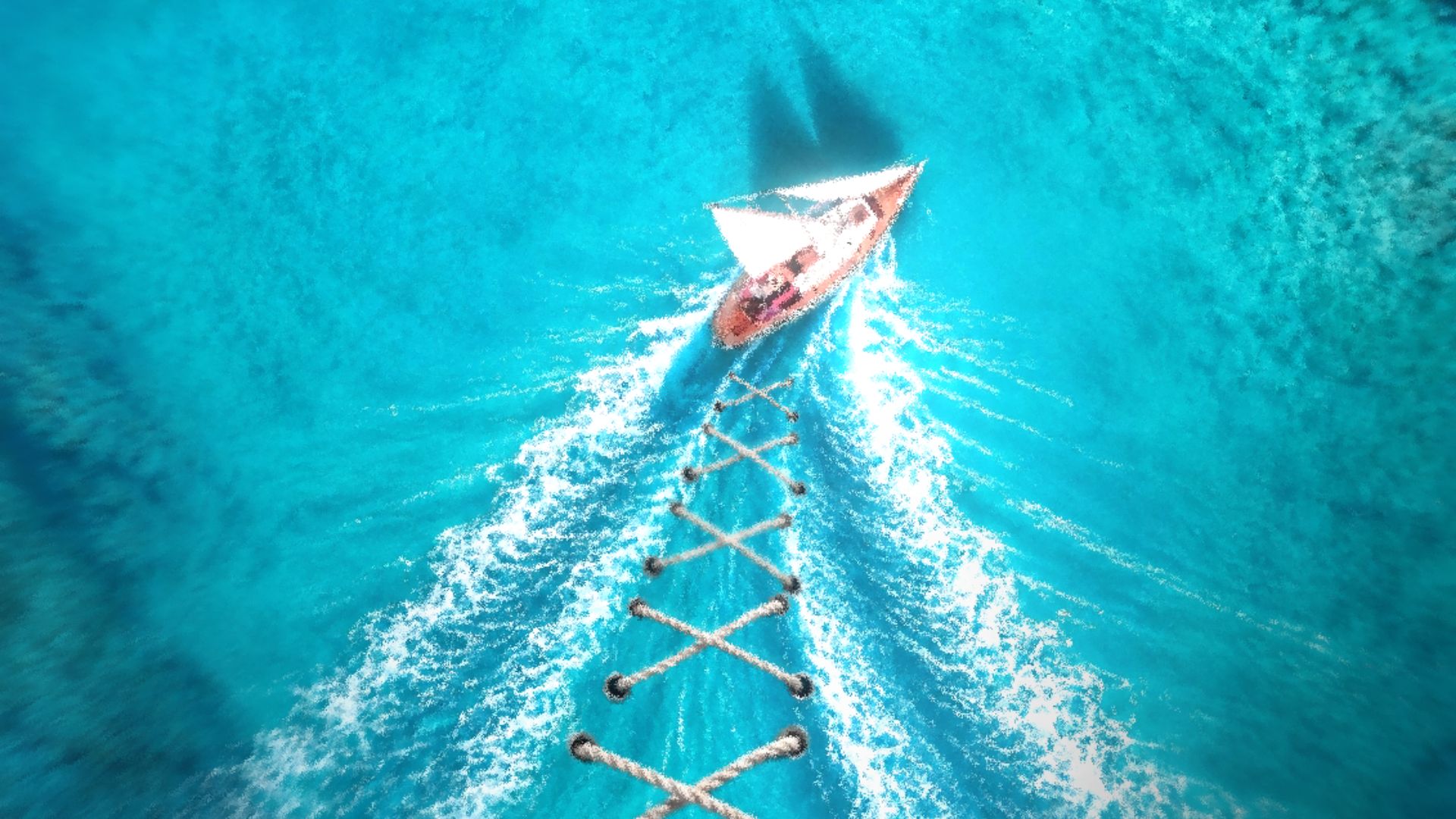
The voyage of the Tao people from Orchid Island, Taiwan, to the Batanes Islands is more than a cultural expedition. It is a direct challenge to centuries of historical amnesia. As sixty indigenous rowers paddle the hand-built canoe Ovayan across the Bashi Channel, they are reviving a maritime route that predates modern nation-states, colonial borders, and geopolitical rivalries. In doing so, they remind the world that the sea separating Taiwan and the Philippines was once a corridor of connection rather than a line of division.
The significance of this journey cannot be overstated. Anthropological, linguistic, and archaeological evidence has long established the deep relationship between the Tao people and the Ivatan communities of Batanes. Both belong to the wider Austronesian family whose ancestors traversed vast oceans thousands of years before European powers entered the region. Yet despite these shared roots, generations have grown up disconnected from one another. Colonial administrations imposed political boundaries, redirected cultural identities, and replaced indigenous networks with systems designed to serve imperial interests. What was once a living relationship became a historical footnote.
Critics may dismiss the voyage as merely symbolic. They may argue that a canoe crossing cannot solve economic inequality, regional tensions, or the challenges faced by indigenous communities in both Taiwan and the Philippines. Others may view the project as an expensive cultural exercise with little practical value in an era dominated by modern technology and globalization.
Such arguments fundamentally misunderstand the nature of cultural survival.
Civilizations do not disappear only when their people are conquered. They disappear when their memory is erased. The loss of ancestral routes, languages, traditions, and relationships weakens the foundations upon which communities build their identity. For indigenous peoples, cultural continuity is not a luxury; it is a necessity. Re-establishing connections severed by centuries of isolation is not an exercise in nostalgia but an act of preservation.
Furthermore, the voyage carries a message that extends far beyond indigenous communities. The Bashi Channel is increasingly viewed through the lens of military strategy, territorial disputes, and great-power competition. Warships patrol its waters. Governments calculate its value in terms of security and influence. Yet the Tao expedition offers a radically different perspective: before the channel became a strategic chokepoint, it was a shared cultural space. By reclaiming this narrative, indigenous peoples assert that history cannot be reduced solely to military maps and political interests.
At the same time, cultural recognition must not stop at ceremonial gestures. Governments that celebrate indigenous heritage while failing to protect indigenous languages, ancestral lands, and political rights risk turning culture into a museum exhibit rather than a living reality. If this voyage is to have lasting significance, it must be accompanied by stronger commitments to indigenous education, cultural preservation, and cross-border cooperation among Austronesian communities. Symbolism opens the door; policy must walk through it.
The journey also exposes a deeper truth about colonization. The greatest damage inflicted by colonial rule was not merely the extraction of resources or the occupation of territory. It was the fragmentation of peoples who once understood themselves as connected. Colonial borders transformed neighbors into foreigners. Shared seas became national frontiers. Indigenous histories were pushed aside to make room for imperial narratives. As a result, many Austronesian descendants today know more about the empires that ruled them than the ancestors who navigated the oceans long before colonization began.
The voyage of Ovayan is therefore not a return to the past. It is a reclamation of a future rooted in historical truth. It demonstrates that identity can survive even after centuries of separation and that indigenous peoples possess the power to define themselves beyond the frameworks imposed upon them.
As the canoe cuts through the waters of the Bashi Channel, it carries more than rowers. It carries a message. The sea did not divide our ancestors; it connected them. The real distance was never measured in nautical miles but in the centuries of forgetting imposed by colonization.
By crossing these waters once more, the Tao and Ivatan peoples remind people that some histories are too important to remain lost. A people that remembers where it came from is a people capable of deciding where it will go. In an age where cultures are increasingly homogenized and indigenous voices struggle to be heard, this voyage stands as a declaration that memory is resistance, identity is power, and reclaiming one’s roots is an act of sovereignty.