









Now Reading: The Hunger Games: A Ballad of Soup and Snares
-
01
The Hunger Games: A Ballad of Soup and Snares

Ralph Ian Espelita
The deadliest weapon in the arena isn’t a bow and arrow; it is the free bowl of a meal used to buy a citizen’s future.
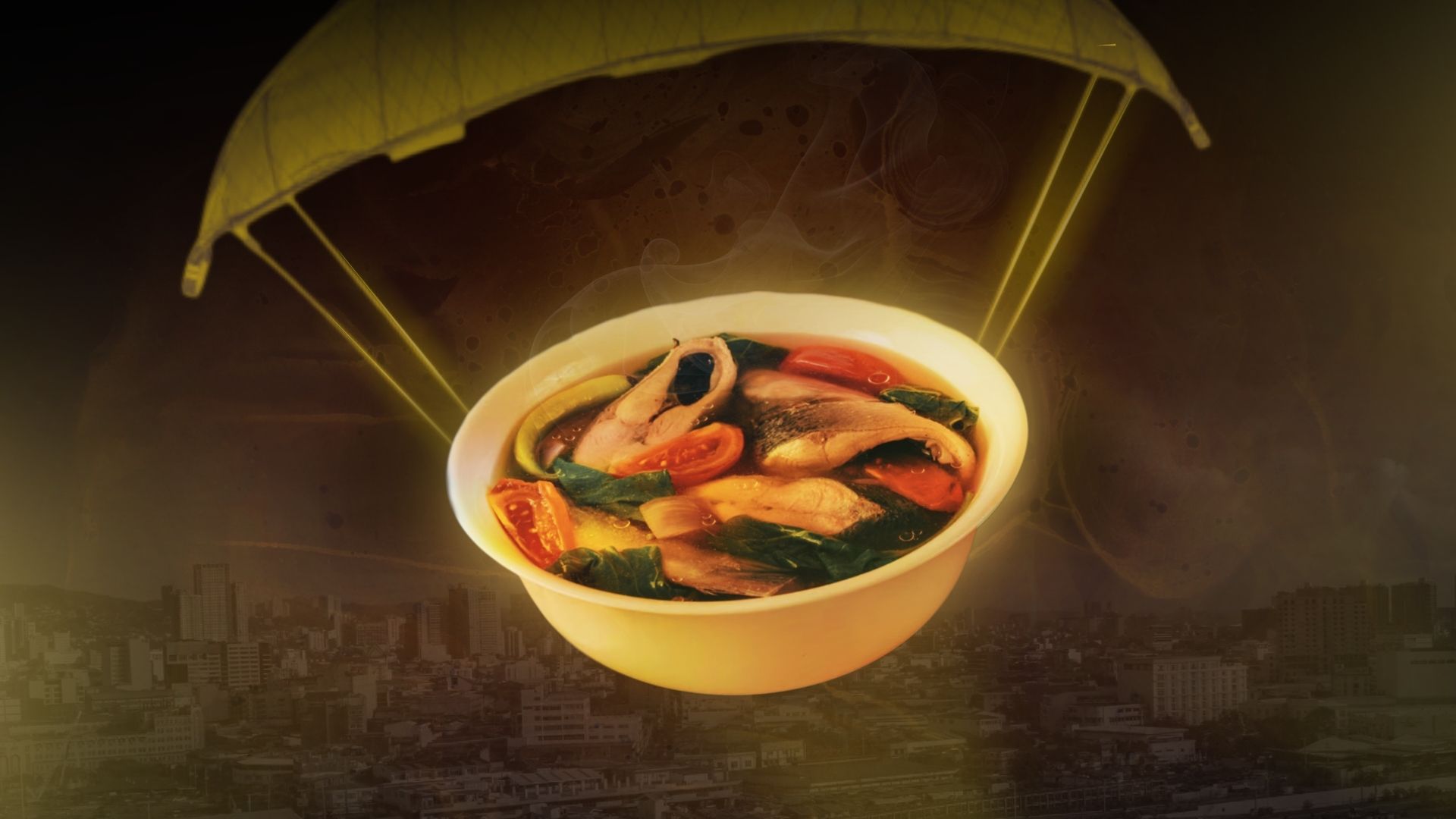
Just like the silver parachutes dropped by the rich Capitol to keep starving tributes dependent in The Hunger Games, today’s welfare programs run the risk of doing the exact same thing. Walk into the DSWD’s new “Walang Gutom Kitchen” at Cebu’s Pier 4, and the broth smells like charity—but look closer, and you will see it is designed to make the poor too comfortable to ever try and escape the arena of poverty.
Let’s face it: playing the hero is cheap when all it takes is a free bowl of soup to buy a voter’s silence.
When a mother spends every waking hour panicking about where to find a single plate of rice for her kids, her mind is completely hijacked. She cannot think about finding a better job, learning a skill, or escaping the slums because she is paralyzed by the daily, agonizing fight to survive. Millions of Filipinos live in this exact state of survival mode, where the future is a luxury they cannot afford to contemplate.
For decades, however, Philippine anti-hunger programs have treated the poor like a captive audience rather than citizens capable of growth. The state frequently acts like the Capitol’s wealthy elite, throwing crumbs to the crowd just to keep them quiet for a moment. These quick fixes are like putting a tiny band-aid on a deep, bleeding wound. A good government shouldn’t try to be a forever savior, as true leadership means helping the poor stand on their own feet so they never have to beg for a handout again.
Against this backdrop, this exact clash between short-term charity and long-term independence came to life on June 22, 2026, when the Department of Social Welfare and Development (DSWD) officially launched the country’s second “Walang Gutom Kitchen” at Pier 4 in Barangay Tejero, Cebu City. Tucked right next to the busy shipping docks where low-income laborers grind through backbreaking work, this newly opened facility is a community food bank built to cook and serve free, nutritious daily meals to street dwellers, port laborers, and families stuck in extreme poverty.
This port-side kitchen is not an isolated charity project or a simple one-off soup kitchen. It is a critical piece of the national “Walang Gutom 2027: Food Stamp Program” created under Executive Order 44. The government is rapidly scaling up this initiative across major urban hubs and rural food-poor areas with a massive, aggressive goal: to systematically feed and rehabilitate one million of the poorest households in the Philippines by next year.
For people like Josephine Grama, a beneficiary, the program is a lifesaver. “Malaki pong pasalamat namin sa “Walang Gutom” kasi makakain araw-araw ang mga anak namin. Sa wala pa ‘yan [the program], isang beses lang kami makaka-kain nang kumpleto kasi mahirap lang po kami.”
To be clear, no one can argue against feeding a starving person. A hungry family needs a meal today, not next year, and keeping citizens alive is a basic human duty that any decent society must fulfill. This free food center must be strictly treated as a temporary stepping stone, not a permanent home. To truly wipe out hunger by 2027, the government must enforce strict exit plans. Free meals must come with a clear off-ramp.
The ultimate goal of a good food program must be to help people leave the soup line, not keep them lined up at the counter forever.
When people get used to a safety net that demands nothing from them, the net quickly turns into a cage. That is exactly why the DSWD didn’t just hand out blank checks; they attached hard rules to every single peso. To keep getting their ₱3,000 monthly food credits, families are required by law to follow tough rules. They must attend mandatory health and nutrition classes, finish livelihood training courses, and actively look for employment through government agencies like the Department of Labor and Employment (DOLE) and the Technical Education and Skills Development Authority (TESDA).
Without a doubt, these rules are the most critical part of the entire program. If you feed the ultra-poor without teaching them how to earn their own money, you create a fake safety net that masks the real problems of unemployment.
It is proven that when the government hands out unconditional freebies, it accidentally kills the drive to look for work. Instead of lifting families up, it drains public funds and leaves people permanently trapped in poverty, waiting for the next drop from the state.
Beyond just training the poor, the food stamp system has a clever second layer: it connects the kitchen directly to our local economy so that public money circulates where it matters most. Beneficiaries cannot spend their food credits on junk food, soda, or alcohol. Instead, they can only redeem them for fresh, healthy food from accredited local sellers, like the government’s Kadiwa stores and small farming cooperatives. The payoff guarantees a steady market for Filipino farmers and fishermen, turning a welfare crisis into a financial boost for local businesses.
At the same time, the new Cebu kitchen is saving clean, surplus food from local hotels and restaurants that would otherwise go to waste. With advice from nutritionists, they turn this extra food into healthy meals. This then prevents the tragic irony of tons of food being thrown into garbage bins just blocks away from children sleeping on empty stomachs. Bottom line: it bridges the gap between urban wealth and urban scarcity, proving that the solution to hunger already exists in our economy if we just learn how to distribute it properly.
It is undeniable that these port-side kitchens and local food stamps are way too expensive. With the high inflation and the soaring food thresholds tracked by the Philippine Statistics Authority (PSA), the government should spend its limited money on bigger macro policies, like lowering taxes or cutting import costs, instead of micro-managing soup lines at a shipping dock.
While that sounds logical on paper, a starving child or a homeless laborer cannot wait for years for big economic reforms to slowly “trickle down” to them from the halls of Congress. They need protein today just to survive until tomorrow.
The real strength of the Walang Gutom Kitchen is that it doesn’t just hand out food and close the door; it acts as an intake hub. Once a person walks in for a meal, the government can immediately link them to broader programs, like the Pag-abot program for the homeless or the Tara, Basa! tutoring program for the vulnerable. The kitchen becomes a gateway to healthcare, housing, and education.
Strip away the politics, and the truth is simple: we cannot let “Walang Gutom” become just another political tool to buy popularity and silence the masses. A full stomach is not the final goal of citizenship; it is simply the physical energy a human being needs to study, work, learn a trade, and get a real job. Welfare should never be a lifestyle; it must be an emergency escape route.
If a government soup kitchen is truly successful, it should eventually work its way out of business. The ultimate victory will not be measured by how many thousands of Filipinos are waiting in line for free food at our ports and plazas. On the contrary, it will be measured by how many families can finally walk away from the counter, stand on their own two feet, and buy their own groceries. The Capitol’s rations must turn into real economic freedom.
Only when our poorest can feed themselves without a government coupon will the ballad of soup finally end, leaving the snares of dependency empty once and for all.