










Now Reading: Mining powers Caraga’s economy—yet their community bear its consequences
-
01
Mining powers Caraga’s economy—yet their community bear its consequences
Mining powers Caraga’s economy—yet their community bear its consequences

Aaron Fernandez
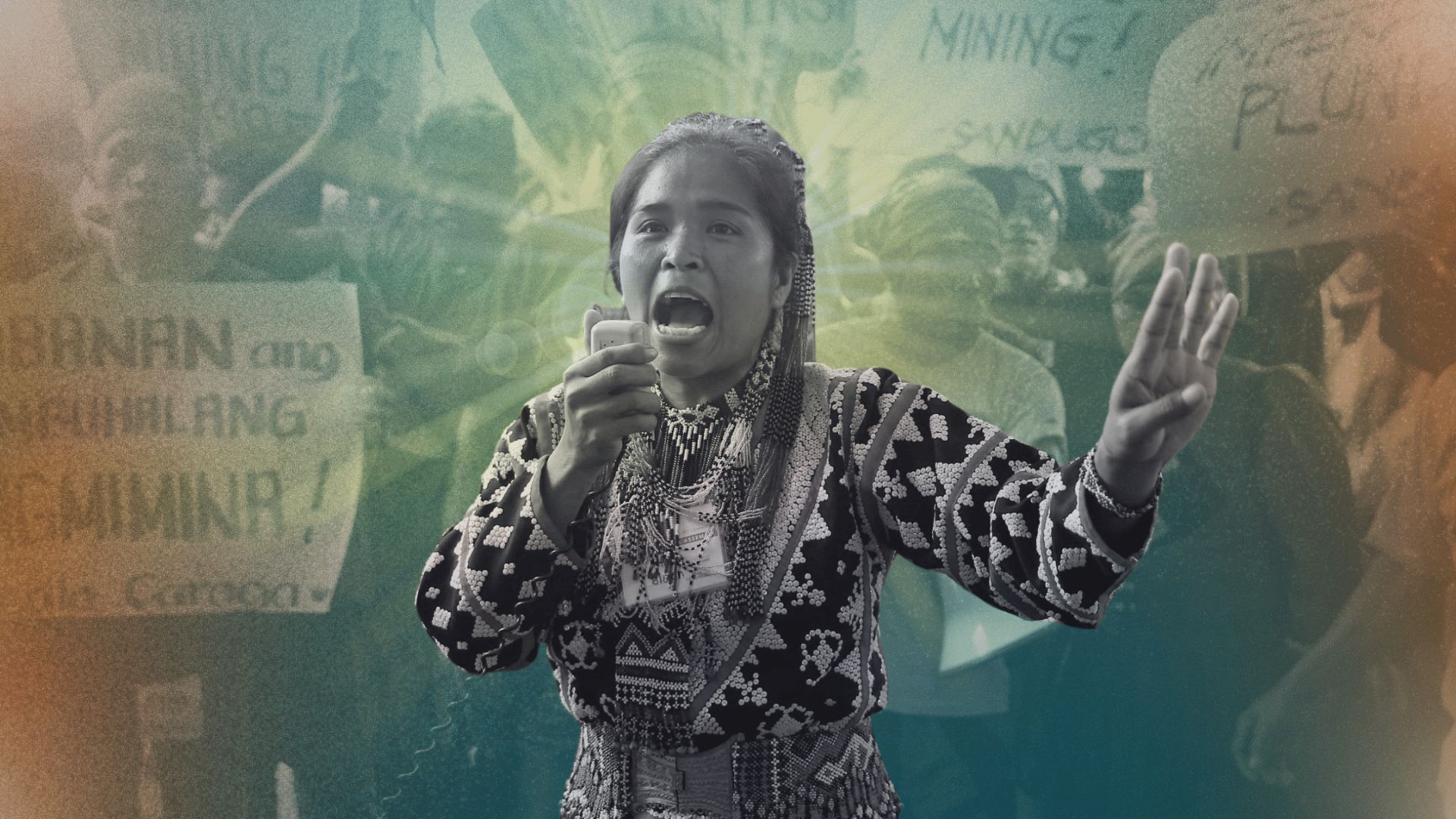
The Philippines recognizes Caraga Region as the nation’s mining capital, with incoming-generating jobs and worldwide exports from its excavated minerals. However, beyond the region’s economic promise, highlights an indigenous community that are losing ancestral sites because of mining. Such an expanding mining issue begs a question—who really is benefiting from Caraga’s mining initiative?
In a report by the Business and Human Rights Resource Centre (BHRRC), many indigenous protected areas, alongside biodiversity hotspots, have shown major loss due to alleged land exploitation of large mining corporations.
These mining initiatives power the transfer from fossil fuels to renewable energy through nickel mining—but instead, many indigenous areas and protected communities experienced toxic leaching and thick orange rivers that became the undisputed irony of such an issue.
Displacement and killings
According to BHRRC, around 84 percent of nickel tenements overlap ancestral domains and protected areas. With various laws on mining containing legal loopholes, many of the region’s mining companies could enter in Certificate of Ancestral Domain Title (CADT) areas without the permission of Indigenous Peoples (IPs).
A 2025 Climate Rights International’s (CRI) “Broken Promises” report interviewed various residents and IPs nearby mining areas, in which many of the residents faced losing various livelihoods from polluted farms to muddy waterways.
What challenges them is that it creates a space without income for families facing such issues, forcing them out of these areas. Especially for a region highlighting their IPs as one of their identities, the loss of a definite answer by the government creates distrust from communities.
Not only that, but the report documented various intimidations, red-tagging attacks, and killings that residents nearby believe to be connected to anti-mining activities. Some mines are owned or operated by political families present in the region itself. An example being the Pimentel family, as for almost a decade, they had been aggressively challenging national governments on their stance for mining projects.
Truly for the community?
It’s not just the IPs experiencing the effects of mining—but also the miners themselves. Interviews taken from former miners had associated respiratory illnesses, skin disorders and even cancer through mining-related dust exposure.
“I got sick because of the dust. It almost felt like pneumonia,” Mark, a former security guard of a Surigao del Sur-based mining company said in a CRI interview. He added that the pollution sparked tuberculosis among other workers, and that the illness he had made him quit his job.
Although a study from Caraga State University (CSU) found mining-company health services accessible, they lack access for services nearby mining areas. As a result, communities in Dinagat Islands suffered persistent coughing and breathing difficulties in everyday living, according to a peer-review study by CSU.
Economic standpoint
Mining operations remain important to Caraga communities however, generating billions of pesos in production value according to the Mines and Geosciences Bureau (MGB) Regional Office XIII.
As the mining capital of the nation, Caraga’s overall Gross Regional Domestic Product (GRDP) accounts for approximately 9 percent. This, combined with other sectors, drives the region as the second fastest-growing regional economy in the country.
However, the amount of pollution mining companies that had seeped into soils and waterways could ruin other sectors like farming, fishing, and many more affected by the issue.
Meeting in the middle
Mining doesn’t have to be phased out all together, yet strengthened laws and regulations are needed in order for it to continue benefiting the community. Coordinating with national standards for environmental protection and waste management through the Department of Environment and Natural Resources (DENR) would effectively lower the risks of environmental degradation through mining initiatives.
Even for expanding their mining territory, they should follow humanitarian laws and coordinate with government officials and IPs before making any decision. The maltreatment of the communities they manage should not be excused through economic numbers and climate crisis, especially when unfair treatment is visible even through shared interviews.
For many in the region, mining carries a heavy burden in their own eyes. While some view its immediate impacts badly, others find it beneficial for the future of the region. Yet without finding a middle ground, their community would only bear the weight of consequences alone—built quietly by the people’s resilience in accepting a region polluting itself.