



Now Reading: Trial and drama
-
01
Trial and drama

Gevo Geganto
The impeachment trial is being tested in more ways than the arguments of what the framers of the 1987 Constitution intended on how the process should proceed. It is being threatened by the very people for whom its purpose is built.
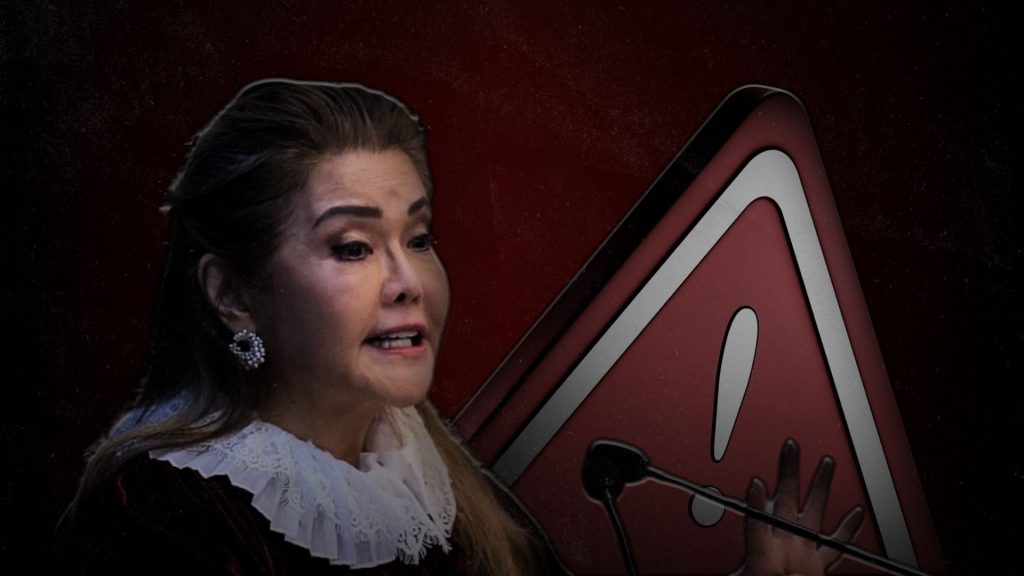
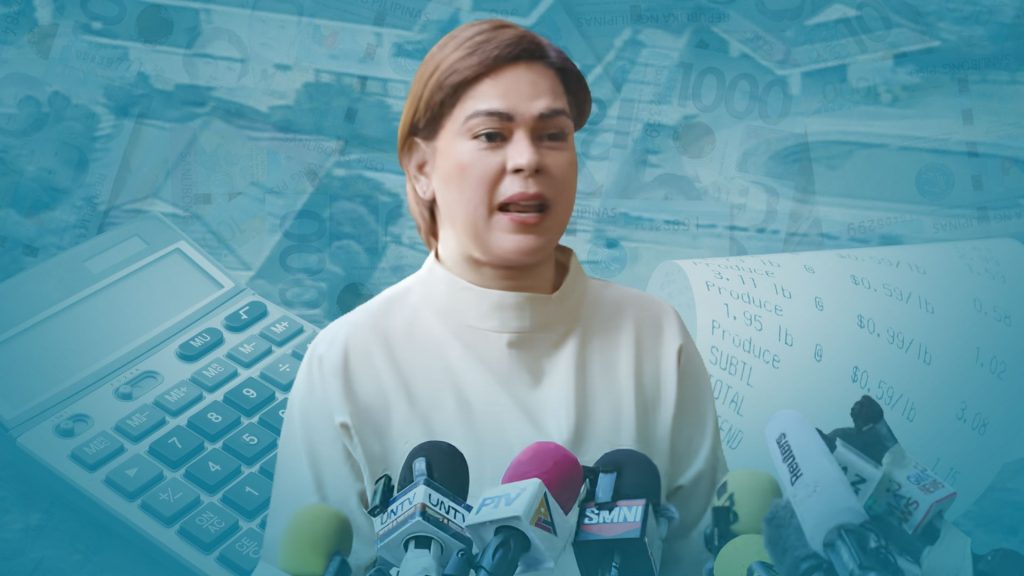
The second week of Vice President Sara Duterte’s trial has now officially concluded. And more than debates on what’s constitutionally sound and explainers on the high court’s rulings, there was drama. Entertaining it might be, but also problematic at the same time.
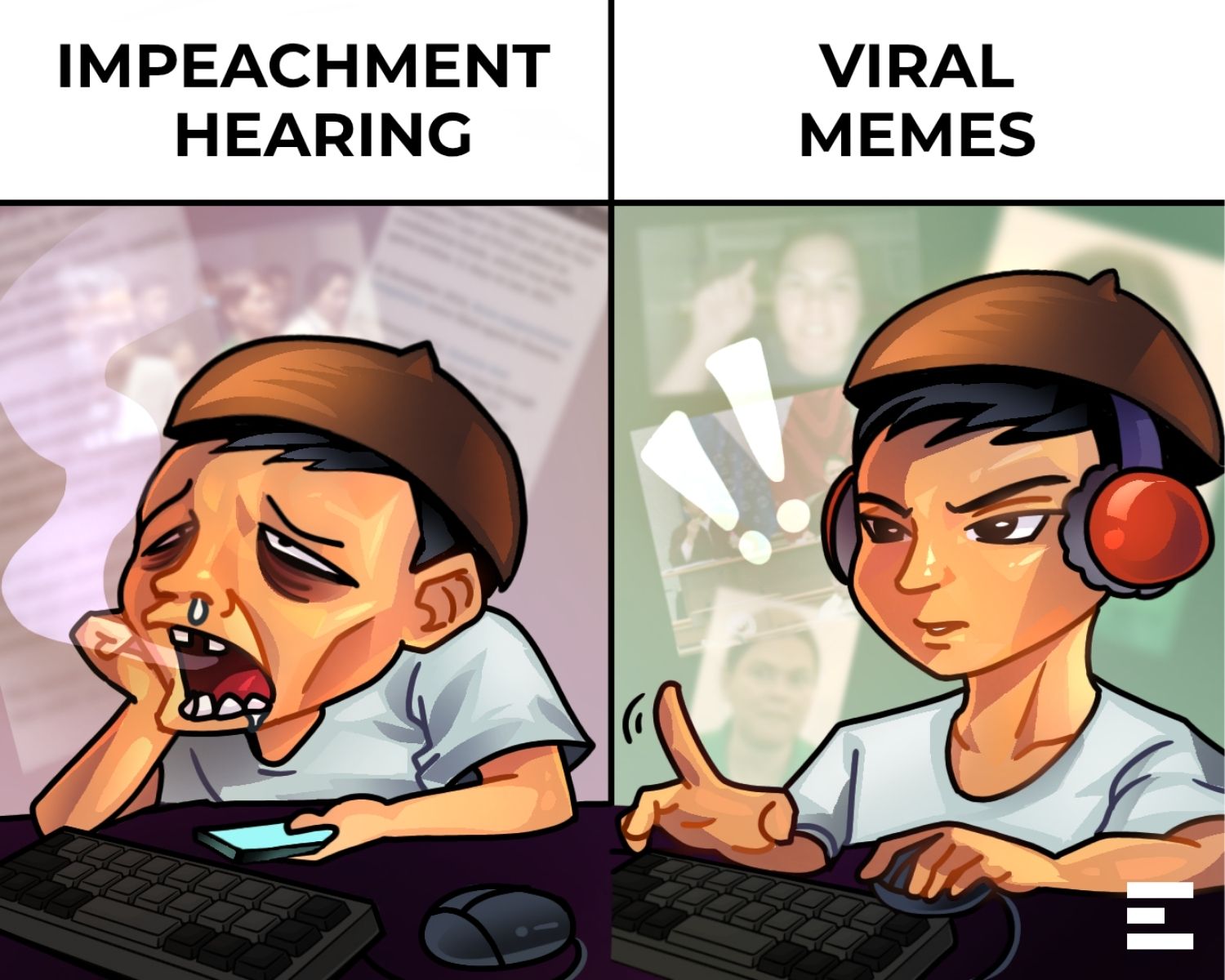
We’ve seen it on social media in swarms: one making a big deal of a certain prosecutor’s moisture on their face, another one mocking the number of objections the defense has uttered, and even how a certain counsel for the public prosecutor became an overnight celebrity.
At first glance, these acclamations appear to be harmless—even of little importance—but they set a dangerous path when they slowly become routine, especially when we invest in these theatrics rather than setting our minds on the gravity of the trial.
Impeachment is no joke—again, no joke. It is a way in which we can hold the highest government officials accountable and ascertain that they could no longer take public office. Being convicted in an impeachment court cuts a public servant’s political life short, equally tarnishing their name in history, as proven by former Chief Justice Renato C. Corona—the first public official and member of the judiciary to be convicted in an impeachment trial in Philippine history.
Moreover, this trial could be the last straw for the long-disappointed public, eventually mobilizing them to the streets which, historically speaking, has been the avenue where leaders were ousted.
We can look back at EDSA Dos, and that’s exactly what happened.
In the impeachment trial of former President Joseph Estrada, the senator judges voted by a majority not to unseal the infamous “second envelope,” which allegedly contains key evidence against the former president. But understood by many as a move to conceal the truth, this prompted public outrage.
The former Senate President Aquilino “Nene” Pimentel Jr. resigned.
Opposition senators and house prosecutors walked out.
The trial turned into a catastrophe and was never completed. The streets were then flooded by people, eventually leading to the ousting of Estrada—not by a court decision, but through public pressure.
Today, with Duterte’s impeachment trial, a “second envelope” moment seems imminent. This comes after the defense objected to the request by House prosecutors to open the Bureau of Internal Revenue (BIR) box during the impeachment pre-trial conference. On July 15, oral arguments regarding the matter and other bank records occurred between the two parties, but the impeachment court has yet to yield a decision. Until such time, the shadows of doubt and the fixation from the public will remain.
But in contrast to both Corona and Estrada’s impeachment trial, Duterte comes in a time where information is as susceptible to sensationalism as it is to falsehood. A study in 2025 showed that memes, influencers/vloggers, entertainment creators, and platform-native creators frequently dominate mainstream media in shaping political conversations.
Credible sources of information are slowly becoming an option rather than the standard.
The public is leaning more into dramatic headlines over well-curated ones. The space for verified information is now saturated with content creators who are directly or indirectly promoting narratives that influence public discourse and the political decisions that make and break this country every day.
These sources only prioritize reaction and engagement. Neither do they observe editorial practices nor are held accountable. But once a person engages with this content, their social media slowly turns into an echo chamber. By then, what shapes their political opinion are no longer verified information, but rather ones that bring out laughter, outrage, amusement or even pity.
That reality is particularly worrisome in Duterte’s impeachment trial. Since this trial no longer simply stands for accountability, it bears the country’s fate. The decision made here will ultimately lead and set a precedent for the 2028 Presidential Elections—whether the Duterte name will once again be synonymous with the presidency. I hope not.
That is what the proceeding carries: a heavy and sensitive load.
While entertainment can be interpreted as a coping mechanism to navigate this long and stressful chapter of the country, it ought not bind us to spectacle and shift our focus from matters that will fundamentally define what our future will look like.
With six trial days completed, the impeachment court still has 86 trial days left, and so much could happen within that timeframe. However, it is our duty to not lose track of this constitutional process because, although the senator-judges hold the power over the final outcome, our shared public sentiment remains a strong deciding factor.
So, I’ll end with this reminder: watch the trials with the same eagerness as an afternoon telenovela, seek news updates like you’re fanning over the individuals involved, watch explainers as if you’re trying to understand the plot. But unlike teleseryes, be reminded that this one’s effects do not remain on the screen.