
Now Reading: NUJP, CenterLaw push civil remedies over jail for libel
-
01
NUJP, CenterLaw push civil remedies over jail for libel

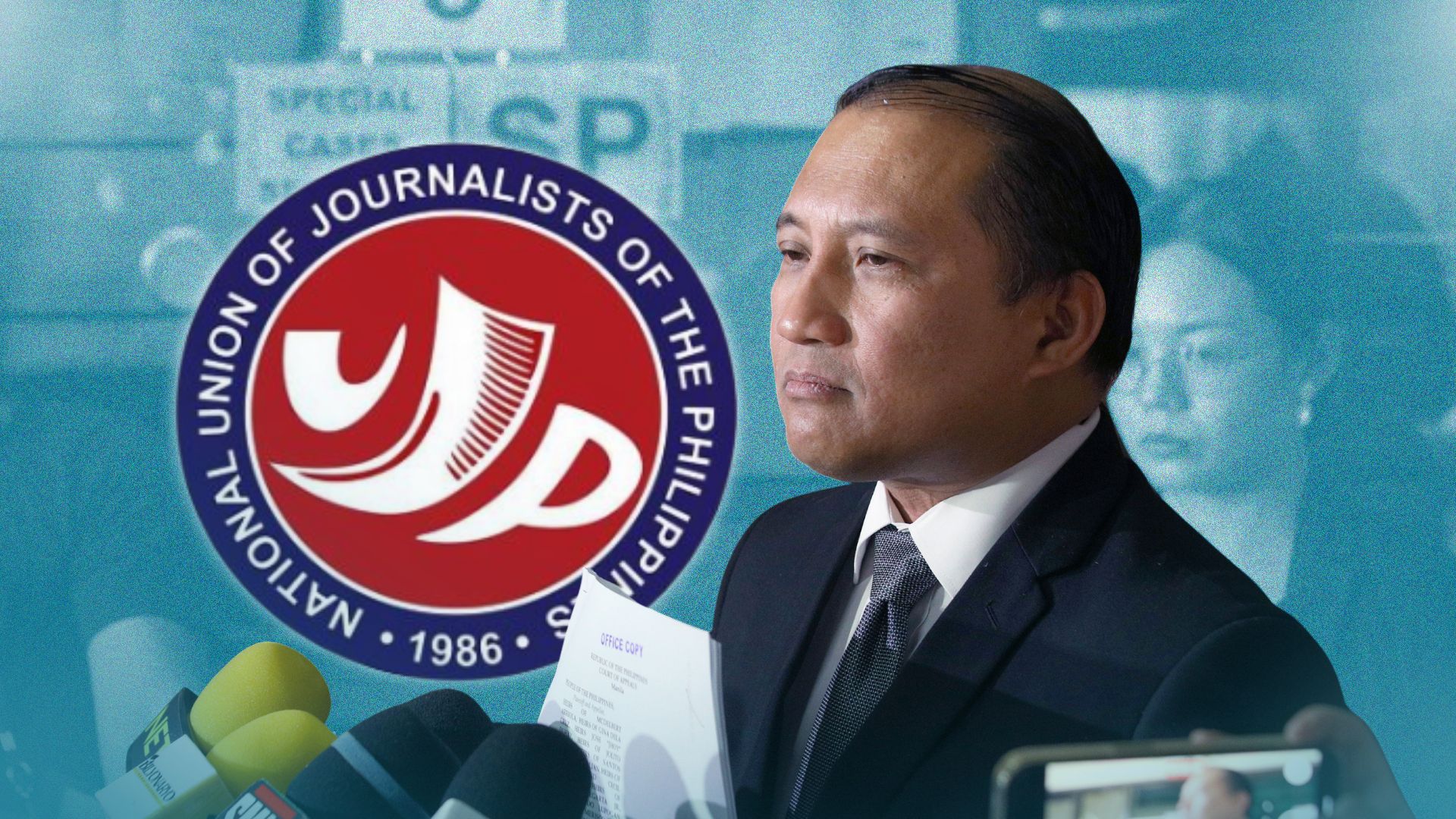
The National Union of Journalists of the Philippines (NUJP) and human rights lawyers are pushing for civil remedies in libel cases, arguing that monetary damages can replace criminal prosecution and imprisonment.
CenterLaw Executive Director Atty. Gilbert Andres said the nature of libel makes civil litigation a more appropriate remedy because the offense involves alleged harm to a person’s or corporation’s reputation.
“Since this is a private reputation, then they should be the ones shouldering the litigation,” Andres said.
He said that those who seek redress could seek damages in civil court rather than have the State pursue criminal charges.
“Civil litigation damages, not criminal,” he argued.
For NUJP Secretary-General Len Olea, libel does not have to be treated as a criminal offense.
“It can just be civil libel, right? Not criminal libel,” Olea said.
Olea stated that the continued criminalization of libel runs counter to the Philippines’ obligations under the International Covenant on Civil and Political Rights (ICCPR), to which the country is a party and which protects freedom of expression under Article 19.
She stated that the United Nations Human Rights Committee had found the country’s libel law excessive because it allows imprisonment as a penalty.
Under Article 355 of the Revised Penal Code, libel may be punished with imprisonment and/or a fine—when committed through a computer system, cyberlibel carries a penalty one degree higher under the Cybercrime Prevention Act of 2012.
The push to remove criminal penalties has also reached Congress. Senate Bill No. 1593, filed in 2022, proposed decriminalizing libel and cyberlibel, while Senate Bill No. 250, filed in 2025, likewise proposed replacing criminal penalties with civil liability.
Andres also pointed to the 1987 Constitution’s protection of freedom of speech, expression, and the press, saying these protections extend beyond political commentary covering forms such as parody, satire, comedy, and films.
For Olea, however, the consequences of criminal libel extend beyond members of the press.
She noted that citizens who openly criticize public figures may also become targets of libel complaints.
“It can be used against citizens who are vocal critics of whoever is in power,” Olea said.
According to Olea, the possibility of imprisonment can also affect democratic participation by discouraging people from speaking out.
“If this is the experience and everybody can be charged with this case with the threat of jail time… when that happens, democracy is threatened, and it’s not just a press freedom issue now,” she said.
The call comes amid the NUJP’s documentation of 256 attacks against the press under the administration of President Ferdinand Marcos Jr., including 14 cases involving libel or cyberlibel as of July 2026. The NUJP has also recorded other forms of attacks against journalists and media organizations during the period.
Olea urged the public to support efforts to decriminalize libel, emphasizing that the issue concerns both journalists and citizens who depend on the media to access information and express their views.
“That’s how it is—it’s not just about decriminalizing libel for us journalists, but for everyone and for democracy,” she said.