






Now Reading: Who will control the future of AI?
-
01
Who will control the future of AI?

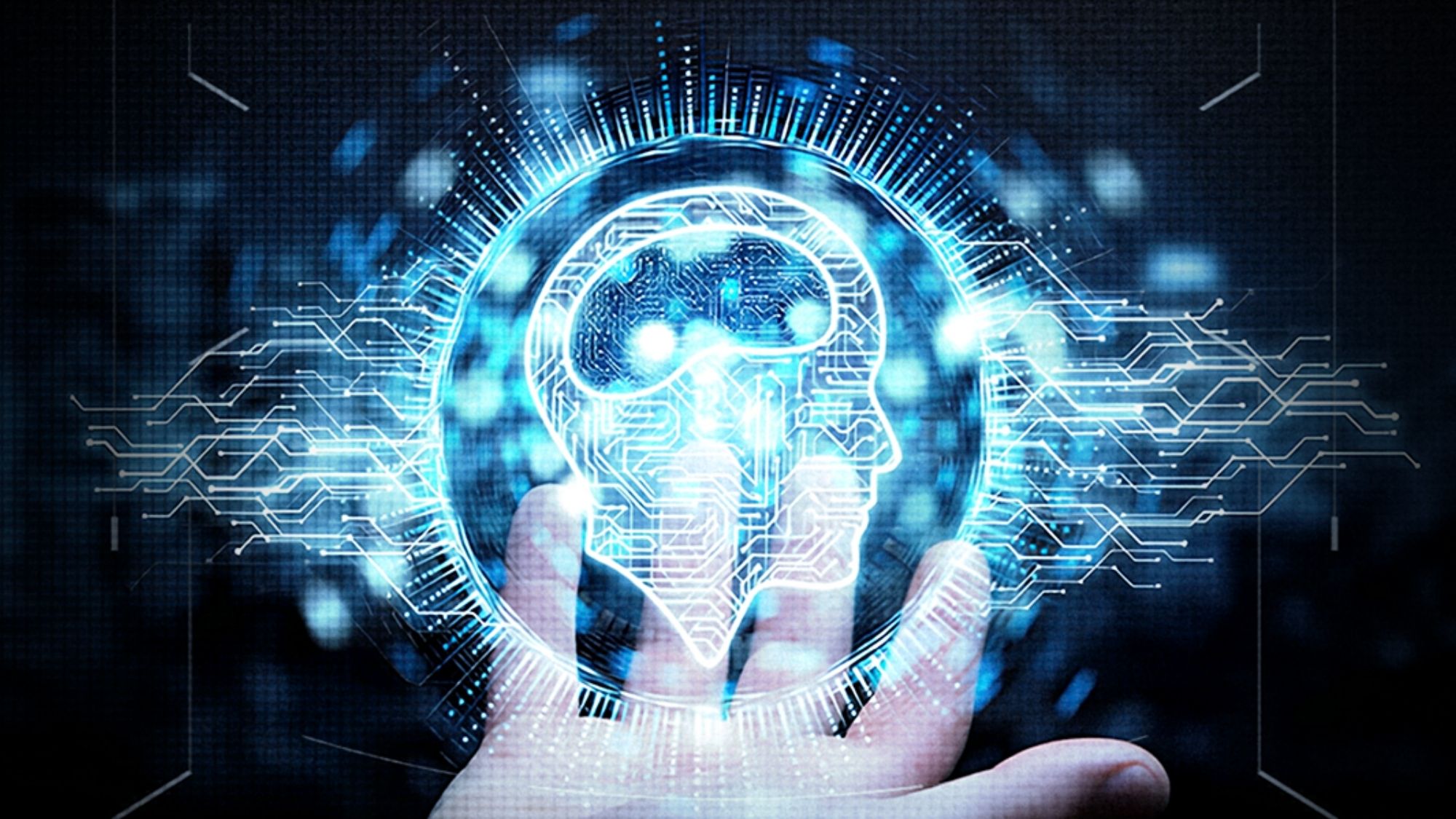
Power has always followed what the world cannot afford to lose. As Artificial Intelligence (AI) becomes indispensable, control over its future is becoming a contest of global power.
AI has become one of the world’s most strategic technologies. Countries that lead in AI stand to gain significant advantages in economic growth, scientific research, military capability, and global influence.
But building advanced AI takes more than just powerful algorithms. AI models depend on computing power; computing power depends on advanced chips; and producing those chips depends on electricity, refined minerals, and a highly specialized industrial infrastructure.
Because these resources are concentrated in a relatively small number of countries such as the United States, Taiwan, the Netherlands, China, Japan, and South Korea, no country can build a complete AI ecosystem alone. Governments are therefore forming partnerships to secure the technologies and resources they need while protecting the parts of the supply chain they already control.
These partnerships are creating new geopolitical alignments around AI. Two major AI-centered networks are taking shape, but they compete over different parts of the AI system. Pax Silica, led by the United States, is organizing countries around the supply chains and infrastructure behind advanced AI. WAICO, led by China, is building a network around AI governance, cooperation, and access. Around them are countries such as India, Indonesia, and the Gulf states that are working with multiple partners, while ASEAN is trying to preserve its own room to maneuver.
The result is a new map of AI power. It is shaped not only by who develops the most advanced systems, but by who controls the infrastructure, resources, rules, and partnerships that make them possible.
The U.S.-led AI supply-chain network
Pax Silica is a U.S.-led coalition launched through the Pax Silica Declaration on December 13, 2025, to secure the supply chains behind artificial intelligence.
Its U.S. leadership reflects the country’s outsized influence over the global AI supply chain, from advanced chips and computing infrastructure to critical technologies and resources.
Its name combines pax, the Latin word for “peace,” with silica, the compound from which silicon is produced, the material at the foundation of modern semiconductor chips. Like terms such as Pax Romana and Pax Americana, the name evokes an order shaped by a dominant power. Here, that order is being built around the technologies and resources that underpin AI.
Pax Silica focuses on four strategic areas:
- computing infrastructure
- semiconductors
- critical minerals
- energy
These are the physical foundations of advanced AI, and access to them is concentrated among a small number of countries.
The coalition began with seven founding signatories and expanded rapidly. The Philippines became its 13th signatory in April 2026. By the Second Pax Silica Summit in June, membership had reached 24, including countries such as India, Qatar, the United Arab Emirates, Sweden, Finland, and Norway, as well as the European Union.
The significance of Pax Silica, however, lies less in its membership count than in what its members control.
The countries that power Pax Silica’s AI supply chain
The United States leads in frontier AI research, chip design, cloud computing, and AI companies. The Netherlands, through Advanced Semiconductor Materials Lithography (ASML), produces the extreme ultraviolet lithography machines needed to manufacture the most advanced chips. Japan supplies critical semiconductor materials and equipment, while South Korea is a major producer of memory chips. Together, their strength across different parts of the AI supply chain gives Pax Silica its strategic weight.
Taiwan is even more central to this system. Although it is not a formal Pax Silica member, Taiwan Semiconductor Manufacturing Company Limited (TSMC) manufactures a large share of the world’s most advanced chips. Its position shows that formal membership does not always determine technological importance. A country can remain outside a political coalition while still being indispensable to the infrastructure that coalition is trying to secure.
Europe adds another layer to the picture. The European Union is working with the U.S.-led ecosystem while pursuing its own efforts to strengthen technological and industrial capacity through measures such as the AI Act and European Chips Act. Europe therefore has an interest in both cooperation with Washington and reducing its dependence on foreign technology.
Pax Silica is consequently more than a diplomatic partnership. It connects countries that control different parts of the physical AI supply chain and attempts to make those connections more secure.
For the Philippines, that creates both an opportunity and a difficult question.
The country’s membership has been linked to plans for a 4,000-acre Economic Security Zone within the Luzon Economic Corridor, envisioned as an AI-focused industrial hub. The Philippines also holds reserves of nickel, cobalt, and other critical minerals that could become more valuable as countries seek alternatives to Chinese-controlled supply chains.
But supplying resources is not the same as controlling the technology built from them. Critics have questioned whether the Philippines could remain concentrated in lower-value activities while foreign companies retain the most profitable parts of the AI supply chain. Concerns over environmental impacts, resource use, and the terms of foreign investment have added to the debate.
For the Philippines, the question is therefore not simply whether Pax Silica brings investment. It is whether that investment can help the country move higher up the AI value chain.
The China-centered AI governance network
WAICO, the World Artificial Intelligence Cooperation Organization, represents a different approach to building influence in AI.
The China-led intergovernmental organization was formally established in Shanghai on July 16, 2026, when 29 countries signed its founding agreement. The proposal was first raised by Chinese Premier Li Qiang at the 2025 World Artificial Intelligence Conference and later reiterated by President Xi Jinping.
While Pax Silica concentrates on securing the physical foundations of AI, WAICO focuses on how AI is governed and who gets to participate in its development. AI governance refers to the rules governments and international institutions establish for how AI is developed and used, including questions of safety, accountability, data, and the responsibilities of governments and technology companies.
WAICO is headquartered in Shanghai and is structured as an independent international organization guided by United Nations Charter principles. Its stated goals include promoting AI development that is “beneficial, safe, and fair,” expanding access to AI, and strengthening cooperation among governments.
In practice, this means coordinating approaches to AI regulation, providing technical training and capacity-building, and giving governments a forum to discuss common AI policies. China has pledged 5,000 AI training opportunities for developing countries over five years, alongside proposed cooperation centers involving ASEAN, the African Union, and BRICS.
Its founding membership reflects this broader approach. The 29 signatories include countries across Asia, Africa, Latin America, and Europe, including Brazil, Indonesia, Pakistan, Russia, and Kazakhstan. No G7 country or European Union member joined the founding agreement.
That difference is significant. Pax Silica emphasizes trusted supply chains and strategic technology cooperation among selected partners. WAICO emphasizes wider participation regardless of a country’s political system or level of technological development. A country does not need to control advanced chips or operate a frontier AI company to have a place in WAICO.
China’s growing use of openly available AI models also strengthens this appeal. Countries with limited computing capacity and research infrastructure can potentially adopt and adapt these models without developing every component of an advanced AI system themselves. For governments already connected to China through trade and investment, WAICO can provide another channel for technical cooperation.
WAICO is therefore not simply a second version of Pax Silica. The two operate in different parts of the AI system. Pax Silica is primarily concerned with who controls the physical infrastructure and supply chains behind advanced AI. WAICO is more concerned with who participates in developing its rules and gaining access to AI capabilities.
The Philippines is absent from WAICO because it chose a different network, joining Pax Silica in April. That decision places Manila closer to the U.S.-aligned technology ecosystem, particularly in areas involving infrastructure and supply-chain development.
The multipolar middle
Not every country is choosing between Pax Silica and WAICO.
The Center for a New American Security identifies Brazil, India, Indonesia, Saudi Arabia, South Africa, and Türkiye as “global swing states,” countries that maintain relationships with multiple major powers rather than fully aligning with one. In AI, this flexibility matters because countries can seek chips, computing capacity, investment, and technical expertise from different sources.
India is the clearest example. It joined Pax Silica in February 2026 while continuing to build its own domestic AI capabilities and advocate for greater participation by developing countries in AI governance. It also hosted the India-AI Impact Summit in New Delhi, bringing together leaders from 20 countries.
India is therefore using Western partnerships to strengthen its AI capacity while maintaining enough independence to promote its own approach to AI development.
Indonesia shows how this strategy works at the regional level. It joined WAICO as a founding member while maintaining economic and technological ties with the United States and other partners. For Jakarta, joining a China-led organization does not prevent cooperation with Washington. It gives Indonesia another source of technology and investment while preserving its ability to work with competing powers.
Kazakhstan demonstrates how far this overlap can go. It joined WAICO while pursuing a $10 billion Nvidia-backed computing project and continuing to deepen its economic relationship with China. Reports suggest Kazakhstan is the only country that sits on both membership lists. Its position shows that participation in one network does not necessarily prevent cooperation with another.
ASEAN faces the same challenge across an entire region. Its members have taken different positions in the AI landscape: Indonesia, Malaysia, Cambodia, and Laos joined WAICO, while Singapore and the Philippines are connected to Pax Silica. Other members remain outside both networks.
ASEAN is therefore not another AI bloc. Its importance lies in its attempt to create a common regional framework while its members work with both U.S. and Chinese technology providers. Initiatives such as the ASEAN Digital Economy Framework Agreement could give Southeast Asian countries greater collective leverage over digital rules and cross-border technology.
The Gulf states have adopted a similar strategy. The UAE and Saudi Arabia are developing major partnerships with U.S. AI companies while maintaining substantial economic and technological ties with China. Their capital, energy resources, and growing data-center industries give them something both sides want.
These countries are not forming a third bloc. They are using competition between the major networks to expand their own options.
The map is more complicated than two blocs
The emerging AI order is therefore not a simple contest between two fixed camps.
Pax Silica and WAICO are the two clearest institutional networks taking shape around AI, but neither fully defines the global map. The semiconductor supply chain remains dependent on countries such as Taiwan, the Netherlands, Japan, and South Korea regardless of formal political alignment. The European Union is cooperating with the U.S.-led ecosystem while pursuing greater technological independence. India is building partnerships without surrendering strategic autonomy. ASEAN is trying to coordinate a region divided across competing technology ecosystems. The Gulf states are using capital, energy, and infrastructure to maintain leverage with both sides.
This makes AI geopolitics different from a traditional alliance system. A country can obtain computing infrastructure from one ecosystem, use models developed in another, participate in a regional regulatory framework, and maintain political and economic ties with both Washington and Beijing.
For the Philippines, the challenge is sharper. Pax Silica can provide access to investment, technology, and global supply chains, but membership does not automatically create technological independence. The country still has to determine how much value it can capture from the resources, infrastructure, and workforce it brings to the AI economy.
AI may run in the cloud, but its future is being forged on the ground. Whoever commands the foundations beneath this rising intelligence may hold the power to shape the technological order of the century ahead.