







Now Reading: Back to The Hunger Games arena before Sunrise on the Reaping
-
01
Back to The Hunger Games arena before Sunrise on the Reaping
Back to The Hunger Games arena before Sunrise on the Reaping

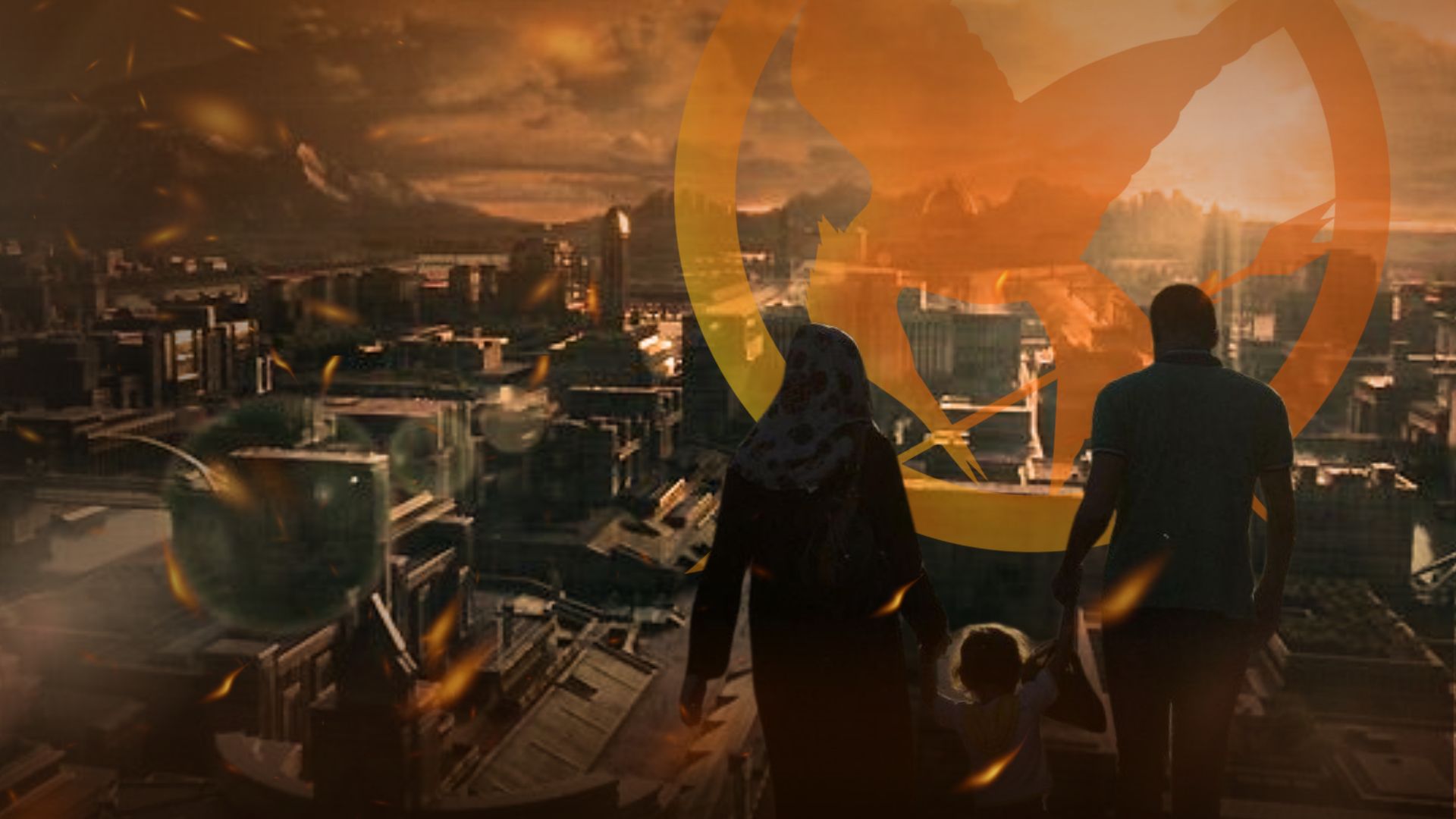
“Hope. It is the only thing stronger than fear.”
In a world ruled by fear and enforced silence, hope becomes an act of resistance. It gives people the courage to rise, the strength to endure, and the will to fight.
Based on the bestselling novels by American author Suzanne Collins, The Hunger Games first came to the big screen on March 23, 2012. Its film adaptation introduced audiences to Panem, a nation divided into districts and ruled by the Capitol, where inequality is maintained through fear and the suffering of others is turned into entertainment.
Across the franchise, each film reveals another layer of Panem’s history, exposing the violence that sustains its government and the people who refuse to remain powerless. What begins as a fight for survival gradually becomes a struggle against a system that has made oppression a way of life.
Now, with The Hunger Games: Sunrise on the Reaping set to arrive in cinemas on November 20, 2026, audiences are preparing to return to Panem, 24 years before Katniss’s story the 50th Hunger Games or the Second Quarter Quell. Before another story unfolds, let us revisit the films that brought its world to life.
The Hunger Games
Sometimes, the hardest choices we made are not for ourselves, but for the people we love.
Directed by Gary Ross, The Hunger Games (2012) follows sixteen-year-old Katniss Everdeen (Jennifer Lawrence), who volunteers to take her younger sister Primrose’s place in a televised competition where children from Panem’s districts are forced to fight to the death. Alongside fellow District 12 tribute Peeta Mellark (Josh Hutcherson), she enters an arena where survival depends not only on skill but also on winning the favor of Capitol audiences.
“I volunteer as tribute!”
Her words begin a journey that extends far beyond the arena. Amid the violence, Katniss forms an unexpected bond with Rue (Amandla Stenberg), whose fate becomes one of the film’s most heartbreaking moments. When the Capitol changes the rules to allow two tributs from the same district to win, Katniss and Peeta see a chance to survive together. But when the rule is reversed, they refuse to turn against each other and threaten to eat poisonous nightlock berries, forcing the gamemakers to declare them both winners.
Their victory is more than survival, Katniss entered the arena to protect her sister but leaves having challenged the Capitol’s authority. Her decision to stand by Peeta, even when faced with death, shows that compassion can survive in a place designed to strip people of their humanity. What the Capitol intended as a spectacle of fear becomes an unexpected display of defiance. And for the first time, its people have a reason to believe that its power can be challenged.
The Hunger Games: Catching Fire
Winning may end the games, but it does not end the suffering.
The Hunger Games: Catching Fire (2013), directed by Francis Lawrence, follows Katniss and Peeta after their return to District 12. Their victory has made them symbols of hope, but to President Snow (Donald Sutherland) that hope is a threat to his authority.
During the Victory Tour, the two are expected to convince the districts that their actions in the previous games were driven by love rather than defiance. But as they travel from one district to another, they witness growing unrest among people who have began to see Katniss as a symbol of resistance.
Snow responds by announcing the 75th Hunger Games, also known as the Third Quarter Quell, which forces previous victors back into the arena. Katniss and Peeta are joined by familiar faces, including Finnick Odair (Sam Claflin), Johanna Mason (Jena Malone), Beetee (Jeffrey Wright), Wiress (Amanda Plummer), and Mags (Lynn Cohen). As alliances form and deadly traps unfold, Katniss begins to realize that some tributes are working toward something beyond winning. In the film’s closing moments, she shoots an arrow into the arena’s force field, destroying it and bringing the competition to an abrupt end.
The arena falls, but the consequences reach far beyond it. What began with one act of defiance has become a movement shared by the districts. Katniss may be its face, but the fire belongs to the people who have endured the Capitol’s cruelty for generations. The fire is no longer confined on the arena, it is spreading throughout the districts, stirring a nation to stand.
The Hunger Games: Mockingjay – Part 1
The destruction of the arena does not bring an end to the violence. Under Francis Lawrence’s continued direction, The Hunger Games: Mockingjay – Part 1 (2014) shifts the story from survival in the arena to the fight for Panem’s freedom.
Rescued from the destroyed arena, Katniss awakens in District 13, the center of the resistance. President Alma Coin (Julianne Moore) and Plutarch Heavensbee (Philip Seymour Hoffman) ask her to become the Mockingjay, the face of a rebellion that needs someone capable of inspiring the districts. Katniss agrees, provided that the captured victors, including Peeta, are rescued and protected.
As the rebellion grows, Katniss appears in propaganda videos known as propos, using her image and words to challenge the Capitol’s control over public opinion. After the Capitol bombs a hospital in District 8, she delivers a message to President Snow:
“If we burn, you burn with us!”
But while Katniss becomes the voice of the uprising, the Capitol turns Peeta into a weapon against her. When he is finally rescued, she discovers that his memories have been manipulated, transforming someone she loves into a threat she never expected. The person she once fought to protect can no longer recognize her as someone safe.
The film reveals that revolutions are fought not only through weapons but also through images, narratives, and the struggle to control what people believe. Yet behind the Mockingjay is a young woman burdened by the lives lost and the people she cannot save. The districts may see a symbol of hope, but Katniss is still someone who grieves, fears, and struggles to keep going.
The Hunger Games: Mockingjay – Part 2
Rebelling against a tyrant does not guarantee freedom from tyranny.
The Hunger Games: Mockingjay – Part 2 (2015) brings Katniss’s journey to its conclusion as the rebellion advances toward the Capitol.
Determined to end Snow’s rule, she joins the Star Squad on a mission into the Capitol, where deadly traps threaten everyone involved. The journey comes at a devastating cost, including Finnick’s death. But the greatest loss comes when a bombing outside Snow’s mansion kills several children and the medics who rush to help them, including Prim (Willow Shields).
After the rebels seize the Capitol, Snow tells Katniss that Coin orchestrated the bombing to turn the people against him. When Coin proposes holding another Hunger Games using the children of Capitol leaders, Katniss recognizes that the rebellion is beginning to resemble the government it fought to destroy.
At Snow’s public execution, she turns her arrow away from him and kills Coin instead, refusing to let the rebellion give birth to another tyranny.
Katniss’s final act of defiance is not simply bringing down a dictator. It is refusing to let a new regime inherit the same cruelty. She eventually returns to District 12 and builds a life with Peeta. Years later, they are shown raising their children, a quiet ending that stands in stark contrast to the violence that once defined their lives.
After everything she has lost, Katniss finally gets something the games never allowed her to have: a future. Her story closes not with another victory in the arena, but with the possibility of living beyond it. For someone whose life was shaped by survival, choosing to live becomes its own kind of victory.
The Hunger Games: The Ballad of Songbirds and Snakes
To understand the Capitol’s cruelty, the story looks back to the boy who would eventually rule it.
The Hunger Games: The Ballad of Songbirds & Snakes (2023) takes audiences 64 years before Katniss’s story, when Panem is still recovering from war and the Hunger Games are being shaped into the spectacle they will become.
Eighteen-year-old Coriolanus Snow (Tom Blyth) hopes to restore his family’s former status by earning a scholarship through his role as a mentor. He is assigned to Lucy Gray Baird (Rachel Zegler), a tribute from District 12 whose singing and defiant personality draw the Capitol’s attention. As he helps her navigate the Games their relationship grows, but so does the conflict between his attachment to her and his ambition.
After his cheating is discovered, Coriolanus is sent to serve as a Peacekeeper in District 12. There, he reunites with Lucy Gray and becomes involved in the district’s unrest. When his friend Sejanus Plinth (Josh Andrés Rivera) secretly aids the rebels, Coriolanus reports him to the authorities, leading to his execution. He and Lucy Gray later attempt to flee together, but she disappears after questioning his intentions. Coriolanus eventually returns to the Capitol and poisons Dean Casca Highbottom (Peter Dinklage), securing another step toward the power he has long desired.
Unlike Katniss, whose actions are often driven by the people she wants to protect, Coriolanus repeatedly puts his ambitions first. His transformation reveals that tyranny is not built by one person alone. It is sustained by those who justify cruelty, protect their interests, and choose power even when they know its cost.
Beyond the arena
Panem may be fictional, but the suffering it portrays is not.
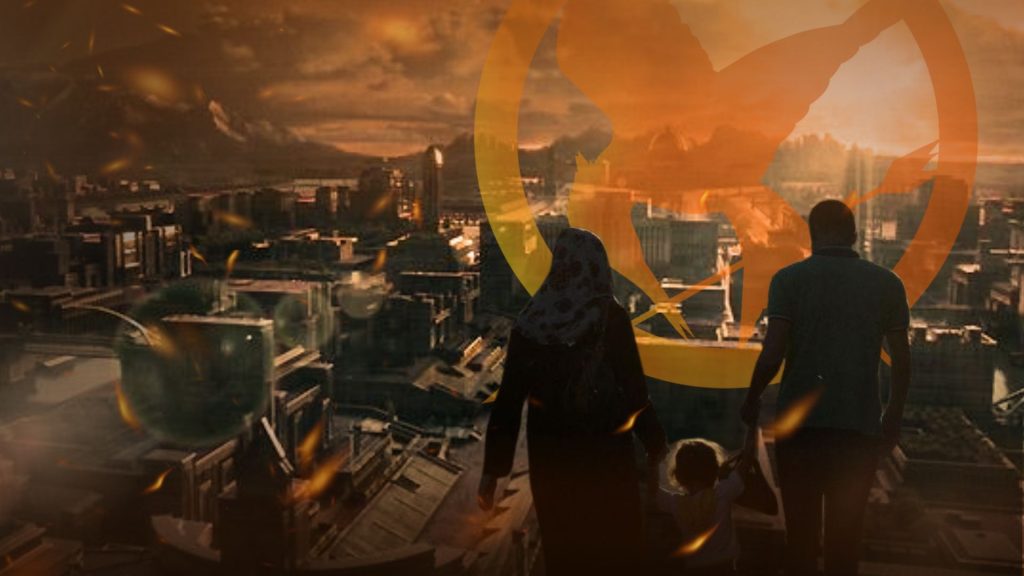
Across places like Gaza, Sudan, and Ukraine, families are forced to flee their homes as conflict tears communities apart. Children lose access to education, hospitals struggle to provide care, and civilians face uncertainty over their next meal or place of shelter. These are not scenes from a dystopian film. They are lives disrupted by violence.
Like the districts under the Capitol, civilians often bear the heavier cost of decisions made by those in power. They lose their homes, loved ones, and futures to conflicts they did not choose. And as images of destruction fill our screens, it becomes easy to forget that behind every headline are people whose lives may never return to what they were.
This is where The Hunger Games reaches beyond its fictional world. It challenges us to question systems that preserve power at the expense of human lives, the silence that allows injustice to continue, and the expectation that those who suffer must simply endure. It reminds us that behind every number, image, and headline are people who deserve more than to become casualties of someone else’s pursuit of power.
As Sunrise on the Reaping prepares to take audiences back to Panem, the earlier films remind us that a change in power means nothing if the suffering remains. A society cannot call itself free while people are still forced to live in fear.
No victory is worth the lives lost or the futures stolen. May the odds be ever in our favor, and may hope outlive the horrors we endure