








Now Reading: Where martyrs are murdered twice
-
01
Where martyrs are murdered twice

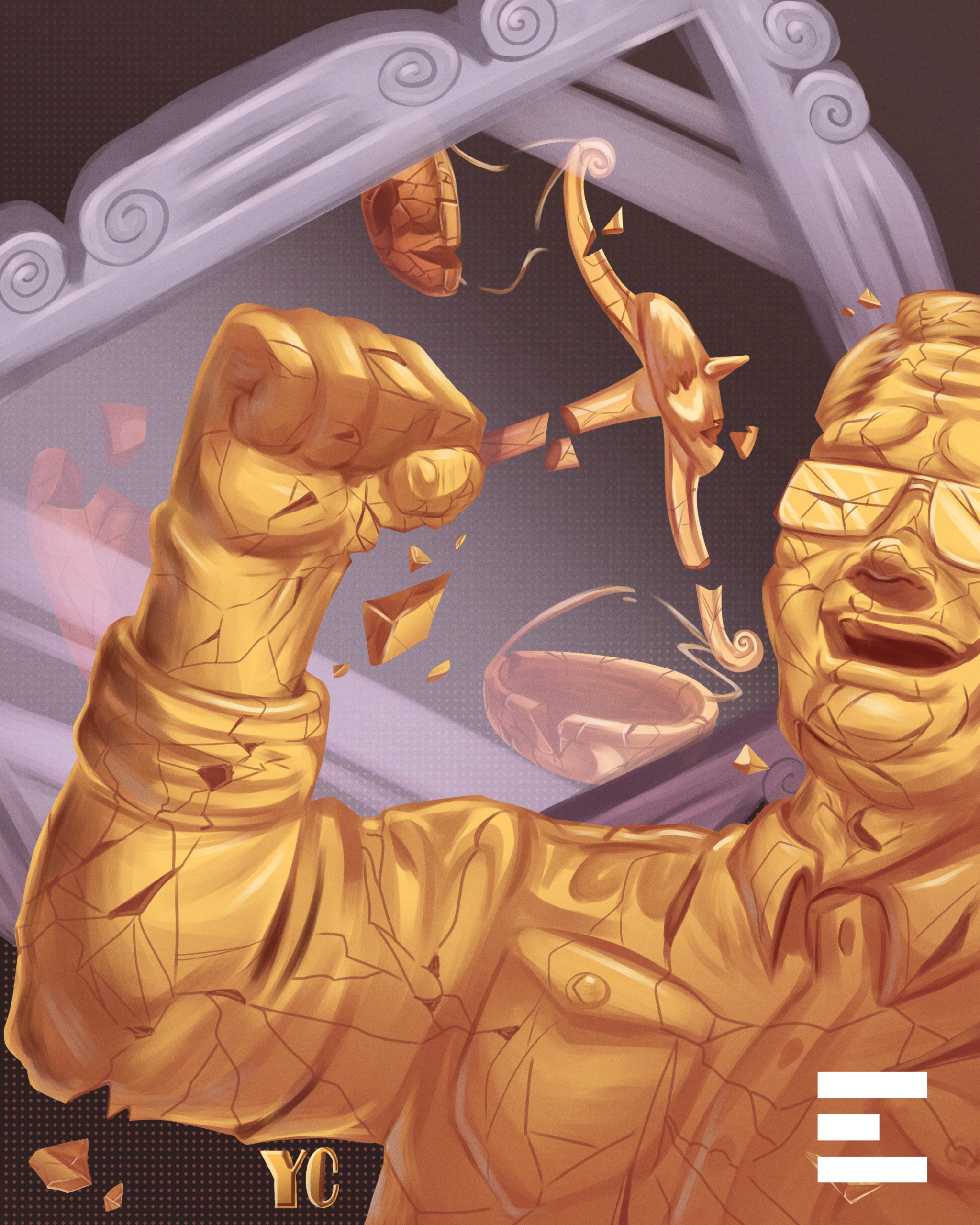
The assassination of Benigno “Ninoy” Aquino Jr. on August 21, 1983, was not merely the murder of a man but the attempted execution of democracy itself. His death unmasked a regime sustained by fear and coercion, and in killing him, the dictatorship unwittingly ignited the fire that would consume it three years later at EDSA.
More than four decades later, Ninoy Aquino Day is observed in an environment characterized less by physical repression than by discursive manipulation. The struggle has shifted from silencing opposition to reconfiguring collective memory.
The clearest examples lie in the current administration’s recent maneuvers. In 2023, it shifted the commemoration of the EDSA People Power Revolution from February 25 to February 24, then erased it entirely from the list of holidays in 2024. That same year, it moved Ninoy Aquino Day from its rightful August 21 to August 23, justifying the decision as “holiday economics.” Such maneuvers are not innocent adjustments to the calendar.
As the late veteran human rights lawyer Edcel Lagman—renowned for his lifelong dedication to
democracy and justice—emphasized before his passing, shifting the dates of national memorials like Ninoy Aquino Day “dilutes their significance and accommodates revisionism.” To move the commemoration is to make forgetting easier, to erode the civic memory that anchors democratic vigilance.
Contemporary distortions of Aquino’s legacy, which recast him as driven by ambition rather than public duty, operate as calculated strategies to dismantle democratic memory and entrench authoritarian nostalgia. If 1983 marked the silencing of a political voice, the present moment marks the systematic drowning of historical consciousness.
The August Twenty-One Movement (ATOM) has correctly emphasized that such distortions are neither spontaneous nor accidental. They are systematically produced through the infrastructures of disinformation that dominate the digital public sphere.
Where martial law relied on censorship and the closure of news outlets, the present political environment relies on algorithmic manipulation and the saturation of falsehoods. Although the mechanisms differ, the objective remains constant: to obscure the crimes of dictatorship and to rehabilitate dynastic power.
The commemoration of Ninoy Aquino Day, therefore, embodies a paradox. It commemorates a democratic victory, yet it reveals the persistence of authoritarian legacies in contemporary politics.
Years after the EDSA revolution, dynastic families with authoritarian pedigrees continue to dominate.
The false narrative of a “golden age” circulates more widely on social media than the documented testimonies of torture and theft. As ATOM has emphasized, “there was no golden age during the martial law dictatorship of the Marcoses. Because surely also, whatever we are experiencing right now in our country is not the golden age.”
Political theory reminds us that democracy is not a permanent achievement but a fragile equilibrium sustained by vigilance. Aquino’s return from exile, despite the certainty of death, reflected this understanding. The citizens who filled EDSA in 1986 embodied it when they confronted tanks with their bodies and their voices. Today, the site of struggle has shifted from streets to screens, yet the stakes remain the same: whether truth or falsehood will define the nation’s memory.
Honoring Aquino requires the refusal to treat corruption and disinformation as structural inevitabilities. It demands recognition that Filipinos are not merely subjects of historical forces but agents capable of shaping democratic futures.
On Ninoy Aquino Day 2025, Filipinos face a choice: surrender to a hollow democracy stripped of truth or reclaim the dignity for which Aquino and countless others gave their lives. The bullets of August 21, 1983 ended a man’s life. They must not end a nation’s memory.